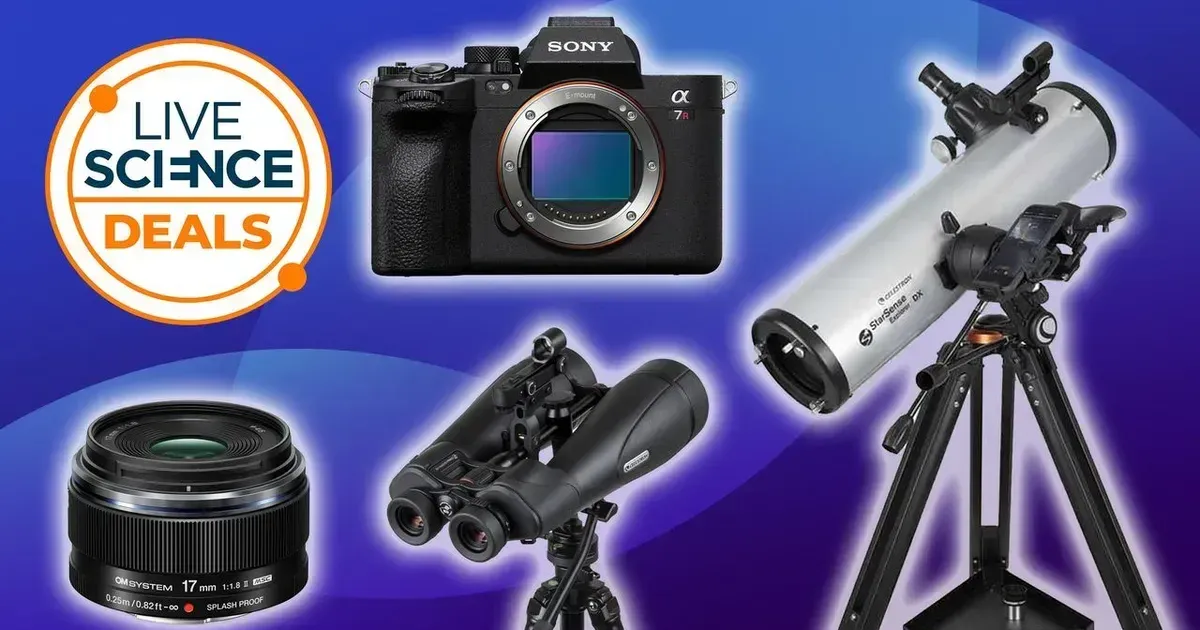
Scientists and amateur naturalists are flocking to digital storefronts as Amazon launched its seasonal discount marathon today. Early data suggests that the focus of this cycle is on clearing inventory for mid-range telescopes and specialized wildlife cameras. Retail analysts note that these price drops exceed typical holiday reductions by nearly 12 percent. Inventory levels for optical equipment have reached a three-year high. Retail reports from Live Science indicate that the most aggressive cuts are appearing in the stargazing and wildlife observation sectors. While these sectors usually maintain stable pricing due to high manufacturing costs, a shift in consumer demand toward integrated digital sensors has left traditional glass manufacturers with excess stock. Nikon and other major players are reportedly coordinating with distributors to move high-end binoculars before the summer season. Discounts on entry-level telescopes have already hit 30 percent in some territories. Buyers are prioritizing portability over raw magnification power.
Observation Gear Discounts Reach Shoppers
Celestron dominates the current pricing field with its NexStar and StarSense lines. These systems allow users to navigate the night sky using a smartphone interface. According to early sales data, the 130mm Newtonian reflectors are the top-selling items in the first four hours of the sale. Prices for these units have fallen below the $400 mark for the first time in eighteen months. Such pricing strategies reflect a desire to capture a younger demographic of casual observers. Most buyers are looking for plug-and-play solutions.
Optical manufacturers are facing a glut of inventory after the 2025 production surge, which forces retailers to implement deeper discounts than we typically see in the spring quarter.
In particular, professional-grade Schmidt-Cassegrain telescopes are seeing more modest reductions of roughly 15 percent. These instruments require specialized handling and shipping, which keeps their floor price relatively high. Enthusiasts are finding value in bundled packages that include high-end eyepieces and solar filters. Nikon has also entered the fray with discounts on its fieldscopes, targeting the overlap between birdwatchers and astronomers. Competition in the mid-range market has never been more intense. Pricing parity between major brands is common. Glass prices dictate the ceiling.
Inventory Pressure Drives Price Cuts
Wildlife photographers are finding strong value in the 2026 Spring Sale. High-end binoculars with image stabilization technology have seen a 22 percent price drop since last week. Many of these units now include 5G connectivity for instant cloud uploads of captured footage. For instance, the latest Bushnell models feature heat-signature tracking to help observers locate animals in dense foliage. These features were once exclusive to military and law enforcement hardware. Consumer versions are now widely available for under $600. Trail cameras have evolved into complex surveillance nodes. The units on sale this week feature solar-powered batteries and artificial intelligence that can distinguish between a deer and a moving branch. This reduces the amount of empty footage stored on local memory cards. The software integration in these devices is often more valuable than the lens quality. Retailers are bundling these cameras with subscription-based cloud storage plans to recoup the low hardware margins. Subscription revenue provides a more predictable income stream. But the real story lies in the camera lens market. Mirrorless camera bodies and compatible telephoto lenses are seeing deep cuts as manufacturers prepare for the 2027 product cycle. While Live Science highlights enthusiast-level gear, professional retailers are matching these prices to prevent customers from migrating entirely to Amazon. Shipping times for these delicate items have decreased due to new protective packaging standards. Damage rates during transit have dropped by 40 percent compared to last year. Logistics remains the primary hurdle for fragile glass. Shipping a 40-pound telescope requires specialized logistics that most retailers struggle to manage profitably. Amazon has used its proprietary delivery network to undercut specialized science shops on shipping costs. This allows them to offer lower list prices on heavy tripods and mounts. The company has invested over $1.2 billion in specialized handling equipment for its regional fulfillment centers. These centers now use robotic arms with soft-touch sensors to move optical equipment. Human intervention is minimized during the sorting process.
Some consumers remain wary of purchasing high-precision gear from mass-market retailers. Specialized forums are filled with reports of misaligned mirrors in telescopes shipped during high-volume sales. While return policies are generous, the inconvenience of repackaging a bulky telescope prevents some buyers from pulling the trigger. Even the volume of sales today suggests that price is the primary driver for the majority of the market. Most amateur observers cannot distinguish between a perfectly aligned mirror and one that is slightly off-axis. The mass market rewards convenience.
The secondary market for used equipment has stalled. With new equipment prices falling so low, the incentive to buy used gear has evaporated. The warranty protection on new items outweighs the small savings of the second-hand market. Sellers on enthusiast boards are struggling to move items that were considered premium just two years ago. This deflationary pressure is expected to continue through the end of the month. Manufacturers are already planning a second wave of discounts for late April. Inventory levels remain stubborn.
The price of glass is the only true constant.
Science Gear Became a Retail Cycle
Does the flood of discount telescopes and AI-driven wildlife cameras actually advance scientific literacy, or does it only clutter suburban garages with expensive novelties? Buying a telescope does not make one an astronomer, yet the retail industry thrives on the illusion of expertise provided by a credit card transaction.
The democratization of high-end equipment is frequently touted as a victory for science, but this ignores the reality of light pollution and the steep learning curve required to actually use this gear. Most of these telescopes will likely spend their lives as decorative pieces or gather dust after the first failed attempt to find the Andromeda Galaxy. The reliance on automated smart-tracking software robs the amateur of the very spatial reasoning and historical knowledge that defined the field for centuries. If the machine finds the star for you, you have learned nothing about the sky.
We are trading the pursuit of knowledge for the dopamine hit of a purchase. Amazon is not selling science; it is selling the aesthetic of exploration to a public that increasingly prefers screens to the actual sky. True observation requires patience, not a 30 percent discount.