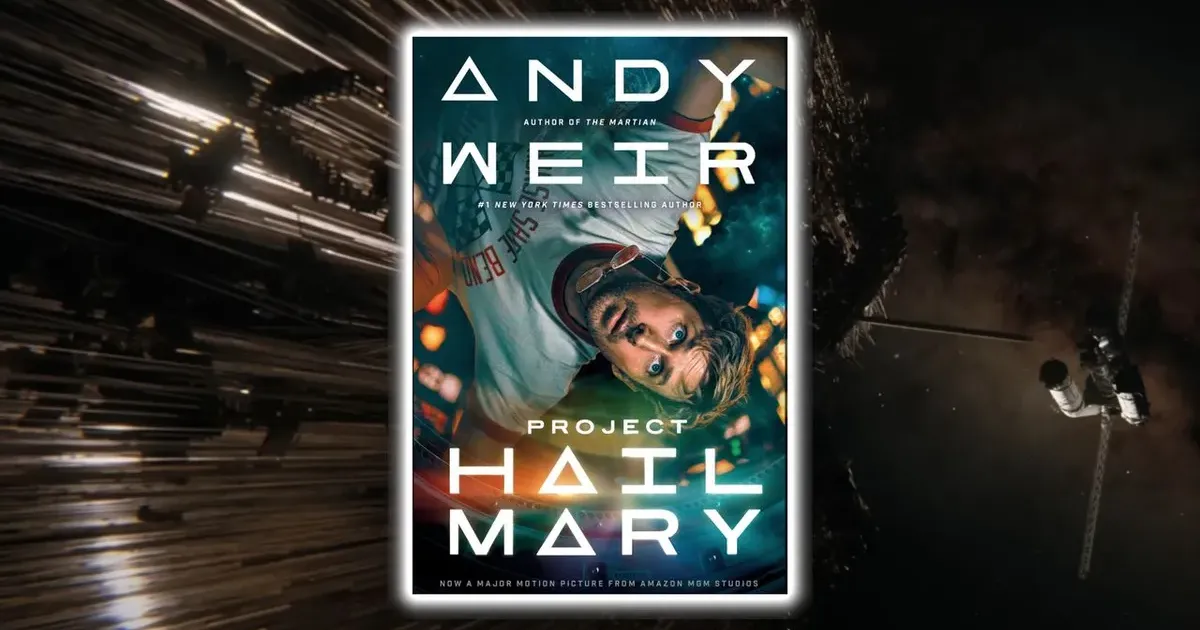
Andy Weir saw his science fiction dominance reach a new peak as Project Hail Mary paperback sales surged alongside fresh production updates. Recent data from major retailers indicates a sustained appetite for the author's brand of optimistic, technically rigorous storytelling. Amazon was reporting that the title has remained in the top ten of its science fiction charts for over 250 consecutive weeks. Readers are returning to the story of Ryland Grace to prepare for the upcoming cinematic rendition. These consumers are also branching out into the writer's back catalog to find similar themes of human ingenuity. Andy Weir's film momentum moved through publishing and market expectations.
Adaptation Value Drives the Market
Separately, internal memos from MGM suggest that the filming schedule for the adaptation has been accelerated to meet a prime summer release window. Phil Lord and Chris Miller are directing the project with a script by Drew Goddard. This team previously collaborated on successful genre-bending features and is now tasked with translating a story that takes place largely inside a single starship cabin. Early screen tests have reportedly focused on the complex visual effects required to depict the alien life form known as Rocky. The production budget is currently estimated to exceed $100 million.
Still, the literary world remains the primary engine for this cultural resurgence. Weir's debut novel, The Martian, saw a 15% increase in digital sales over the last fiscal quarter. Fans of the Ryland Grace narrative are seeking out the survivalist themes found in the story of Mark Watney. Both books rely on the concept of competence porn where characters solve existential threats through chemistry, physics, and sheer willpower. This specific subgenre has carved out a massive niche that few other contemporary authors have been able to replicate with such consistent commercial success.
Hollywood talent agencies are closely monitoring the casting calls for supporting roles in the film. Ryan Gosling will portray Ryland Grace, the junior high school teacher who wakes up on a spaceship with no memory of how he arrived. Casting directors are now searching for international actors to fill the roles of the global task force led by Eva Stratt. The inclusion of diverse characters reflects the book's premise that the entire planet must unite to solve the Petrova problem. Production insiders claim that the film will use advanced LED volume technology similar to that seen in recent space dramas. Meanwhile, the visual design of the Hail Mary vessel has become a focal point for fan speculation. Concept art leaks suggest a faithful recreation of the laboratory and the centrifuge system described in the novel. Designers are working to ensure that the physics of the ship feel grounded in reality. The mechanical accuracy of the setting is a hallmark of the Weir brand. According to industry analysts, this attention to detail is what separates his work from more fantastical space operas that ignore the constraints of orbital mechanics.
Yet, the most significant challenge remains the depiction of the Eridian biology. Rocky is a creature with five-fold symmetry and a metallic carapace who communicates through musical chords. Audio engineers are reportedly developing a unique synthesizer language to represent these tones. The goal is to create a character that feels truly alien while maintaining the emotional bond formed between Grace and the creature. Creative teams are utilizing both practical puppetry and high-end digital overlays to achieve the desired effect. Production has moved to a soundstage in London for these specific sequences.
Scientific Accuracy Fuels Andy Weir Literary Empire
Science educators have praised the book for its ability to make complex topics like time dilation and microbiology accessible to a general audience. The narrative uses the impending extinction of the human race as a backdrop for high-stakes problem solving. Weir spends hundreds of pages explaining the energy output of the Astrophage microbes and the resulting implications for interstellar travel. This commitment to hard science has earned him a dedicated following within the aerospace community. NASA employees frequently cite his work as a tool for public engagement.
In fact, the success of the 2021 novel has revitalized interest in his second book, Artemis. While that story takes place on a lunar colony and focuses on a heist, it shares the same obsession with technical systems. Readers who finished the saga of the Tau Ceti mission are looking for more examples of Weir's world-building. Sales of the Artemis audiobook have climbed since the film adaptation of the third book was greenlit. Each story functions as a standalone entry while reinforcing a shared tonal universe of scientific optimism.
Optimism has become a rare commodity in modern science fiction.
By contrast, many other popular franchises lean into dystopian futures or post-apocalyptic settings. Weir avoids these tropes by focusing on characters who are fundamentally good at their jobs and willing to work together. The shift in perspective provides a refreshing alternative for audiences tired of cynical narratives. The author often states in interviews that his stories are about the human ability to fix what is broken. That philosophy has translated into 2.4 million copies sold in the last year alone.
Hollywood Investors Bet on Optimistic Science Fiction
Box office projections for the adaptation are already being compared to the success of The Martian in 2015. That film grossed over $630 million globally and secured multiple Academy Award nominations. Investors see a similar potential in the story of Ryland Grace due to its emotional core and spectacle. The market for mid-budget adult dramas has shrunk, but high-concept science fiction continues to draw large crowds to theaters. Distribution rights for the film have already been sold in every major international market. Promotional partnerships with technology companies are expected to begin later this year. Andy Weir's market power now comes from a rare blend of science literacy and adaptation value. Studios are not buying only a plot; they are buying a brand of problem-solving that audiences already understand.