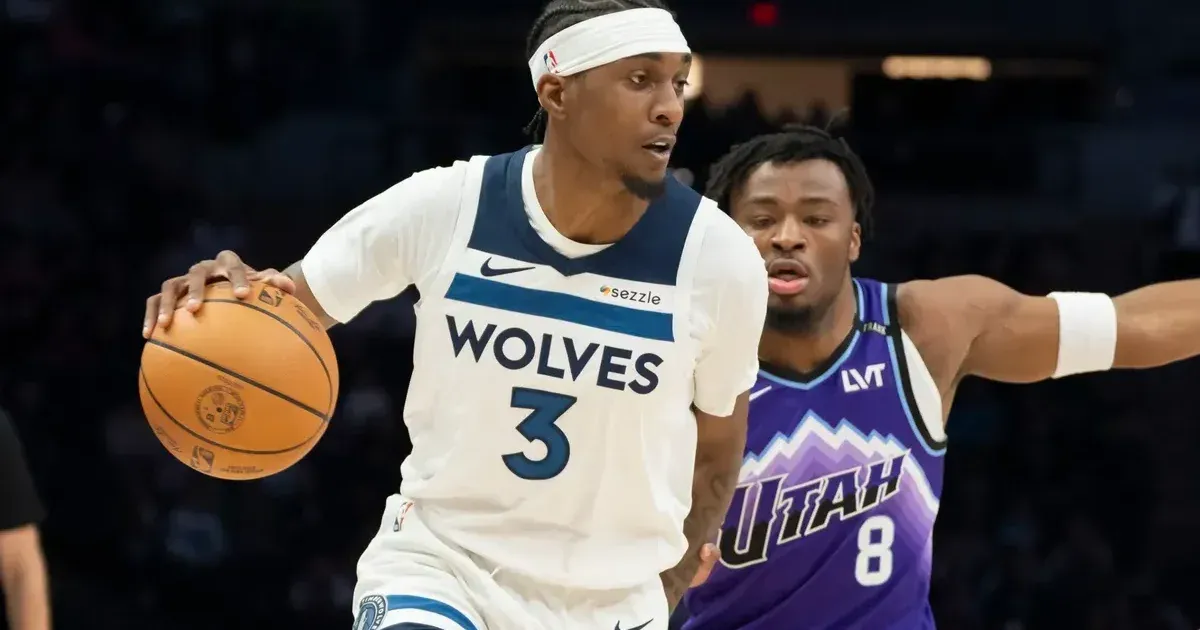
Anthony Edwards’ knee injury changed the tone of a Timberwolves playoff lead that had looked secure only moments earlier. Minnesota’s advantage over Denver suddenly depended on medical updates as much as late-game execution. The team’s postseason ceiling is tied directly to how quickly its franchise guard can recover. Teammates tried to finish the night while the larger question moved to the training room. The series no longer has a purely basketball shape. Anthony Edwards clutched his knee and collapsed to the floor on April 26, 2026, while the Minnesota Timberwolves fought to maintain a late-game advantage over the Denver Nuggets. Teammates and training staff rushed to the baseline as the franchise star remained down for several minutes. Medical officials eventually assisted him to the locker room, casting a pall over a victory that gave Minnesota a 3-1 lead in the best-of-seven playoff series. Precision in the medical evaluation of such joint trauma often dictates the trajectory of an entire postseason run.
Donte DiVincenzo also sustained an injury during the same high-intensity contest in Denver. Physicality during the fourth quarter reached a fever pitch, resulting in multiple players requiring immediate attention. Minnesota head coach Chris Finch declined to provide an immediate timeline for either player. Team doctors planned MRI scans for both athletes immediately upon their return to Minneapolis. Edwards leads the team in postseason scoring with 31.4 points per game.
Minnesota Timberwolves Medical Staff Faces Playoff Crisis
Structural integrity of the knee joint remains a primary concern for the Minnesota training department. High-definition imaging will determine whether the injury involves the anterior cruciate ligament or a less severe meniscus tear. Previous medical records for Anthony Edwards show a history of high-durability, but the explosive nature of his vertical jump increases the torque applied to the patellar tendon. Training protocols in the modern NBA have evolved to reduce these risks through plyometric stabilization. Still, the impact of a direct collision during a drive to the basket cannot be fully countered by preventative conditioning.
Depth within the Minnesota roster faces an immediate test if DiVincenzo misses significant time. Bench production from the Timberwolves had been a statistical outlier throughout the first three games of the series. Reserve guards must now absorb thirty-five minutes of high-leverage defensive responsibility. Denver head coach Michael Malone noted that his game plan will adapt to the personnel shifts regardless of the medical reports. Odds in Las Vegas betting markets moved from -250 for a Minnesota series win to -140 within an hour of the game ending.
Mohamed Salah Concludes Liverpool Career With Hamstring Tear
Liverpool supporters received confirmation that Mohamed Salah has likely played his final match for the club. A serious hamstring tear sustained during recent play will require a minimum of four weeks for recovery. This timeline extends beyond the final fixture of the Premier League season, effectively ending his nine-year tenure at Anfield. Egyptian national team official Ibrahim Hassan provided the definitive update regarding the health of the $40 million per year winger. Hassan clarified that the focus has shifted entirely toward international duties.
"Hamstring tear will keep Salah out for four weeks, but he will be fit for Egypt at the World Cup," Hassan said.
Ibrahim Hassan spoke with clarity regarding the priorities of the Egyptian FA. National team managers expect Salah to lead the attack during the upcoming global tournament despite the lack of domestic match fitness. Liverpool medical staff originally hoped for a quicker return to allow for a ceremonial farewell at the final home game. Instead, the rehabilitation process will take place away from the Merseyside facilities. Salah leaves the club with a record of 211 goals across all competitions.
Physiological data suggest that hamstring injuries in players over thirty require a more conservative return-to-play protocol. Type II muscle strains involve partial tears that threaten the explosive sprinting capacity required for Salah’s style of play. Rushing the recovery process often leads to recurrent injuries that can sideline a player for months. Egypt intends to use specialized sports scientists to ensure their captain reaches peak aerobic capacity by the opening group stage match. The Egyptian FA has not released a specific date for his arrival at the pre-tournament camp.
Broadcast Calendars Are Breaking Elite Athletes
Fragile bodies are currently colliding with the rigid financial demands of modern broadcasting contracts. The simultaneous injuries to Anthony Edwards and Mohamed Salah are not isolated incidents of bad luck; they are the inevitable outcomes of a sports industry that prioritizes volume over vitality. Edwards, a player whose brand is built on physical defiance, represents the high-risk gamble NBA franchises take when they build rosters around singular, explosive athletes. If his knee cannot sustain the torque of a two-month playoff grind, the Minnesota front office will find that their billion-dollar valuation is anchored to a very mortal set of ligaments.
Liverpool’s situation with Salah reveals a different, more cynical reality of global football. The Egyptian FA’s preemptive claim on Salah’s health, effectively pulling him from his club duties before the season ends, indicates a shift in player ownership. Clubs pay the wages, but the national branding of the World Cup now dictates medical timelines. This creates a friction point where the employer loses the utility of their most expensive asset during a critical transition period. The elite athlete is no longer a teammate but a partitioned commodity. Expect this tension to escalate as international tournaments continue to expand their calendars at the expense of domestic stability. Salah’s quiet exit from Anfield is the new blueprint for the mercenary age of sports.