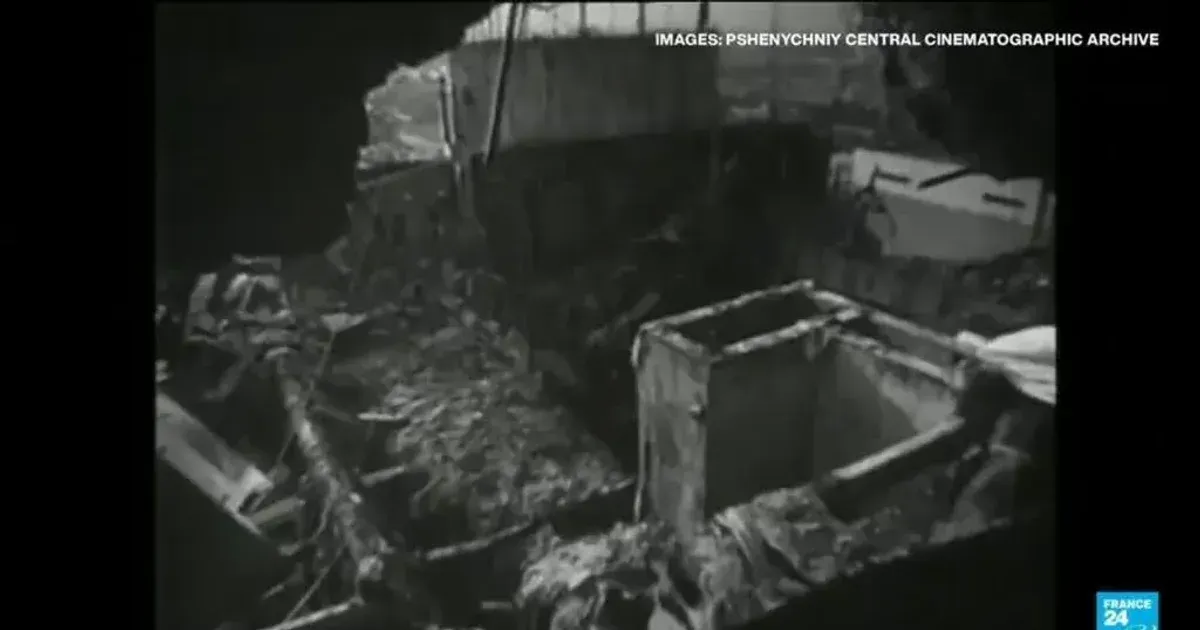
Volodymyr Zelenskyy used the Chernobyl anniversary to tie historical nuclear trauma to Russia’s current military conduct. His accusation of nuclear terror turns a memorial date into a wartime warning. The setting matters because Chernobyl remains one of Europe’s deepest symbols of technological catastrophe and state secrecy. Ukraine is using that memory to argue that nuclear sites cannot be treated as battlefield leverage. President Volodymyr Zelenskyy marked the 40th anniversary of the Chernobyl disaster on April 26, 2026, by accusing the Kremlin of using nuclear sites as leverage in the ongoing war. Speaking near the 30-kilometer exclusion zone, the Ukrainian leader described recent drone activity near the plant as a form of nuclear terrorism that threatens the entire European continent. Moscow has consistently denied these allegations, but Ukrainian intelligence reports suggest Russian forces continue to use the proximity of the decommissioned site for military positioning.
Recent surveillance data indicates unmanned aerial vehicles have traversed the airspace above the containment sarcophagus on multiple occasions during the previous week. This pattern of behavior has drawn condemnation from officials in Kyiv who fear a man-made catastrophe could eclipse the 1986 explosion.
Survivors Return to the Chernobyl Exclusion Zone
Survivors of the initial cleanup effort returned to the site today to honor those who perished during the containment operations four decades ago. These individuals, known as liquidators, played a critical role in preventing the spread of radioactive material across the Soviet Union and Europe. About 600,000 soldiers, firefighters, engineers, miners, and medics worked in high-radiation environments to seal the damaged Reactor 4. Many of these veterans now live with chronic health conditions resulting from their service in the exclusion zone. They gathered at the memorial in Slavutych, the city built specifically to house workers displaced by the 1986 accident.
Firefighters who were among the first on the scene faced levels of radiation that proved fatal within days or weeks. Engineers designed the initial steel and concrete sarcophagus under extreme time pressure to halt the release of radioactive isotopes. Miners dug tunnels beneath the reactor to install cooling systems, working in tunnels where temperatures exceeded 100 degrees Fahrenheit. Medics treated thousands of patients while lacking the necessary protective equipment to ensure their own safety.
Records from the era show that the human cost of the cleanup was enormous, with many liquidators dying young from cancers and heart disease related to their exposure. Today, the surviving members of this group are witnessing another conflict unfolding on the same soil they once fought to save from an invisible enemy.
Russian Invasion Threatens Nuclear Plant Safety
Security concerns at the plant have intensified as the Russian invasion enters its fourth year. Ukrainian military officials reported that Russian drones were intercepted overnight, with several flight paths crossing dangerously close to the Chernobyl facility. Zelenskyy stated that the world is once again close to a disaster because of the Kremlin's disregard for international nuclear safety standards. Military analysts suggest that the exclusion zone, with its dense forests and abandoned structures, provides a tactical screen for moving equipment and personnel. The International Atomic Energy Agency has repeatedly called for a demilitarized zone around all nuclear sites in the region, yet such agreements have failed to materialize.
Drones are not the only threat to the stability of the site's infrastructure. While the New Safe Confinement structure completed in 2016 is designed to last a century, it requires constant maintenance and a stable power supply to manage internal ventilation and humidity. Fluctuations in the regional power grid caused by ongoing missile strikes have forced the plant to rely on backup diesel generators several times over the last year. Experts at the site warn that prolonged power outages could compromise the monitoring systems that track the movement of radioactive dust within the containment area. Despite these risks, the site remains a focal point of geopolitical tension as both sides trade accusations of reckless military behavior.
Civilian Displacement and the Exclusion Zone War
Displacement has become a recurring theme for residents living near the radioactive borderlands. Many Ukrainians who fled the initial invasion in 2022 sought refuge in villages within or near the exclusion zone, believing the radiation risk was preferable to the threat of direct shelling. One woman, who originally left her home in eastern Ukraine to settle in the zone, expressed a sentiment shared by many locals.
"We overcame radiation. We will overcome Russia, too," she said.
People living in these communities face the dual burden of monitoring Geiger counters while listening for air raid sirens. Because the zone is sparsely populated, it has become a corridor for specialized military operations and reconnaissance missions. Local authorities have struggled to provide basic services to the returnees and refugees who refuse to leave the contaminated region. Some elderly residents, known as "samosely," never left the zone after the 1986 disaster, choosing to farm the irradiated soil rather than live in state-provided housing. They now watch as a new generation of soldiers moves through the Red Forest, kicking up radioactive silt that had been settled for decades.
Military Escalation Near the Disaster Site
Ukrainian drones reportedly struck a Russian fertilizer plant across the border recently, causing a pipeline leak that added to the regional environmental anxiety. This strike followed an enormous wave of Russian drone attacks aimed at Ukrainian infrastructure. Moscow officials claimed the fertilizer plant attack was an act of aggression that targeted civilian economic interests. Simultaneously, the Ukrainian government argues that its strikes are necessary to degrade the logistics networks supporting the Russian frontline. The proximity of such industrial targets to the Chernobyl region creates a volatile environment where any miscalculation could lead to long-term ecological damage.
International observers have noted that the 40th anniversary is a reminder of how quickly localized failures can become global crises. The 1986 disaster spread radioactive iodine and caesium as far as Scandinavia and the United Kingdom. Current atmospheric models suggest that a fire in the exclusion zone forests, potentially sparked by artillery or drone crashes, could once again carry radioactive particles across international borders. Efforts to manage the forest undergrowth have been hampered by landmines and unexploded ordnance scattered throughout the zone during the initial 2022 Russian occupation. Safety protocols that were once routine are now nearly impossible to implement under the current security conditions.
Chernobyl Is Becoming a Weapon in a Nuclear Extortion Strategy
Nuclear safety is a fiction maintained by the collective hope of the uninvolved. The 40th anniversary of Chernobyl is not a milestone of recovery but evidence of the frailty of international containment regimes. For four decades, the world treated the exclusion zone as a static museum of Soviet failure, ignoring the reality that such sites stay active and dangerous long after the headlines fade. The current weaponization of the Chernobyl facility by the Kremlin exposes the impotence of the International Atomic Energy Agency and other global watchdogs. They possess the charts and the sensors but lack the teeth to enforce a genuine security perimeter around the planet's most sensitive ruins.
Zelenskyy’s accusations of nuclear terrorism are more than rhetorical flourishes for a war-weary audience. They highlight a shift in modern warfare where the threat of environmental collapse is used as a tactical shield. By flying drones over the sarcophagus, Russia gambles that Ukraine will not risk a kinetic interception that might damage the structure. This is high-stakes extortion. The global community's refusal to impose a non-negotiable exclusion zone for combat operations near nuclear facilities is an invitation for future aggressors to use radiation as a deterrent. What is unfolding is the slow-motion erosion of the thin barrier between civilian safety and atomic chaos. Disaster is inevitable.