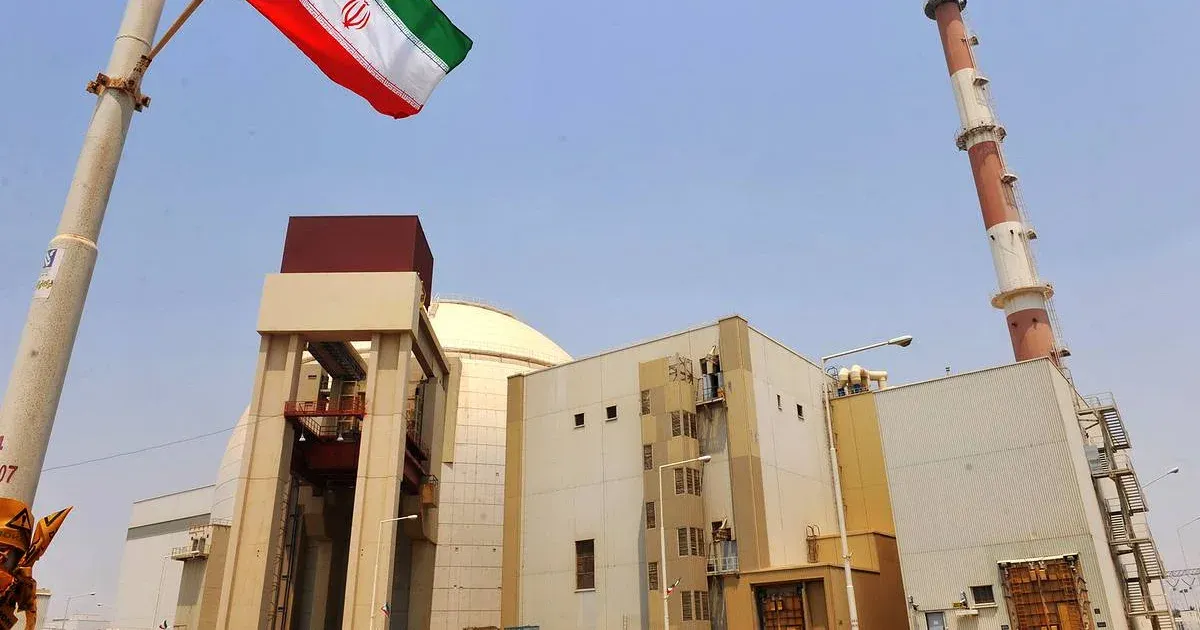
Iran has reported another strike near the Bushehr nuclear facility, raising the risk around a reactor that has become a repeated danger zone. Tehran notified the International Atomic Energy Agency that projectiles had landed near the plant perimeter for the third time in recent weeks. The IAEA reported no reactor damage or radiation release, but the pattern has intensified safety concerns.
The immediate distinction matters. A strike near a nuclear plant is not the same as a strike on the reactor itself. But repeated military activity close to a nuclear facility increases the chance of damage to support systems, power lines, access roads, emergency equipment or personnel routines. Nuclear safety depends on more than the containment dome. It depends on a stable operating environment.
Iran says the strikes violate international law. Western governments have not publicly accepted Tehran's version of responsibility. That leaves the story inside the fog of war, where the safest reporting posture is to separate confirmed safety status from competing claims about who fired and why.
IAEA Monitors Security at Bushehr
The IAEA's central message was that no damage to the reactor and no radiation release had been reported. That is the most important fact for public safety. It does not end the concern. International inspectors and nuclear engineers still have to assess whether repeated nearby blasts could affect auxiliary systems or increase stress on plant workers.
No damage to the reactor or radiation release was reported, according to the International Atomic Energy Agency.
Bushehr's safety systems are built with redundancy, but redundancy is not a license for military risk-taking. Backup power, cooling support, communications, security access and emergency response routes all matter during a crisis. Even if the reactor remains intact, damage around the perimeter can complicate the work of keeping the site stable.
The IAEA's role is especially difficult in an active conflict environment. Inspectors depend on access, reliable data and cooperation from the host state. Movement restrictions during military activity can delay verification. That creates a dangerous information gap: the world may know that no radiation release has been reported, while still lacking a full picture of external damage and operational stress.
Iran Alleges U.S. and Israeli Involvement
Officials from Iran's Atomic Energy Organization alleged that the latest strike involved Israeli and American forces. Tehran has not publicly provided evidence strong enough to independently verify the full claim. That does not make the allegation irrelevant, but it does mean it should be reported as an allegation rather than established fact.
Iranian officials insist Bushehr is a civilian power facility and argue that attacks near it endanger regional energy stability. The plant contributes to electricity supply in southern Iran, and any prolonged shutdown could create wider pressure on hospitals, water systems and industry. Western analysts have long scrutinized Iran's nuclear infrastructure more broadly, but Bushehr's civilian power role makes nearby military action especially sensitive.
Washington and Jerusalem have not offered a detailed public account that resolves the tactical picture. That silence leaves room for competing narratives. Iran presents the strikes as unlawful aggression near a civilian nuclear site. Its adversaries frame the wider conflict around security threats and deterrence. The nuclear plant sits in the middle of that argument, where miscalculation has consequences beyond ordinary battlefield damage.
Russia Raises Nuclear-Safety Claims at the UN
Russian diplomats used the United Nations to warn about the danger of military activity near nuclear infrastructure. Moscow also cited civilian damage in areas around the strikes, though those claims require independent verification. Russia's position is politically convenient, but the safety principle is not wrong: nuclear plants should not become pressure points in military campaigns.
International law has long treated attacks near installations containing dangerous forces as especially grave because the consequences can spread far beyond the immediate target. Nuclear facilities are not ordinary infrastructure. A serious accident can cross borders, poison land and outlast the conflict that caused it. That is why even opportunistic warnings deserve attention when they concern reactor safety.
Russia's call for stronger protection around nuclear plants will face predictable deadlock in the Security Council. States that might support the principle in theory resist rules that could limit their own military options in practice. That is the weakness of the current system. Everyone claims to respect nuclear safety until the facility belongs to an adversary.
Experts also warn that operator fatigue and stress can become safety risks during repeated alarms. Plants rely on trained people making disciplined decisions under pressure. If workers are sheltering, rotating through crisis shifts or responding to blasts nearby, the risk environment changes even without direct reactor damage. Human reliability is part of nuclear safety.
Nuclear Risk Without Margin
Expectations of nuclear restraint are becoming a fantasy in a region where the threshold for acceptable risk has shifted from prevention to mere containment. Repeated strikes near Bushehr show a terrifying confidence among military planners that they can operate at the edge of a nuclear facility without triggering a disaster. History suggests that this kind of confidence is exactly how catastrophe begins. The issue is no longer abstract energy sovereignty. It is a high-stakes contest where one error could make the original military objective irrelevant.
The IAEA's report of no damage is a relief, not a guarantee. If the United States and Israel are indeed connected to these strikes, they are gambling with a fallout risk that respects no borders and honors no alliances. Russia's warnings may be dressed in opportunism, but they still point to a truth the West should not dismiss: a nuclear reactor is not just another strategic asset. It is a fixed site with global consequences. Continuing kinetic pressure around Bushehr suggests that the international community has forgotten the lessons it claims to remember. One miscalculation could turn a tactical strike into a regional disaster.