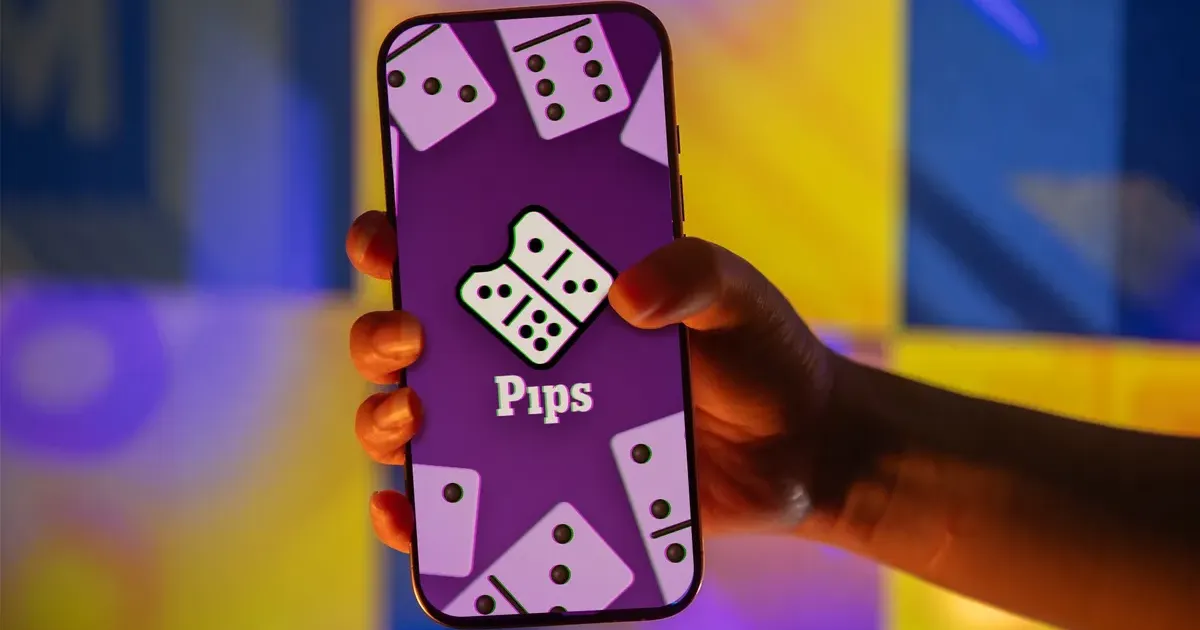
The New York Times digital gaming community faced a specific point of friction as the platform updated its latest complex puzzle rotations. The April 1, 2026, boards placed new pressure on players. Since the launch of Pips in August 2025, the daily logic game has developed a reputation for punishing players who fail to grasp its color-coded spatial constraints. Unlike traditional word games that rely on vocabulary, this dominoes variant utilizes mathematical conditions that dictate exactly where tiles can reside on the board. The current interface provides little relief for struggling users, offering only the option to reveal the entire solution and forfeit progress. This binary choice between total failure and unearned victory has led to a surge in demand for piecemeal guidance.
Logic dictates that players must manage 16 words or tiles with precision to maintain their daily streaks. Within the Pips interface, the tiles connect vertically or horizontally, much like their physical counterparts, but the similarities end there. Colored spaces impose rigid rules on every pip that enters their boundaries. If a space is marked with a single number, all domino halves within that zone must sum exactly to that value. Some segments might require equality, meaning every half-tile in the region must display the same number of pips, while other zones forbid any repeating values among the tiles.
The complexity increases when tiles straddle the line between a coded zone and a neutral area, forcing a split in logic between the two halves.
Pips Mechanics Challenge Traditional Domino Strategy
Spatial reasoning becomes the primary tool for success in the advanced levels of the game. Instead of simply matching numbers like in a standard game of dominoes, players must calculate inequalities across multiple tiles simultaneously. A Less Than zone requires every domino half to remain below a specific numerical threshold, while Greater Than zones demand the opposite. Neutral areas exist without conditions, allowing for flexible placement that often acts as a bridge between two high-pressure coded zones. Because the game does not provide a hint system for single tiles, players are frequently trapped in a state of near-completion with no path forward.
Reliable reports from the gaming community indicate that the difficulty curve on April 1, 2026, has reached a new peak. The configuration for the expert level involves overlapping Not Equal and Summation zones that leave only one possible mathematical arrangement. Experts suggest beginning with the static numbers before attempting to fill the neutral spaces. Many users have expressed frustration that the only official help is a full reveal.
Mashable reported that stuck players in Pips are offered a full puzzle reveal rather than a smaller hint, forcing them to choose between moving on and preserving the challenge.
Progress remains elusive for those who ignore the color coding of the grid. If a player places a tile in an Equal zone that does not match its neighbor, the board state invalidates the entire sequence. This design ensures that every move has a wider effect on the surrounding tiles. Success depends on isolating the most restrictive zones first, usually the Summation spaces, and working outward toward the more flexible Greater Than regions. Our recent analysis, New York Times Expands Digital Games with Pips and Sports, details the broader strategy behind these daily titles.
Sports Edition Connections Focus on Skateboarding Culture
Skateboarders and athletes find themselves at the center of the latest Connections: Sports Edition puzzle released on April 1, 2026. This specific iteration of the word-grouping game is produced in direct association with The Athletic, a sports journalism property under the wider media company umbrella. The core mechanic involves identifying common threads between 16 distinct terms. While the classic version of the game spans a wide array of topics, this variant focuses entirely on the lexicon of professional and amateur athletics. Today, the focus shifts heavily toward the subculture of skateboarding, requiring players to identify niche equipment and maneuvers.
Players have a maximum of four mistakes before the game ends their session for the day. Each grouping consists of four words that share a hidden link, and these sets are color-coded by difficulty level. Yellow represents the most straightforward connection, followed by green, blue, and the notoriously difficult purple category. On April 1, 2026, the words appear designed to mislead through overlapping definitions. For instance, several terms could refer to both skateboarding and surfing, but only one configuration correctly clears the board. Users can shuffle the grid to view the words from different perspectives, a tactic that often reveals patterns missed in the initial layout.
The Athletic Integration Drives Puzzle Vertical Growth
Data from recent quarters shows that the partnership between the gaming division and the sports desk has increased user retention. By tailoring puzzles to specific fan bases, the publication has successfully cross-pollinated its reader demographics. The skateboarding theme featured on April 1, 2026, highlights this strategy by speaking directly to a younger, more active audience. The specific demographic often engages with digital media differently than the traditional crossword-solving cohort, preferring quick, high-stakes puzzles that can be finished during short breaks. The integration allows for a constant stream of fresh, niche content that keeps the platform relevant in a crowded mobile app market.
Instead of a generic sports category, the game frequently dives deep into the history and terminology of specific disciplines. Skateboarders might recognize technical terms like trucks, bearings, or specific trick names that would baffle a casual fan of football or baseball. The depth is what defines the Sports Edition and separates it from its parent game. The difficulty lies in that multiple words seem to fit together even when they do not belong in the same set. There is only one correct path to a perfect score, and the game rewards those with deep topical knowledge over those who guess based on surface-level associations.
Gaming psychology is central to the daily puzzle model because streaks, limited mistakes, and social sharing all push users to return.
Subscription models now rely heavily on these daily habit-forming activities. The daily reset at midnight creates a recurring appointment for millions of users worldwide. By offering a variety of games like Wordle, Pips, and Connections, the company ensures that if a player finds one puzzle too easy or too frustrating, they have multiple alternatives within the same ecosystem. The April 1, 2026, updates show no sign of the company slowing its expansion into new genres. Pips, in particular, is a move toward more abstract, math-heavy challenges that contrast with the linguistic focus of the earlier hits. The diversification protects the platform from fatigue by appealing to different cognitive strengths.
Success in these games is often a matter of pattern recognition and emotional control. The limit on mistakes in Connections forces a conservative approach, where players often hesitate to submit a guess until they are certain. By contrast, Pips allows for more experimentation on the board, but the lack of a mid-game hint system creates a different kind of psychological pressure. Many users have developed a ritual around these puzzles, sharing their scores on social media to compete with friends. The social element acts as a powerful marketing tool that requires no additional investment from the developer. Games are no longer just a side feature; they are a primary driver of digital engagement.
Puzzle Growth and Subscription Strategy
The consolidation of digital puzzles under the banner of a single media titan is a calculated move to monopolize the modern attention economy. By integrating The Athletic into the gaming experience, the organization is not just entertaining readers; it is building a walled garden where news and leisure are indistinguishable. The strategy is transparent. When a player engages with a skateboarding-themed puzzle, they are being nudged toward the sports reporting that lives behind the same paywall. The gamification of information is the new standard for survival in a dying industry.