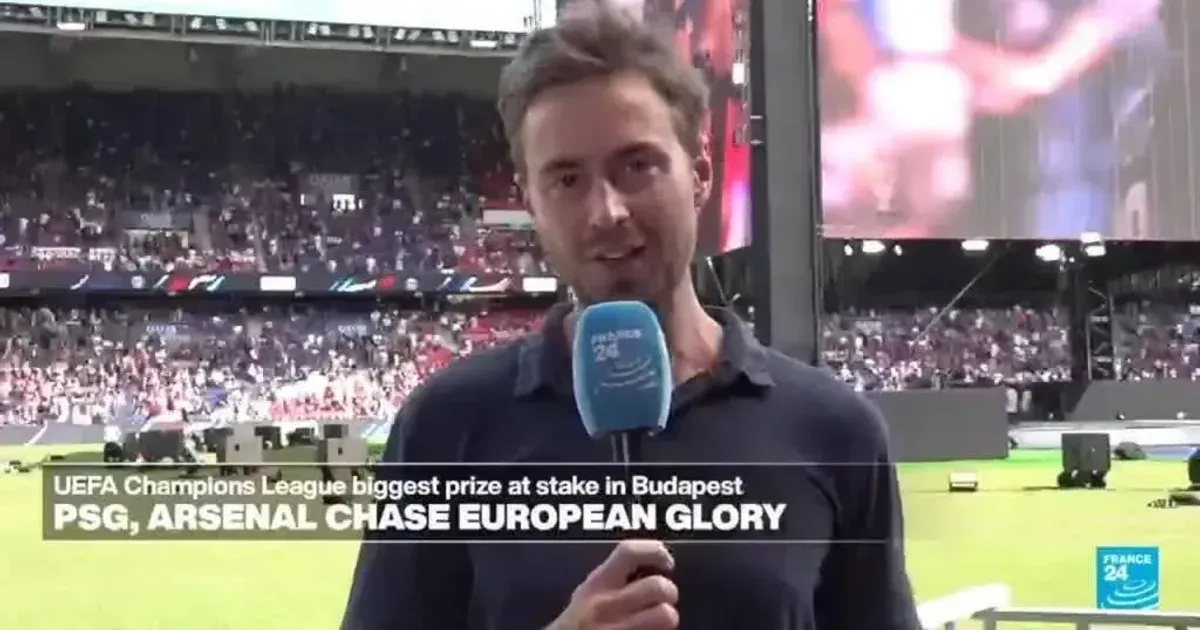
Arsenal and Paris Saint-Germain supporters filled Budapest before a Champions League final that carries different kinds of pressure for both clubs. The final gives Arsenal a chance to turn a strong European run into the title that has eluded the club. Facing PSG also makes the match a test of whether recent investment can survive the highest-pressure stage. The match is set for May 30, 2026, at the Puskas Arena, where Arsenal is chasing its first title in Europe's top club competition and PSG is trying to defend the trophy it won last season. UEFA officials and local authorities prepared for a full-capacity crowd, with fan zones and transport routes stretched by the arrival of thousands of English and French supporters.
The setting gives the final a neutral stage, but the stakes are deeply tied to club identity. Arsenal arrives as the English champion after ending a 22-year Premier League wait, while PSG enters as the defending European champion and the dominant force in French football. Kickoff is scheduled for 18:00 local time in Budapest, creating a late-afternoon showcase for British viewers and an early-evening event across much of continental Europe.
Arsenal Tries to Finish Its Rebuild
Arsenal's route to the final has turned a long-term rebuild into a chance for historic completion. The club has won European trophies before, but it has never lifted the Champions League. That distinction matters to supporters who still remember the 2006 final defeat and the years when Arsenal's domestic consistency did not translate into continental authority. A win in Budapest would move Mikel Arteta's team from promising project to finished champion.
Arteta's selection points toward a side built to press, control transitions, and attack PSG's back line before the French champion can settle into possession. Kai Havertz is expected to play a central role in connecting midfield pressure with penalty-area movement, while Mosquera's inclusion gives Arsenal another physical presence in defensive duels. The balance is delicate because Arsenal cannot afford to chase the game recklessly against a PSG side comfortable breaking into open space.
The emotional context is just as important as the tactics. Arsenal's Premier League title has already changed the season, but the Champions League final gives the club a rarer opportunity to reshape its European reputation. For a team that has spent years being judged through near misses, second chances, and incomplete cycles, this is the match that can close the argument.
PSG Seeks a Second Straight Crown
Paris Saint-Germain approaches the final with the confidence of a champion that has already solved the hardest problem once. Retaining the Champions League is still rare in the modern era, and PSG knows a second consecutive triumph would make last season's breakthrough look like the start of a sustained European run rather than a single peak. Luis Enrique's team has combined technical control with a sharper defensive structure through the knockout rounds.
"PSG has high hopes of winning the prestigious title for the second year in a row, while the Gunners are hoping to lift the trophy for the first time," France 24 journalist James Vasina reported from Budapest.
Luis Enrique's midfield choice is one of the clearest tactical signals before kickoff. Fabian Ruiz gives PSG a calmer possession option than Warren Zaire-Emery, suggesting that the French champion wants to slow Arsenal's pressing rhythm and manage the center of the pitch. If Ruiz can receive under pressure and turn play forward, PSG can force Arsenal's fullbacks and center backs into uncomfortable recovery runs.
The defending champion also carries its own burden. PSG spent years being judged by Champions League failure before finally winning the competition, and a return to the final immediately raises the standard. Anything less than a composed performance would invite questions about whether last season's success has truly changed the club's European standing. That pressure is different from Arsenal's, but it is just as sharp.
Budapest Final Turns on Midfield Control
Selection choices dominated the pre-match conversation among reporters and supporters around the Danube. French fans gathered in large numbers through the day, while Arsenal supporters pushed their own songs through the city center and stadium approaches. Local officials deployed additional security and transport staff to manage supporters with and without tickets, but the mood around the fan areas was described as loud rather than disorderly.
The match is likely to turn on midfield control and the first clean chances created after turnovers. Arsenal will try to make the final fast, especially in the opening stages, because its energy and domestic momentum are strongest when opponents are denied time on the ball. PSG will try to make the same spaces feel smaller by keeping possession longer, drawing Arsenal forward, and releasing runners once the press is broken.
For Arsenal, victory would complete a season that already carries domestic significance and would give the club the one European prize it has never won. For PSG, victory would confirm that the club has moved from chasing the Champions League to defending it. That contrast gives the final its edge: one team is trying to reach a summit for the first time, while the other is trying to prove it can stay there. The matchup also gives Arsenal a chance to prove that tactical control can hold against a PSG side built to punish even brief defensive lapses. That kind of final often turns on small details rather than long spells of dominance.