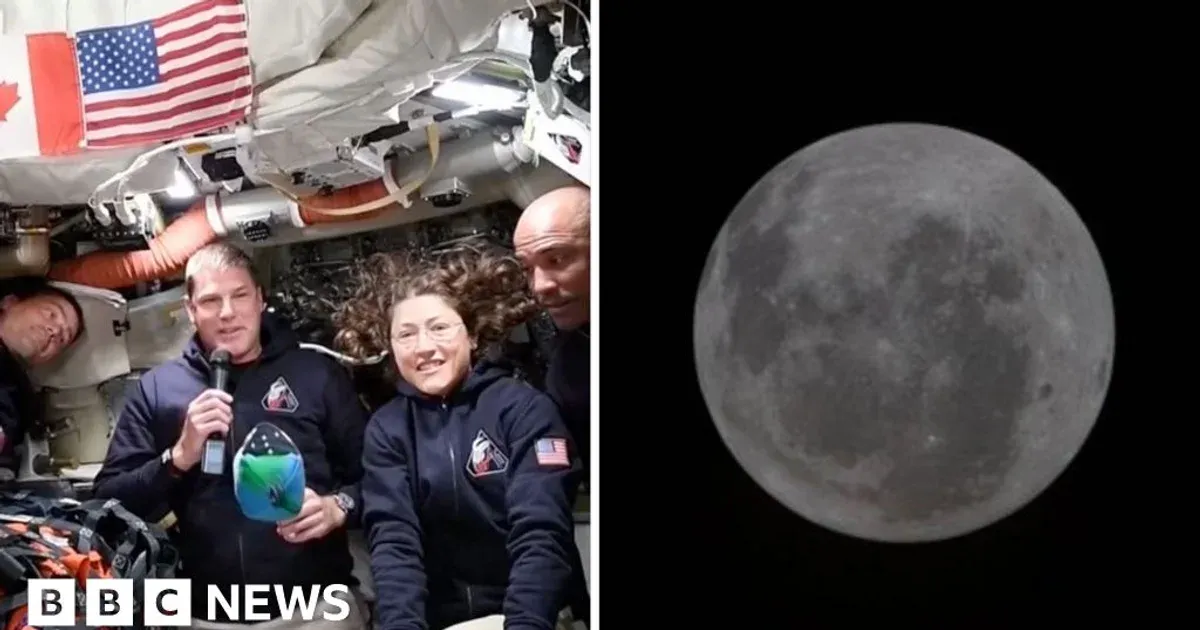
NASA astronauts aboard the Orion capsule entered their third day of deep space operations while navigating the gravitational influences of the lunar far side. This orbital trajectory represents the furthest distance humans have traveled from their home planet since the conclusion of the Apollo program. By April 5, 2026, the far-side transit had become both an engineering check and a public proof point for Artemis. Crew members initiated high-gain antenna arrays to maintain contact with the Deep Space Network as they moved behind the lunar disk. Radio signals required several seconds to travel the vast distance between the spacecraft and mission control in Houston. Data received during the transit confirmed all life support systems remained within operational parameters.
Deep Space Life Inside Orion
Life inside the spacecraft dictates a rigorous schedule of maintenance and scientific observation. Astronauts described their daily routines during an interview, highlighting the sensory experiences of living in a 330-cubic-foot pressurized volume. Humidity control systems hum constantly to scrub carbon dioxide and manage moisture levels. Exercise remains a priority to reduce the effects of microgravity on bone density and muscle mass. Food preparation involves rehydrating vacuum-sealed pouches using a dedicated water dispenser connected to the potable supply tanks.
Orion carries four individuals through a vacuum that provides no natural protection from solar radiation. Internal shielding and specialized polyethylene layers provide a sanctuary against cosmic rays. Crew members monitor radiation dosimeters several times per day to ensure cumulative exposure stays below safety thresholds. Sleep cycles follow a coordinated schedule to ensure at least one person monitors the flight deck at all times. Personal hygiene relies on specialized wipes and rinseless shampoo because water behaves as floating spheres in the weightless environment.
Emotional responses to the mission vary among the crew members. Participants told Costello that the sensation of speed is nearly impossible to perceive without a fixed point of reference. Only the changing phase of the moon and the shrinking diameter of the planet behind them provide a sense of movement. Instrument panels provide the only confirmation of their velocity, which exceeds several thousand miles per hour. Silence often fills the cabin during periods of intense observation of the lunar terrain.
Visual Records of the Lunar Far Side
Visibility of the lunar far side provides a perspective that humans have not witnessed firsthand in over fifty years. Artemis II crew members described the geography as something they had never seen before during a briefing. Unlike the near side, which features large volcanic plains called maria, the far side is dominated by impact craters and rugged highlands. The lack of atmospheric interference allows for crystalline clarity when viewing the lunar horizon. Sunlight reflects off the regolith with an intensity that requires specialized visors for direct observation. The crew continues to conduct extensive performance tests on critical life support systems during their deep space journey.
Orion continues to track along its planned free-return trajectory. Gravity from the moon pulls the spacecraft into a wide loop, using the celestial body as a natural anchor to swing the capsule back toward its home planet. Maintaining this path ensures that even a total engine failure would result in a safe return to the atmosphere. Navigation sensors use star trackers to verify the orientation of the vehicle relative to the sun and moon. Engineers monitor these systems from Earth to ensure no deviations occur during the critical lunar transit phase.
“You're on a spaceship called Earth,” the crew said during a broadcast from deep space.
Astronauts noted that the Earth appears as a singular entity without the lines or divisions found on maps. Clouds swirl over oceans and continents in a continuous cycle of weather and light. Seeing the entire planet at once creates a sense of interconnectedness that the crew described as the deepest element of the mission. They urged listeners to consider the planet as a shared vessel that requires careful stewardship and cooperation. Voice transmissions during this segment were clear, despite the distance of over 200,000 miles.
Technical Progress Toward Lunar Orbit Exit
Systems monitoring occupies the majority of the crew's operational hours. The European Service Module provides the necessary power through its four solar array wings, which track the sun to maximize energy collection. Batteries remain fully charged to support the spacecraft during the periods when it enters the shadow of the moon or our home planet. Thermal control loops circulate coolant to prevent the avionics from overheating while simultaneously keeping the cabin at a comfortable 72 degrees Fahrenheit. These systems have performed flawlessly since launch.
Artemis Far Side Pass Builds Mission Confidence
The far-side pass matters because Artemis II is testing confidence as much as hardware. Each successful communication, navigation and life-support check strengthens NASA's case for the next crewed lunar step.