ISS Power Work Moves Ahead
March 18 features a critical expansion of the International Space Station power grid when astronauts Jessica Meir and Chris Williams exit the Quest airlock. Their objective involves preparing the 2A power channel for the installation of International Space Station Roll-Out Solar Arrays, commonly referred to as IROSA. On March 13, 2026, NASA briefings tied upcoming station maintenance to a broader week of aerospace testing.
Meir enters this mission as an experienced spacewalker with three previous excursions, while Williams makes his debut in the vacuum of space. Operations integration manager Bill Spetch and flight directors Diana Trujillo and Ronak Dave will oversee the six and a half hour procedure from the Johnson Space Center in Houston. Installation of these arrays constitutes a necessary technical response to the natural degradation of the station's original power systems.
Solar panels lose efficiency over decades because of constant exposure to atomic oxygen and micro-meteoroid impacts. IROSA technology provides a compact solution that unrolls like a fabric carpet, sharply boosting the station's total energy output.
This specific task requires Meir and Williams to traverse the external truss of the station to install mounting brackets and cabling. NASA estimates the new arrays will increase total available power by approximately 30 percent. Power remains the lifeblood of the orbiting laboratory.
X-59 Tests Supersonic Rules
Flight controllers at the Johnson Space Center have scheduled a news conference for Monday, March 16, to preview the specific maneuvers required for Spacewalks 94 and 95. Journalists from around the world will gather to discuss the risks associated with external maintenance and the logistics of the IROSA deployment. Live coverage will begin at 6:30 a.m. across multiple digital platforms including NASA+ and YouTube.
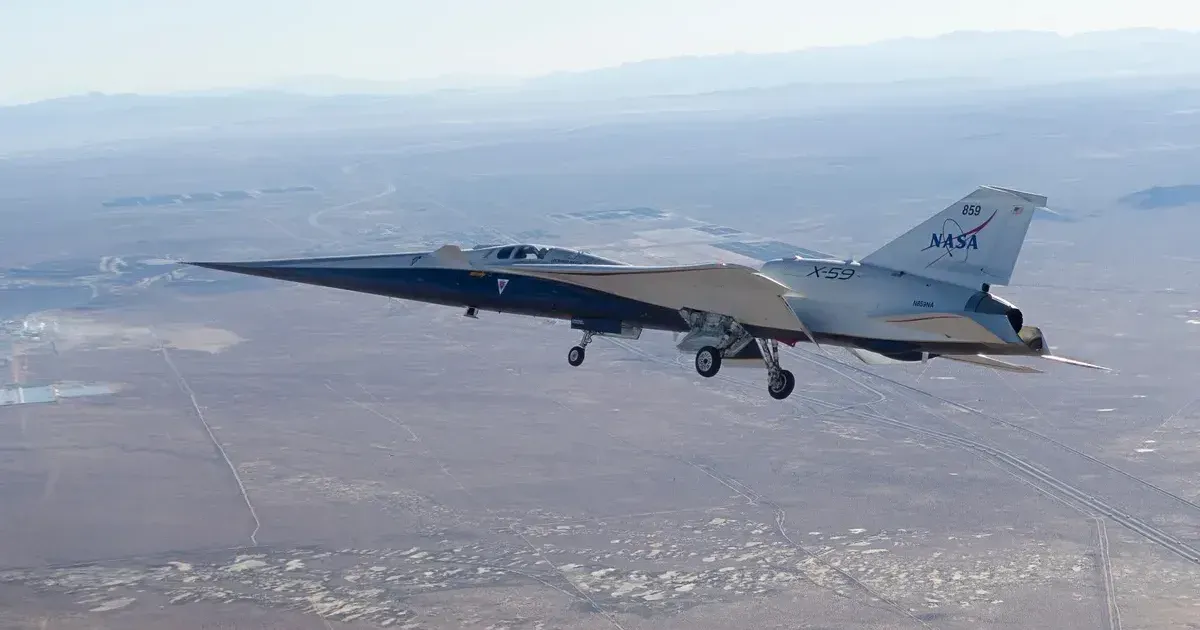
Will the team encounter any hardware resistance during the bracket installation on the 2A power channel? California skies recently hosted the first flight of the X-59 quiet supersonic research aircraft, moving the Quesst mission into a new phase of data collection.
Developed at Lockheed Martin’s Skunk Works facility in Palmdale, the aircraft seeks to solve a noise problem that has stifled commercial aviation for half a century. Federal authorities prohibited civilian supersonic flight over land in 1973. Sonic booms proved too disruptive for populated areas, leading to a permanent ban that effectively ended the era of high-speed commercial travel.
NASA Links Spacewalks to Aviation Research
This shift in regulatory framework would allow manufacturers like Boeing and Gulfstream to compete in a dormant market if the X-59 proves successful. Modern engineering allowed the LBFD project to design a hull that shapes shockwaves rather than allowing them to merge into a singular blast.
NASA researchers aim to replace the traditional boom with a soft heartbeat sound, measuring roughly 75 perceived loudness decibels. Phase 1 of the Quesst mission focused on the initial flight envelope expansion and airworthiness at the Armstrong Flight Research Center. Data gathered during these flights will eventually be presented to international regulators to establish new noise standards.
How will terrestrial communities react when the X-59 begins its planned low-noise flyovers in the coming years? Technical specifications for the X-59 highlight its unique silhouette, featuring a long, needle-like nose that prevents shockwaves from coalescing.
General Electric provided a variant of the F414 engine, similar to those found in F/A-18 fighter jets, to power the experimental craft. Mounting the engine above the fuselage further isolates the noise from the ground. Lockheed Martin engineers claim this configuration is essential for achieving the quiet supersonic signature required by the FAA. Each test flight generates terabytes of acoustic data for analysis. Beyond the X-59, the Integrated Aviation Systems Program conducts research to mature technologies for future subsonic and electrified aircraft. One recent demonstration involved the Crossflow Attenuated Natural Laminar Flow wing, which flew for 75 minutes mounted beneath a NASA F-15 research jet. Researchers confirmed the aircraft could maneuver safely with the three-foot-tall test article attached. This test article confirms that laminar flow can be maintained even under high-stress flight conditions. Maintaining smooth airflow over a wing surface reduces drag and sharply lowers fuel consumption for commercial carriers. Efficiency dictates the survival of commercial aerospace. Economic implications of these aviation projects extend to the broader U.S. aerospace industry. Establishing new standards for supersonic noise would allow American companies to lead a global market for high-speed travel. But the transition from experimental flight to commercial production involves years of certification and safety testing. IASP projects like the Electrified Powertrain Flight Demonstration also aim to reduce the carbon footprint of future regional travel. Current projections suggest that integrating these technologies could save airlines billions in annual fuel costs. Private sector interest in NASA's research remains driven by clear cost and efficiency gains. Public engagement for these missions remains high as NASA utilizes live streaming and social media to broadcast its milestones. Agency leadership emphasizes that these programs are part of a multi-phase effort to transition mature technologies into the hands of industry partners. Live coverage of Spacewalk 94 will feature real-time commentary from astronauts on the ground to explain the technical nuances of the IROSA installation. Still, the primary focus remains on the safety of Meir and Williams as they work in the high-radiation environment outside the station.