Federal Reserve Bank of Richmond President Tom Barkin cautioned on March 27, 2026, that geopolitical tensions may disrupt the fragile downward path of consumer prices. Central bank officials have monitored price data with increasing scrutiny as international conflict enters a more volatile phase. Tom Barkin noted that the US-Israel war in Iran creates a dual threat by inflating costs while simultaneously clouding the broader economic outlook. Economic forecasts previously assumed a steady decline in core price indices through the end of the fiscal year.
Those assumptions now face rigorous testing by external shocks that lie outside the control of domestic monetary policy. Barkin emphasized that the current environment leaves little room for error given the unstable state of the national workforce.
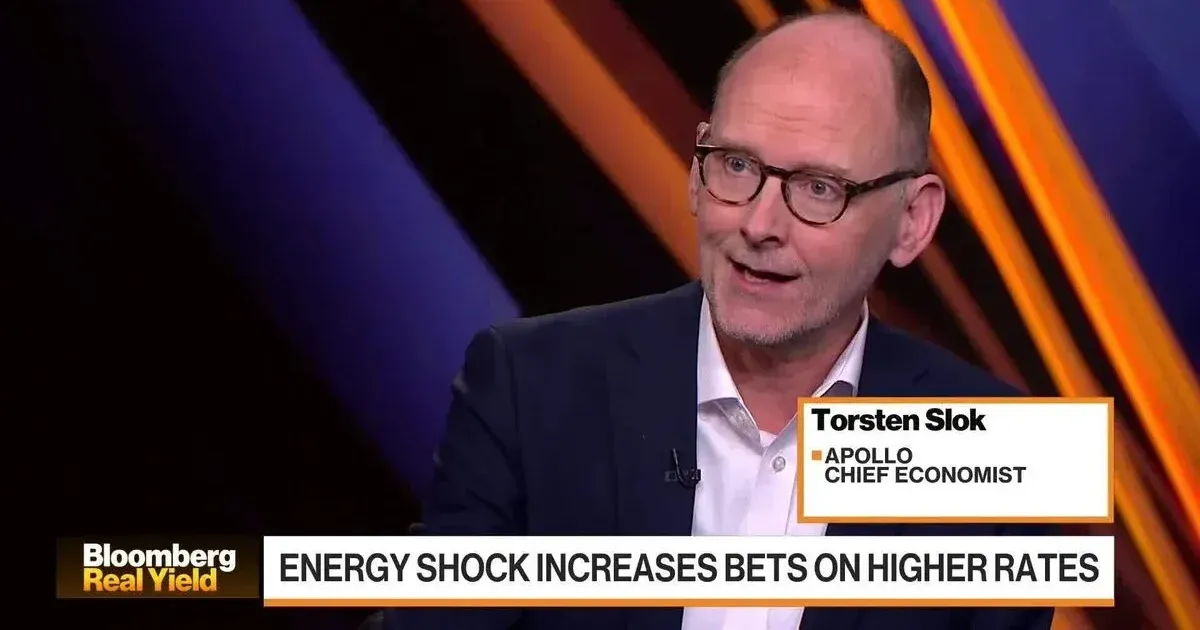
Meanwhile, Apollo Chief Economist Torsten Slok noted that while energy shocks strain household budgets, long-term expectations for price stability have remained surprisingly anchored. Data from Apollo suggests that consumers have not yet capitulated to a narrative of permanent high inflation despite rising costs at the pump. Slok observed that the impact of the energy shock on consumers often manifests in reduced discretionary spending rather than a shift in long-term financial planning. Households are absorbing higher costs by tightening belts in other sectors. This pattern maintains a level of psychological stability that prevents a wage-price spiral from taking root. Slok highlighted that the labor market is still a primary driver of these expectations.
Richmond Fed President Analyzes Geopolitical Shocks
For instance, Tom Barkin pointed to the specific risk of the Iran conflict adding layers of pressure to an already strained global supply chain. Energy markets reacted to the news of intensified hostilities with immediate price adjustments. Richmond Fed analysts suggest that every sustained ten-dollar increase in oil prices adds approximately 0.2 percentage points to headline inflation over a twelve-month period. Tom Barkin expressed concern that these external factors could reverse the progress made by the Federal Reserve over the last eighteen months. Policy shifts often take quarters to manifest in the real economy. Barkin believes the timing of this conflict is particularly disadvantageous for the committee.
Actually, the Federal Reserve relies on a cooling labor market to balance out the remaining heat in the service sector. Barkin indicated that the labor market is currently fragile. Recent data shows a slowdown in hiring across the manufacturing and technology sectors. Small businesses report increased difficulty in passing higher costs on to consumers without losing market share. These businesses are now caught between rising input costs and a consumer base that is increasingly price-sensitive. Barkin argued that a stalling of inflation progress would force the Federal Reserve to maintain higher interest rates for a longer duration than many market participants currently anticipate.
The US-Israel war in Iran threatens to add to already elevated inflationary pressures and clouds the economic outlook at a time when the labor market is fragile.
Apollo Economist Slok Evaluates Consumer Expectations
According to Torsten Slok, the stability of inflation expectations is a buffer against the worst-case scenarios envisioned by some policy hawks. Consumers appear to view the current energy shock as a temporary phenomenon linked to specific geopolitical events. Slok argued on Bloomberg Real Yield that this distinction is essential for understanding how the Federal Reserve might react. If expectations remain stable, the central bank may have more flexibility to look through short-term price spikes. Apollo research indicates that consumer sentiment is more closely tied to job security than to the daily fluctuations of the Brent crude index. Slok noted that as long as the labor market does not collapse, the economy can weather higher energy costs.
Still, Torsten Slok acknowledged that a prolonged energy shock would eventually erode the savings buffers built up by American households. Lower-income brackets feel the pinch of rising fuel and heating costs with immediate intensity. Apollo tracks these spending shifts in real-time through credit card transaction data and retail foot traffic. Data shows a migration toward discount retailers and a serious drop in luxury travel bookings. These behavioral changes act as a natural brake on the economy. Slok maintains that the current shock is primarily a tax on consumption. Higher energy prices function as a mandatory expenditure that reduces the capital available for other economic activities.
Labor Market Fragility and Central Bank Policy
That said, the Federal Reserve must struggle with the reality that a fragile labor market limits its ability to fight inflation with aggressive rate hikes. If the central bank raises rates too far to combat energy-driven inflation, it risks triggering a deeper recession. Tom Barkin has been vocal about the need for a balanced approach that considers both sides of the dual mandate. Unemployment claims have begun to tick upward in several key districts including Richmond. Regional surveys indicate that CEOs are becoming more cautious about capital expenditures. These leaders cite geopolitical uncertainty as the primary reason for delaying expansion projects. Barkin noted that business investment is a lagging indicator that may show further weakness in the coming months.
On the other side, some analysts at Apollo believe the labor market is more resilient than the headline figures suggest. Slok pointed to the continued demands for healthcare and education professionals as a source of underlying strength. These sectors are less sensitive to interest rate changes or global oil prices. Torsten Slok suggested that the divergence between different sectors of the workforce creates a complicated map for the Federal Reserve to navigate. While construction and manufacturing may be struggling, the service economy continues to provide a baseline of support for consumer spending.
Slok believes this structural diversity prevents a total collapse of the employment landscape. The total number of job openings still exceeds the number of available workers in several metropolitan areas.
Energy Shock Impact on US Inflation Targets
The Federal Reserve remains focused on the elusive two-percent inflation target. Barkin stated that achieving this goal becomes sharply harder when global commodity prices are in flux. The central bank typically prefers to ignore volatile food and energy prices in its core calculations. Yet, when energy prices remain elevated for several months, they inevitably bleed into the cost of transporting goods and providing services. This second-round effect is what concerns Tom Barkin the most. He observed that once businesses incorporate higher transport costs into their permanent pricing structures, inflation becomes much harder to dislodge. The Federal Reserve wants to avoid a scenario where high prices become normalized in the minds of business owners.
Working from that premise, the Federal Reserve is closely watching the Apollo data on consumer behavior. Slok indicated that the velocity of money has slowed slightly as consumers become more cautious. This slowing can help dampen inflationary pressures by reducing the total demands in the economy. And yet, the supply-side shocks from the Middle East act in the opposite direction. The tension between reduced demand and constrained supply creates a period of stagflationary risk. Slok argued that the primary task for the Federal Reserve is to convince the markets that it remains committed to price stability regardless of the geopolitical noise. Torsten Slok noted that credibility is the central bank's most important tool in times of crisis.
But the political pressure on the Federal Reserve is likely to mount if the conflict in Iran persists. High gas prices are historically a major concern for elected officials in Washington. Barkin mentioned that the independence of the central bank is critical during such periods. The committee must make decisions based on economic data rather than political expediency. For one, the upcoming Federal Open Market Committee meeting will likely focus on whether the Iranian conflict has fundamentally changed the neutral rate of interest. Some members may argue for a more restrictive stance to prevent inflation from becoming established. Barkin has not yet committed to a specific path for the next meeting.
So, the standoff between stabilizing expectations and rising physical costs continues to define the 2026 economic outlook. Tom Barkin and his colleagues at the Federal Reserve are forced to wait for more clarity from the global stage. Torsten Slok and the team at Apollo will continue to provide the detailed data necessary to understand consumer reactions. Every new development in the Middle East sends ripples through the bond market and changes the calculus for mortgage rates and business loans. The transition from a period of relative calm to one of heightened geopolitical risk has been swift. Investors are now pricing in a higher probability of a non-linear economic event before the year concludes.
The Elite Tribune Perspective
Does the Federal Reserve actually have the tools to manage a world on fire? Veteran observers of the central bank must find Tom Barkin's recent warnings both predictable and deeply inadequate. For years, the committee has operated under the delusion that its interest rate levers can somehow offset the brutal realities of global warfare and energy scarcity. Torsten Slok may point to stable expectations, but expectations are a psychological ghost that vanishes the moment a consumer can no longer afford to drive to work.
The Apollo data provides a fascinating snapshot of the present, but it cannot predict the moment when the public's patience finally snaps. The pattern is clear: a central bank that is fundamentally paralyzed by a dual mandate that has become a dual burden. Barkin talks about a fragile labor market as if it were a delicate vase, ignoring that the Federal Reserve itself is the one that has been swinging the hammer. By keeping rates elevated while the Middle East burns, they risk a policy error that could haunt the global economy for a decade.
The time for cautious rhetoric has passed; the committee needs to decide whether it serves the stability of the dollar or the stability of the employment statistics, because in this new era of permanent conflict, it clearly cannot do both.