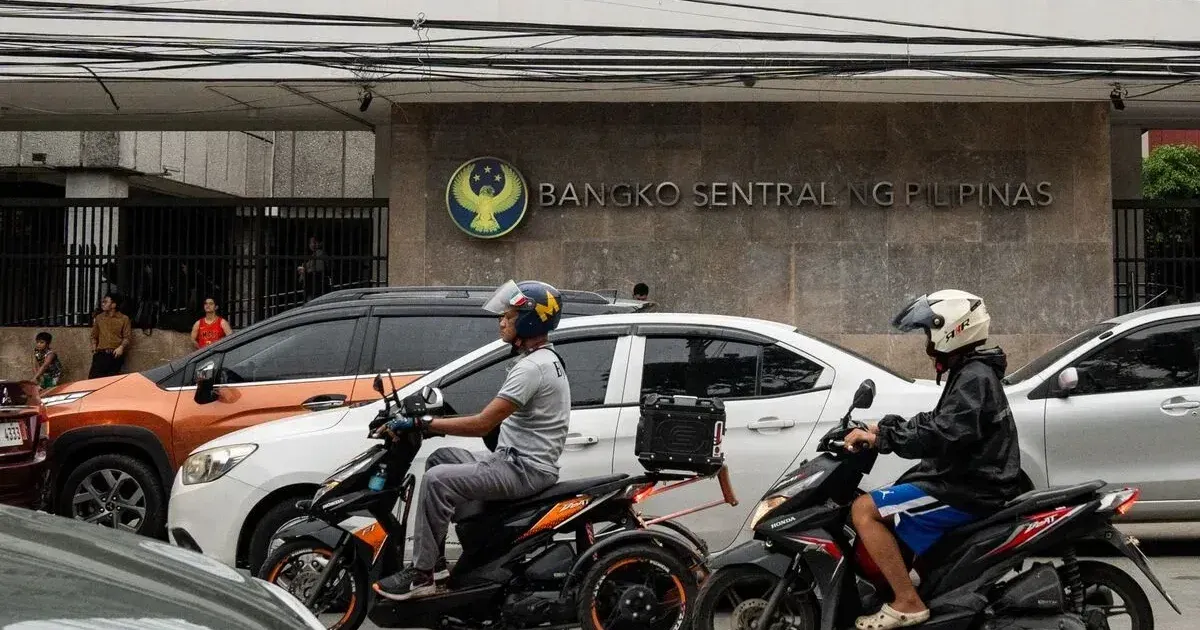
Philippine debt officials expressed confidence that a pause in interest rate hikes can help restore order to a local debt market rattled by global conflict. By March 27, 2026, that message had become central to Manila's effort to calm investors. Yields on government securities climbed sharply earlier this month as geopolitical tensions in the Middle East disrupted traditional pricing models for emerging market assets. Financial authorities in Manila now believe the decision to maintain current borrowing costs will provide a necessary anchor for institutional investors.
Markets reacted with immediate sensitivity to the latest policy signals from the Bangko Sentral ng Pilipinas. Recent sell-offs in the bond market mirrored broader anxieties regarding energy prices and supply-chain security. Traders had previously priced in additional tightening measures, but the monetary authority opted for a steady hand during its most recent session. Stability in the fixed-income sector is still a primary goal for the Bureau of the Treasury as it manages the national debt portfolio.
The specific timing of this policy hold coincides with a period of intense pressure on the Philippine Peso. Currencies across Southeast Asia have faced serious depreciation against the dollar, forcing central banks to balance growth concerns with the need for currency defense. By holding rates steady, policymakers are betting that the current yield environment is sufficient to attract capital without choking off domestic consumption. Local banks have already started adjusting their long-term lending outlooks in response to the announcement.
The Philippine central bank’s decision to hold off raising interest rates on Thursday may help stabilize the government bond market after yields surged since the start of the Iran war.
The correlation between domestic yields and international energy benchmarks has tightened sharply since hostilities began. Rising crude prices frequently translate into higher transport costs and logistical fees within the archipelago, driving up the headline inflation rate. Government analysts monitor these inputs daily to determine the sustainability of current interest rate levels. Investors often view the Treasury as the final arbiter of local market sentiment during such cycles.
Treasury Forecasts Stability for Government Securities
The auction of ten-year Treasury bonds scheduled for next week will serve as the first major test of this newfound stability. Demand for long-duration assets typically dries up when interest rate paths appear uncertain or volatile. National Treasurer representatives suggested that the clarity provided by the rate hold should encourage higher bid-to-cover ratios in upcoming sessions. Institutional players like insurance companies and pension funds require predictable yield environments to meet their long-term obligations. Secondary market trading volume for sovereign debt saw a modest uptick in the hours following the official statement. Many brokerage houses had advised clients to maintain defensive positions while the central bank deliberated its next move. The underlying risks associated with the regional war continue to cast a shadow over projected fiscal outcomes for the fiscal year. Private wealth managers are currently reallocating portions of their portfolios into short-term bills to minimize duration risk.
The biggest challenge remains the persistent gap between local inflation and the central bank target range. Prices for basic commodities have not yet fully reflected the recent surge in global logistics costs. Still, the Treasury maintains that the current yield curve accurately reflects the risk premium associated with emerging market debt. Officials point to the strong foreign exchange reserves as a buffer against speculative attacks on the national currency. Debt servicing costs represent a heavy portion of the annual budget and require careful management of interest rate expectations. The ongoing Iran war has sparked similar inflationary pressures and monetary policy adjustments across the Eurozone.
Central Bank Policy Shifts Under Regional Pressure
According to market data, the yield on the benchmark five-year note settled lower by several basis points shortly after the Treasurer’s comments circulated. Professional investors often look for specific cues from the National Treasurer to gauge the government's appetite for higher borrowing costs. The balance between funding the state's ambitious infrastructure projects and maintaining fiscal discipline requires a delicate policy touch. High-interest rates increase the burden on taxpayers while potentially slowing down the transition to a more modernized national economy. As a result, the central bank must navigate the divergent paths of various global economies. While some Western nations have pivoted toward easing, the proximity of the Philippines to primary trade routes affected by the conflict creates a unique set of constraints. Emerging markets rarely have the luxury of ignoring the Federal Reserve's path, yet Manila has sought to forge a more independent path this quarter. Recent data on manufacturing output suggests that the local economy can withstand a period of elevated rates if the bond market remains liquid.
The Bureau of the Treasury has explored diversifying its funding sources beyond traditional domestic auctions. Discussions regarding the issuance of retail bonds or green bonds continue to progress despite the difficult global environment. The immediate focus remains on ensuring that the primary dealers who participate in government auctions have sufficient liquidity to support the market. Banks have expressed concern that prolonged volatility could lead to a widening of bid-ask spreads. Volatility in the bond market is often a precursor to broader economic cooling in developing nations.
Bond Yield Volatility and Inflation Constraints
The relationship between the Treasury and the central bank has become increasingly visible to the public eye. Coordination between fiscal and monetary authorities is essential during times of war and energy shocks. A lack of communication can lead to market confusion and unnecessary spikes in borrowing costs for the private sector. Large corporations in the Philippines often peg their own bond issuances to the government yield curve, making Treasury stability a foundation of corporate finance.
The agricultural sector remains highly sensitive to any shifts in the cost of capital for equipment and fertilizer imports. Farmers and food producers rely on stable financing to maintain output levels during the rainy season. The inflationary impact of a weaker currency can quickly negate the benefits of a rate hold if the central bank stays on the sidelines for too long. Policymakers must decide if the current pause is a temporary reprieve or a long-term strategic shift. Inflation expectations among the general public have stabilized slightly, though they remain above pre-war levels. Consumers have adjusted their spending habits to account for higher prices at the pump and in the grocery store. National Treasurer officials believe that preventing a blowout in bond yields will indirectly support the consumer by keeping mortgage and auto loan rates from spiraling out of control. Public confidence in the financial system relies heavily on the perceived competence of these lead agencies.
Investor Sentiment in Emerging Market Debt
Foreign investors have maintained a cautious stance toward Philippine assets since the onset of the conflict. Capital flight is a recurring theme in emerging market history during periods of global instability. According to recent flow data, there has been a noticeable shift of funds into safer havens like gold and high-grade corporate debt in more stable jurisdictions. Reversing this trend will require more than a single rate hold; it will require a sustained period of macroeconomic calm. Investors generally prefer a central bank that is proactive rather than reactive to external shocks. The decision to hold rates suggests that the Bangko Sentral ng Pilipinas believes it has done enough for now to curb domestic price pressures. Whether this assessment holds true despite escalating regional tensions remains the subject of intense debate among Manila's financial elite. Recent surveys of fund managers indicate a split between those who favor further tightening and those who support the current pause.
Fiscal space for the Philippine government has narrowed as revenue collections face headwinds from slower global trade. Any increase in interest rates would further strain the ability of the state to provide social services and disaster relief. To that end, the Treasury's efforts to calm the bond market are as much about social stability as they are about financial engineering. Maintaining the infrastructure pipeline depends on the government's ability to borrow at sustainable rates.
Manila Bond Credibility Test
Why should any serious investor believe that a simple pause in rate hikes can neutralize the tectonic shifts caused by a regional war? The Philippine National Treasurer is engaging in the kind of performative optimism that usually precedes a meaningful market correction. Claiming that the bond market will calm down while energy prices are being dictated by missiles and blockades is a bold, perhaps reckless, gamble on public perception.
The reality is that the Bangko Sentral ng Pilipinas has run out of effective tools and is now resorting to the power of suggestion to keep yields from breaking through critical psychological levels. This strategy assumes that the market has a short memory and an even shorter attention span regarding the actual drivers of inflation. If the conflict in Iran persists or intensifies, the cost of borrowing in Manila will inevitably soar regardless of what the Treasury says on a Thursday morning.
Credibility in the financial markets is earned through rigorous policy, not through press releases designed to soothe nervous traders. Independent analysts view this rate hold as a desperate attempt to buy time for a government that is increasingly trapped by global forces it cannot control and refuses to fully acknowledge in its public briefings.