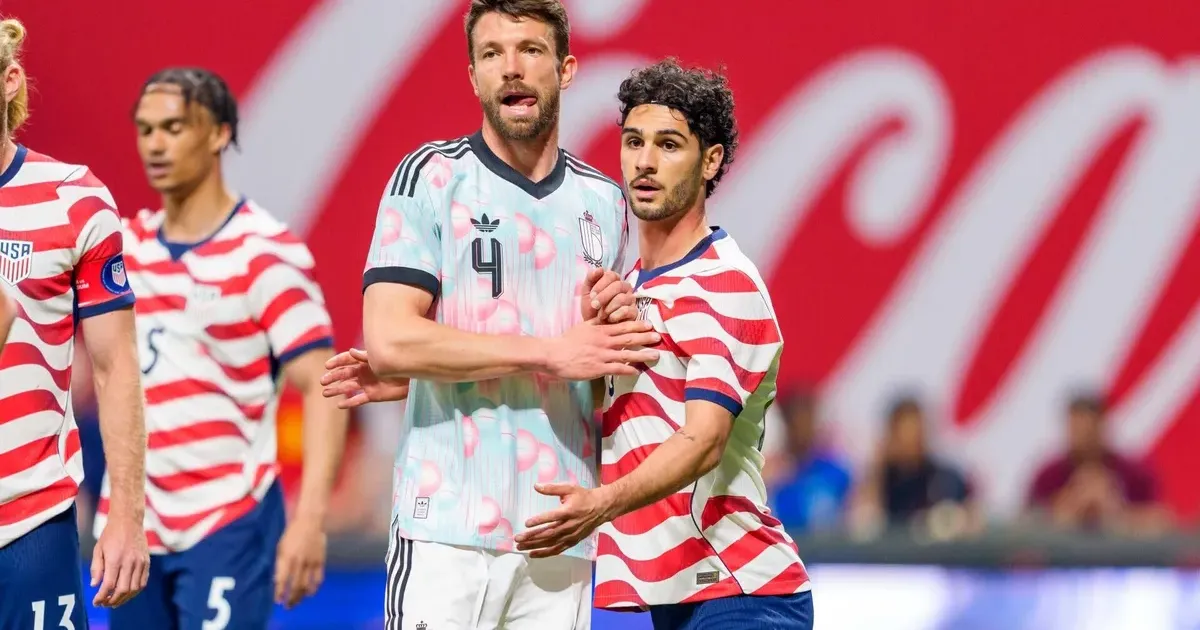
Belgium punished a disjointed USMNT performance in a friendly that left Mauricio Pochettino with more selection questions. The match also drew attention because the two teams' kits looked too similar under stadium conditions. Tactical problems mattered more than the wardrobe issue, but the visual confusion added to a difficult night. On March 29, 2026, the result sharpened scrutiny of the U.S. team's World Cup preparation. The performance problems would have mattered even without the equipment subplot, because Belgium repeatedly reached dangerous spaces.
Belgium struck early and often, exploiting a defensive structure that appeared completely unrehearsed. Jérémy Doku proved particularly lethal, navigating the American flank with a level of ease that suggested a lack of scouting preparation. He repeatedly isolated fullbacks before cutting inside to create scoring opportunities for a clinical Belgian frontline. Defensive help simply never arrived for the overwhelmed American backline.
Pochettino, who took over the program following a disappointing group-stage exit in the 2024 Copa América, appears to be struggling with the limited time available in the international calendar. He inherited a player pool that he recently admitted was largely unfamiliar to him, leading to a year of heavy experimentation. This approach resulted in 14 different starting combinations over the last 12 months, yet none have produced a cohesive identity. The squad looked disjointed, uneven, and entirely unprepared for the speed of the Belgian transition game.
Belgium Attack Exploits Defensive Gaps
Jérémy Doku turned the match into a personal highlights reel, exposing every flaw in the American defensive philosophy. The Manchester City winger bypassed challenges with ease, often drawing three defenders toward him before releasing the ball to unmarked teammates. USMNT center-backs remained rooted to the spot, failing to track runners or communicate during high-pressure situations in the penalty area. Belgium scored its second goal after a 40-yard run from Doku went entirely uncontested by the American midfield.
Critics pointed to the lack of a defined holding midfielder as the primary cause for the lopsided scoreline. Without a defensive anchor, the space between the midfield and the back four became a playground for Belgian playmakers. Every time the United States lost possession, an enormous gap opened in the center of the pitch. Belgium finished the match with 12 shots on target, while the American side failed to register a single attempt until the 78th minute.
Matt Turner Faces Criticism After Goalkeeping Errors
Matt Turner remains at the center of a growing controversy regarding the American goalkeeping hierarchy. Despite being the presumed number one choice for the 2026 cycle, Turner faltered under pressure during several key moments on Saturday. He appeared hesitant when coming off his line, allowing a Belgian striker to poke the ball home for the opening goal. His distribution also suffered, with several clearances landing directly at the feet of Belgian attackers in dangerous areas.
The pressure of a full first team playing in front of him seemed to worsen his recent lack of club minutes. While other options in the player pool are gaining experience in Europe, Turner's status as the definitive starter is now under intense scrutiny. He ended the night with three goals conceded and a save percentage that will alarm the coaching staff. The goalkeeper rank for the 2026 World Cup is now an open competition.
World Cup Kit Debut Triggers Aesthetic Crisis
Confusion reigned as both teams debuted jerseys that were too similar for professional play. The USMNT wore a cream-colored variant with thin red stripes, while Belgium opted for a light burgundy that appeared identical under the stadium floodlights. Players from both sides were seen gesturing in frustration after misplacing passes to teammates they could not visually identify. Visibility issues hampered officials and spectators alike throughout the ninety minutes.
Equipment managers, however, found themselves unable to switch to secondary kits due to strict broadcasting agreements and marketing requirements. The commercial interests of the kit manufacturers appeared to outweigh the functional needs of the athletes on the field. This match was the first public announcing of the tournament designs, yet it likely required an emergency redesign by the federation. Soccer analysts noted that the kit clash was one of the most meaningful logistical failures in recent national team history.
USMNT Tactical Identity Under Mauricio Pochettino
Pochettino continues to prioritize experimentation over results, a strategy that is testing the patience of the American fanbase. His insistence on playing out from the back with a roster that lacks technical ball-handlers resulted in numerous turnovers in the defensive third. Belgium recognized this pattern and implemented a high press that suffocated the American build-up play. The lack of a plan B when the initial press failed was evident to everyone in attendance.
The 2026 World Cup cycle has hit a midpoint characterized by uncertainty rather than growth. Two years have passed since the 2024 Copa América failure, yet the team remains plagued by the same lack of clinical finishing and defensive organization. Pochettino has tested dozens of players, but a core eleven has yet to emerge from the chaos. Belgium provided a harsh reality check for a program that believes it is ready to compete with the global elite.