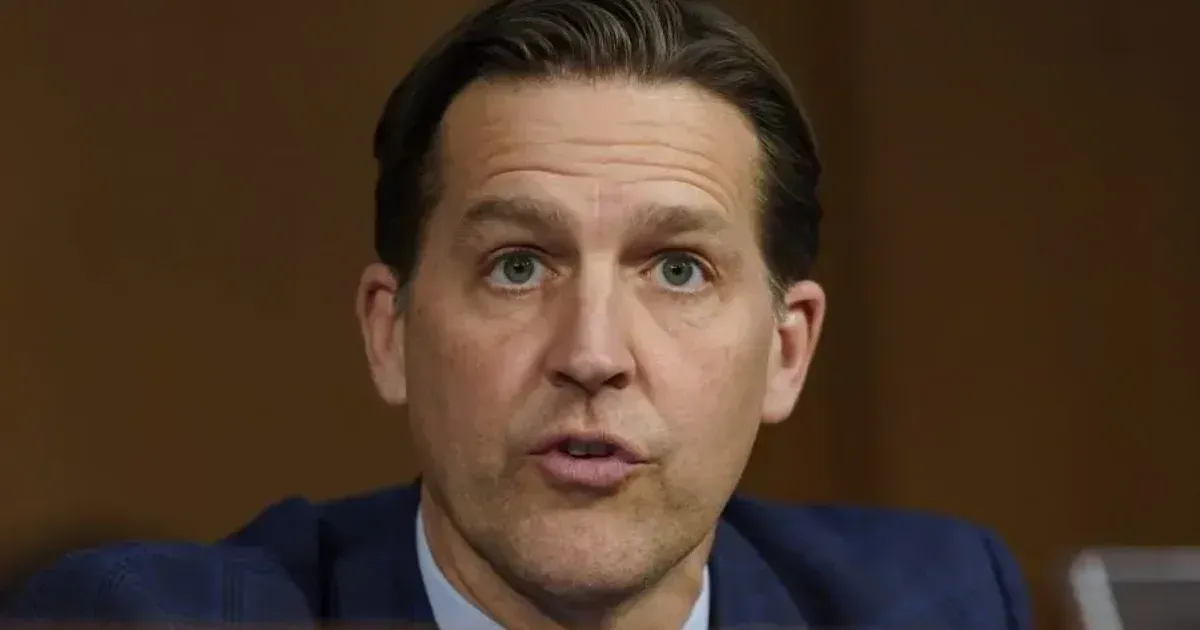
Ben Sasse, the former Republican senator from Nebraska, spoke publicly and candidly about his fight with stage 4 pancreatic cancer during an interview with Ross Douthat. The conversation moved between treatment, faith and the psychological weight of a terminal diagnosis. His public return came after a long period away from politics and university leadership. The discussion carried a personal tone rather than a campaign message. The April 9, 2026, interview offered a rare update from a figure who once occupied a distinct place in conservative politics.
Sasse has often presented public life through moral and institutional language rather than pure party messaging. That made the interview notable because it did not fit the usual pattern of a political comeback or policy argument. It was instead a discussion of illness, limits and how a public person speaks when the future is uncertain.
Illness, Faith and Public Life
Pancreatic cancer carries a harsh reputation because it is often discovered late and leaves patients facing difficult treatment choices. Sasse did not turn that reality into a campaign message. He described the diagnosis as something that reorganizes priorities, forcing attention toward family, belief and the practical demands of care.
The interview also reminded listeners how quickly political figures can move from constant visibility to private struggle. Sasse left the Senate, took a university post and later stepped back from that role. For supporters and critics alike, the cancer disclosure reframes that absence in human terms.
The medical context also matters because pancreatic cancer often gives patients little room for public performance. Treatment can alter energy, speech and appearance, making any interview a physical act as much as a political one. That reality gave the conversation a different weight from ordinary commentary about Washington or universities.
A Conservative Voice Outside Office
His comments may resonate most with people who followed his earlier warnings about institutional decay and civic seriousness. A terminal diagnosis gives those themes a different weight. Arguments about public duty sound less abstract when the speaker is also discussing mortality and medical uncertainty.
There is a risk in overpoliticizing the moment. Sasse's illness does not erase his record, and it does not require every listener to reassess his ideology. But it does change the tone of public attention. The story is less about partisan positioning than about how a former officeholder chooses to speak under severe personal pressure.
For Republicans, Sasse remains a complicated figure: admired by some for intellectual independence and disliked by others for criticism of Donald Trump. The interview did not try to settle those arguments. It placed them behind more immediate questions of endurance and meaning.
The lasting impact may be modest but real. Public illness narratives can make political figures more legible as people without turning them into symbols. In this case, Sasse used the platform to talk less about power than about what remains when power is gone.
The interview also placed illness in a public vocabulary that often avoids weakness. Political culture rewards certainty, stamina and control, while serious disease forces dependence and interruption. Sasse's comments cut against that performance by acknowledging fear and limitation without turning them into spectacle.
That tone matters because many listeners know cancer through family experience rather than policy debate. They may not share Sasse's politics, but they can recognize the practical rhythm of appointments, treatment decisions and conversations with loved ones. The most durable part of the interview may be that ordinary point of connection.
For a former senator, stepping away from argument can itself be revealing. Sasse did not need to resolve the future of conservatism to make the interview meaningful. He only needed to speak plainly about what a grave diagnosis does to ambition, time and faith.
The discussion also leaves a record for people who encounter Sasse outside the political fights that once defined him. Illness can narrow a life, but it can also clarify what a person wants to say with the time available. That is the emotional center of the interview. Whether Sasse returns to any formal public role is secondary. The more immediate significance is that he used a public platform to describe a private ordeal without pretending that confidence solves everything. That restraint gave the conversation its force. It also reminded listeners that public service careers end, but the need to make sense of suffering does not end with a resignation letter or a final title. That is a narrower message than a political platform, but it may be the one that lasts longest from the conversation. The interview also complicates the way political audiences remember Sasse. Supporters may hear consistency in his emphasis on faith and duty, while critics may separate the human moment from his record. Both responses can exist at once because illness does not turn a public figure into a simple symbol. What it does is change the scale of attention. Arguments that once sounded institutional now sit beside questions of time, pain and how a person chooses to speak when certainty is gone. That does not make the interview apolitical, but it places politics inside a more basic human frame.