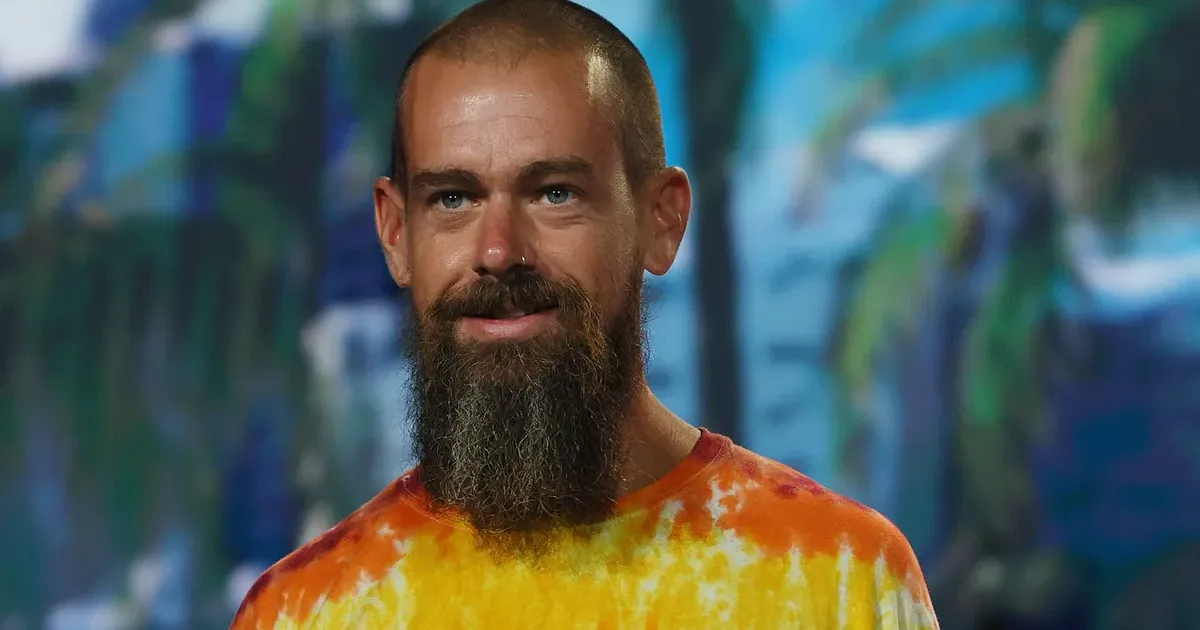
Jack Dorsey announced on April 3, 2026, that Block employees have abandoned slide decks in favor of functional prototypes during internal meetings. Functional models now serve as the primary medium for decision-making at the fintech giant. Dorsey explained during an interview on the Sequoia Long Strange Trip podcast that prototypes provide a depth of realism that static presentations lack. Working models allow teams to manipulate real or simulated data instantly to test assumptions. Real-time modification has replaced the linear narrative of the traditional corporate pitch.

Block employees previously relied on Google Docs or slide presentations to outline new initiatives. Transitioning to software prototypes reflects a shift toward engineering-led management. Dorsey noted that these functional models reveal flaws earlier in the development cycle. Prototyping allows engineers to identify technical hurdles before resources are fully committed. Efficiency gains from this methodology align with the company’s recent internal restructuring efforts.

Dorsey maintains that the financial penalty for incorrect decisions has plummeted. Engineering tools now allow developers to pivot between different software architectures with minimal friction. Decisions that once required weeks of deliberation now resolve through live demonstrations. Speed has become the defining metric for the product teams at the San Francisco-based firm. Development costs decrease as the cycle between ideation and testing shrinks. Dorsey stated that the expense of pursuing a failed path is nearing zero.

"The cost of being wrong on that path and going back up the tree and going down another path is getting closer and closer to zero," Dorsey said.

Staffing levels at the fintech firm underwent a serious contraction prior to this cultural shift. Block eliminated over 4,000 employees in February, representing roughly 40% of its total headcount. Dorsey attributed these reductions to efficiency gains realized through artificial intelligence. Smaller teams now use automated tools to generate the very prototypes that have replaced administrative slide decks. Human roles within the organization have shifted toward direct technical output.

Jack Dorsey Mandates Functional Software Prototypes

Tech industry veterans have increasingly criticized the pitch deck as a relic of slower corporate eras. Aravind Srinivas, the cofounder and CEO of Perplexity, has not built a traditional fundraising deck since his company’s Series A round. Srinivas prefers writing detailed memos and engaging in rigorous question-and-answer sessions with potential investors. Written memos force a level of clarity that visual slides often obscure. Investors find that prose reveals logical gaps more effectively than bullet points.

Historically, high-profile leaders like Steve Jobs also expressed disdain for formal presentations. Jobs famously preferred whiteboard sessions and physical product demonstrations over projected slides. He believed that people who knew what they were talking about did not need PowerPoint. Dorsey’s current mandate echoes this philosophy by prioritizing the product over the presentation of the product. Internal meetings at Block now focus on the real mechanics of software code. This change forces non-technical managers to engage more deeply with the underlying technology.

Investors generally favor methods that reduce time-to-market for new features. Eliminating the time spent designing slides allows engineers to focus on core functionality. Real-time data integration within prototypes provides a more accurate forecast of user behavior. While Bloomberg suggests that some managers struggle with the technical requirements of this new format, Reuters reports that developer morale has improved. Direct interaction with working software reduces the ambiguity often found in executive directives.

Leadership Integrity Impacts Senior Executive Retention

Executive behavior remains a critical factor in maintaining organizational trust despite these technical advancements. Emily, a Chief Revenue Officer at a global financial firm, recently discovered her CEO is involved in a private affair. While the relationship is consensual and does not violate formal company policy, the discovery created immediate professional friction. Proximity between the families of the executives adds a layer of personal complexity. Emily’s CEO frequently uses public platforms to advocate for integrity and organizational trust.

Dissonance emerges when a leader’s private conduct contradicts their stated corporate values. Emily noted that she now hears the CEO’s quarterly strategy presentations differently. Financial figures and market projections remain sound, yet her willingness to champion the leader has evaporated. Trust acts as the invisible glue in high-stakes negotiations and senior recruitment. When that trust dissolves, the executive’s ability to inspire a sales organization diminishes. Subordinate leaders often begin to distance their personal brands from a compromised CEO.

Corporate credibility relies on the perceived consistency of its top officers. Emily hesitated to recruit top-tier talent into an environment where she questioned the leader’s character. Senior leaders who lose confidence in a CEO rarely vocalize their concerns in public forums. Instead, they exhibit cautious language and reduced candor during internal deliberations. Compliance replaces enthusiastic advocacy as the primary mode of interaction. These subtle shifts in behavior can eventually erode the execution of long-term strategic goals.

Trust Fractures Undermine Organizational Strategy

Research indicates that perceived disconnects between executive values and actions lead to a decline in employee voice. Staff members become less likely to surface risks or challenge flawed decisions when trust is low. Private fractures at the top of a company eventually reshape how work is conducted at every level. The damage from a character crisis often stays hidden from financial reports for several quarters. It manifests first in the departure of key senior personnel who seek more aligned leadership.

Similar organizational friction occurs when CEOs take controversial political stances or join disputed boards. Employees who disagree with these personal choices find it difficult to maintain their previous levels of effectiveness. Protecting professional integrity while serving under a compromised leader requires a difficult balancing act. Executive coaches report that this pattern is increasingly common in modern corporate environments. Leaders must decide if they can continue to attach their reputation to a strategy led by an individual they no longer respect.

Recruitment efforts suffer sharply when a CEO’s personal choices become a topic of internal gossip. High-performing candidates often conduct extensive due diligence on the character of their potential supervisors. A reputation for hypocrisy is a major deterrent for elite talent. Financial incentives frequently fail to compensate for a lack of cultural alignment. Corporate strategy depends on the ability of leaders to move in unison toward a shared objective. Personal scandals break that unison and introduce unnecessary friction into the decision-making process.

The Elite Tribune Strategic Analysis

Corporate survival usually hinges on the narrow gap between what a leader says and what a leader does. Jack Dorsey is attempting to bridge this gap by stripping away the performative theater of the slide deck. By forcing employees to bring prototypes, he is demanding proof of work rather than the promise of work. This is a cold, technocratic approach to management that values output over optics. It treats the corporation as a machine that must be constantly tuned with real-time data. Dorsey’s move is a direct assault on the managerial class that survives by polishing presentations instead of building products.

The integrity crisis described in financial services highlights the limits of this technocratic vision. You can optimize every workflow and automate every prototype, but you cannot fix a rotting core. When a CEO’s personal life contradicts their professional platitudes, they create a tax on every interaction within the firm. Trust is a non-linear asset. It takes years to build and seconds to incinerate. A CEO who preaches integrity while practicing duplicity is not just a moral failure; they are a strategic liability. Emily’s hesitation to recruit is the first symptom of a terminal organizational illness. No amount of AI-driven efficiency can replace the credibility of a leader who actually lives the values they project onto a screen. Pure operational vanity.