Chief executives across the globe gathered on April 3, 2026, to analyze the catastrophic delays in corporate response times during the previous fiscal quarter. Business leaders now face a reality where seconds dictate market dominance. Rapidly changing market conditions require a level of agility that traditional hierarchies simply cannot provide. April 3, 2026, marks a deadline for many firms to overhaul their decision-making protocols or risk total obsolescence.
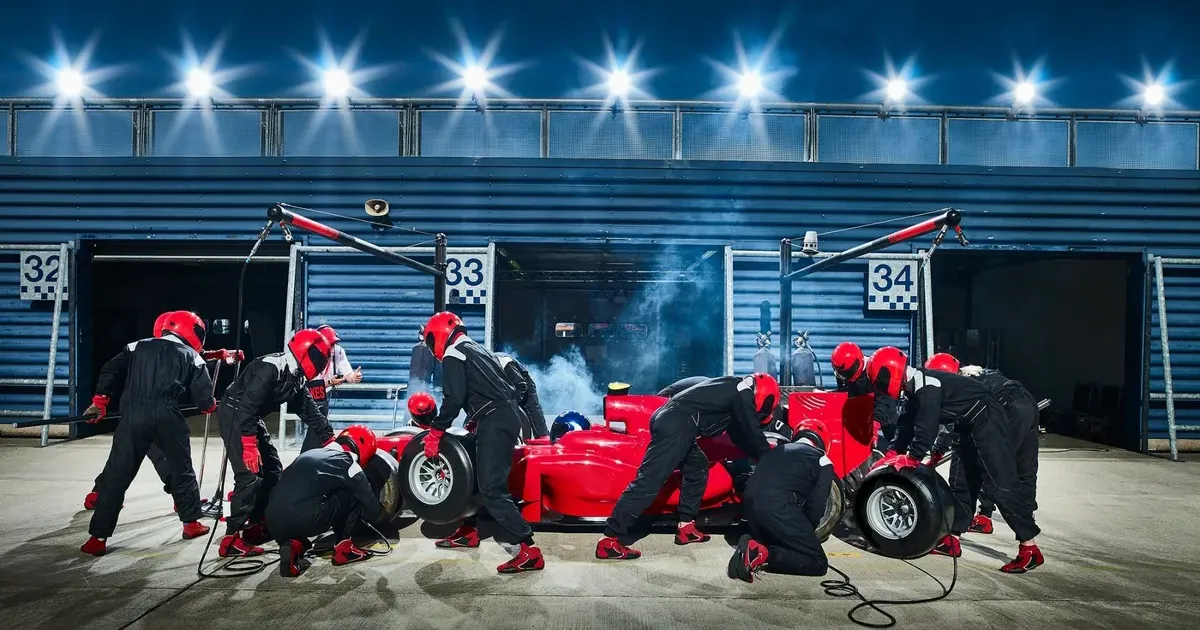
Formula One racing teams offer a stark contrast to the sluggishness of the modern boardroom. Engineers in the paddock process millions of data points per second to make split-second adjustments to car performance. These teams have perfected the balance between automated telemetry and human instinct. Formula One pit walls operate with an urgency that most corporations lack. Success in this environment depends on knowing exactly where software ends and human accountability begins. Delaying a pit stop by two seconds can cost a driver a championship. In the corporate sector, delaying a strategic pivot by two months can result in a loss of $40 million in market capitalization.
Formula One Efficiency in Corporate Strategy
High-stakes environments like Grand Prix racing prove that data alone does not win races. Algorithms suggest the optimal time for a tire change, but a human crew chief must weigh variables that sensors might miss. Recent telemetry analysis suggests that top-tier teams prioritize decisive action over perfect information. This preference for speed allows them to recover from errors faster than cautious competitors can react to successes. Organizations that over-rely on AI to make final calls often find themselves paralyzed by conflicting data sets. Effective leadership in 2026 demands the courage to override the machine when the situation on the ground shifts.
Success on the pit wall requires a distinct separation between where the algorithm ends and where human intuition takes command of the race.
Elite performance teams maintain a clear distinction between technical competence and tactical judgment. Within a racing environment, every employee understands that their role is to enable a singular, fast decision. By contrast, the typical corporate structure involves layers of committees that serve to dilute responsibility. This dilution creates a safety net for individuals but a death trap for the organization. Speed remains the primary competitive advantage in an economy driven by instantaneous consumer feedback. Systems that prioritize consensus over velocity are failing at a rate of 12 percent annually.
Competition is moving too fast for traditional quarterly reviews.
Special Operations Models for Leadership Selection
Military elite units operate under a different set of selection criteria than their civilian counterparts. A retired commander from the Navy SEALs revealed that leadership selection often hinges on a single, counterintuitive metric. While most corporations promote based on individual performance and technical skill, special operations teams prioritize trust. High performers who lack the trust of their peers are viewed as liabilities rather than assets. These organizations would rather have a moderately competent individual who is entirely reliable than a genius who acts alone. Toxic high-performers frequently cause systemic collapse in high-pressure situations.
Trust is the invisible glue in high-speed decision-making environments. Teams that trust their leaders can execute orders without the hesitation caused by internal politics. Selection processes in 2026 are beginning to shift toward these military models to combat the rising tide of corporate narcissism. Specialized units use peer evaluations to identify those who sacrifice personal gain for team success. This shift ensures that the people in charge are there because their subordinates believe in their judgment. Special Operations training emphasizes that a leader is not someone who is appointed, but someone who is chosen by the collective based on demonstrated character.
Promotion cycles in large enterprises often reward the loudest voice in the room. The habit leads to the installation of leaders who are gifted at managing optics but poor at managing crises. Research indicates that 70 percent of leadership failures in the Fortune 500 stem from a lack of relational trust. When the stakes are high, employees will not follow a leader they do not believe has their back. The military model suggests that the most effective way to lead is to be the person the team would choose if the official hierarchy disappeared.
Structural Barriers to Problem Identification
Large organizations often cultivate a culture that punishes those who surface bad news. Initiatives rarely fail overnight; they die a slow death behind a wall of optimistic progress reports. Middle managers often feel a distinct pressure to filter out problems before they reach the executive suite. The filtration system ensures that by the time a CEO hears about a crisis, the cost of fixing it has tripled. Institutional silence is not a passive state but a trained behavior. Employees learn that being the messenger of failure is a career-ending move.
Breaking this pattern requires a total rethinking of how failure is reported. Some tech firms have implemented anonymous red-flag systems that bypass the chain of command. These systems allow junior engineers to halt a project if they detect a fundamental flaw. Encouraging early failure reduces the long-term financial impact of bad strategic bets. Leaders must actively seek out the dissenting voices that the current system is designed to suppress. If the hierarchy prevents the truth from rising, the hierarchy is the problem. $11 billion was lost last year due to delayed reporting of supply-chain failures.
Economic Costs of Institutional Inertia
Global markets punish hesitation with ruthless efficiency. The gap between identifying a problem and implementing a solution is the primary indicator of corporate health. Firms that can pivot within a thirty-day window show 40 percent higher profitability than those on a ninety-day cycle. Inertia is a silent killer of innovation and growth. Many companies are currently bogged down by legacy processes that were designed for a slower era. These processes act as friction, slowing every move the company tries to make.
Executive teams must treat speed as a real asset on the balance sheet. When decision-making slows, the cost of capital increases because the risk of a missed window grows. Reducing the number of approval steps for major projects can cut operational costs by nearly a fifth. Leaders who cannot make a decision with 70 percent of the information are usually doomed to wait for 100 percent, at which point the opportunity is gone. The most successful firms in 2026 are those that have dismantled their own bureaucratic roadblocks. Efficiency is a choice, not a byproduct of size.
The Elite Tribune Strategic Analysis
Corporate leadership is currently suffering from a pathetic addiction to consensus that is masquerading as collaboration. Most boards are so terrified of individual accountability that they bury every meaningful decision under a mountain of committee signatures. The cowardice is why we see large enterprises blindsided by startups with a fraction of their resources. If your organization requires six months to decide on an AI integration strategy, you have already lost. True leadership is not about being the smartest person in the room; it is about being the one who is willing to be wrong first and fast.
The obsession with technical competence over trust is a terminal error. The evidence points to a glut of highly skilled sociopaths occupying C-suite positions because they hit their quarterly numbers. These individuals are organizational cancer. They hide mistakes, they gaslight their subordinates, and they eventually steer the ship into an iceberg because no one felt safe enough to point out the ice. If you do not adopt a trust-first model similar to elite military units, your top talent will leave for someone who actually values their integrity.
Stop hiring for the resume and start hiring for the foxhole. The market is increasingly hostile, and the era of the comfortable, slows-moving conglomerate is over. You either build a team that can move at the speed of a Formula One pit crew, or you wait for the inevitable acquisition by someone who did. Decision-making is a survival skill. Those who cannot master it deserve to fail. Speed is everything.