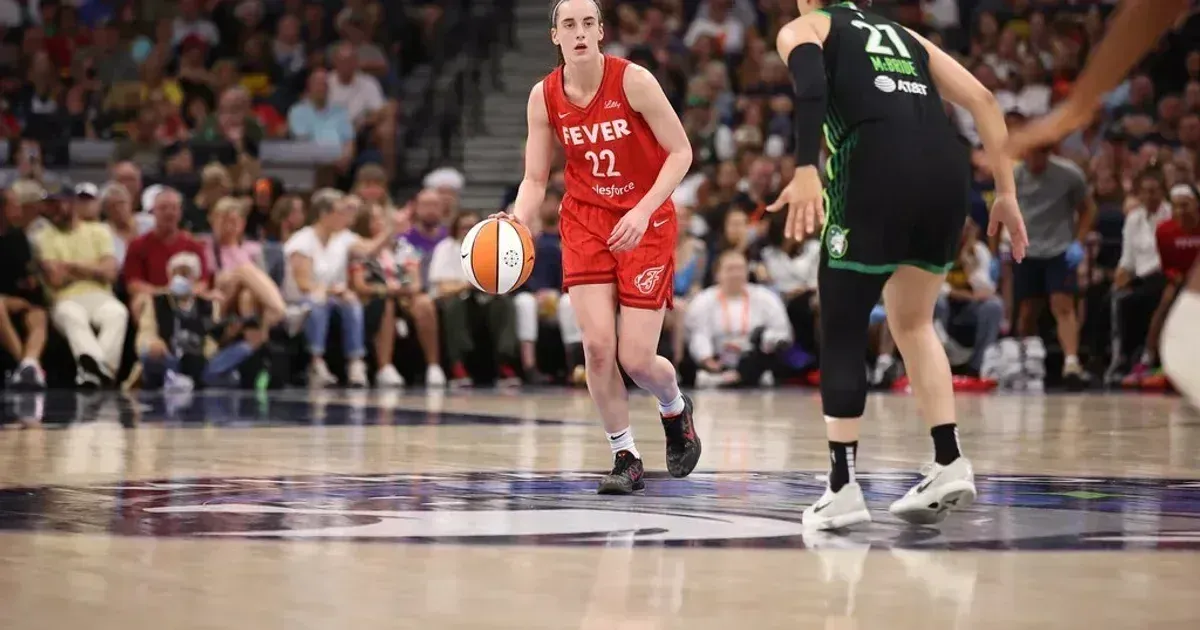
Clark tried to calm the injury narrative while keeping attention on the Fever's performance. That distinction matters because every physical signal around her now becomes a league-wide story. Caitlin Clark dismissed concerns regarding her physical health after a contested season opener against the Dallas Wings. Indiana Fever officials monitored the star guard on May 10, 2026, following a sequence of heavy contact that led observers to question her availability for upcoming fixtures. Fans and analysts focused on Clark's mobility throughout the fourth quarter as the intensity of the game reached its peak.
Heavy defensive pressure from the Dallas perimeter unit forced the Indiana offense into repetitive high-intensity sets. This defensive posture increased the physical demands on Clark, who was frequently targeted with double-teams and aggressive screens. Despite the visible exhaustion in the closing minutes, the star guard continued to command the backcourt through the final whistle.
Head coach Stephanie White addressed the rumors during a post-game media briefing. White told reporters that the coaching staff viewed Clark's status as entirely normal, emphasizing that the physical nature of the game was a standard element of WNBA competition. She noted that the training staff did not observe any irregularities that would require a shift in the player's management schedule.
White observed that the intensity of the matchup reflected the standard scouting reports prepared for any elite scoring threat in the WNBA. She signaled that the medical team had not flagged any new issues requiring a departure from existing recovery protocols. Coaching staff members remained focused on the tactical adjustments needed for the next game rather than individual health concerns.
Indiana Fever Management Downplays Physical Toll
Maintaining health during the early stages of a rigorous schedule often requires transparency between athletes and the front office. While Clark appeared to favor her leg at one point in the second half, the medical team did not remove her from the rotation or implement any immediate restrictions on her minutes. The organization continues to prioritize longevity and recovery in its daily training operations.
White said Clark's status was normal despite public concern, keeping the team's focus on execution rather than a new injury issue. Indiana Fever personnel relied heavily on their primary playmaker to navigate the complex defensive traps set by Dallas. Reliance on a single ball-handler often leads to increased physical contact, especially against a veteran roster like the Wings. Reporters noted that Stephanie White seemed confident in the conditioning levels of her squad despite the season-opening setback.
Clark offered a candid assessment of the performance shortly after the game concluded. She prioritized the team's defensive lapses and ball security over any individual physical complaints, suggesting that the scoreboard was a greater concern than her personal comfort during the fourth quarter. Her immediate reaction focused on the technical deficiencies that allowed Dallas to pull away in the second half.
Although the scoreboard did not favor Indiana, Caitlin Clark noted that the experience provided necessary data for the roster's development. She described the Dallas Wings defense as a benchmark for the level of athleticism the Fever must match to secure wins in a difficult league matchup. The focus has already shifted to the film room to identify where the spacing failed under pressure.
Defensive Pressure Shapes Season Opener
Dallas used a rotating cast of defenders to harass Clark from the opening tip. This tactical decision by the Wings coaching staff limited the guard's ability to find open shooting lanes, forcing her to play a facilitator role for much of the evening. The physicality of the matchup was an introduction to the defensive intensity expected throughout the 2026 campaign.
Statistics from the game highlight the efficiency of the Dallas defensive scheme. Wings staff members prioritized perimeter contests, which contributed to a lower-than-average shooting percentage for the Indiana backcourt. While the Fever managed to stay within reach during the first half, the cumulative effect of the Dallas defense took a toll on the offensive execution late in the game.
Professional growth requires these early hurdles. Clark indicated that the team needs to refine its offensive transitions to better handle the aggressive ball-denial strategies seen in this opener. The squad intends to use the upcoming practice sessions to address the physical mismatch encountered in the paint.
What Clark and the Fever Must Prove
League scrutiny on the health of its marquee stars is an inevitable byproduct of the current media environment. For the Indiana Fever, the challenge lies in balancing the heavy usage of their primary asset with the long-term goal of a deep playoff run. The physical targeting of Clark is not a seasonal anomaly; it is a tactical blueprint that opponents will likely duplicate throughout the year. Success for the organization will depend on developing secondary scoring options to ease the pressure currently concentrated on the backcourt.
Early results indicate that carrying a high-usage role through a professional schedule requires careful physical recovery. Trainers must manage these perceptions as much as the actual injuries to prevent external speculation from disrupting team chemistry. Analysts suggest that the Fever's medical staff will remain under a microscope as the league's schedule accelerates into the summer months.
Stability in the rotation is the priority. If the Indiana front office can maintain Clark's health while evolving the surrounding roster, the opening loss will serve as a foundational lesson in resilience rather than an early warning sign. Fundamentals dictate outcomes.