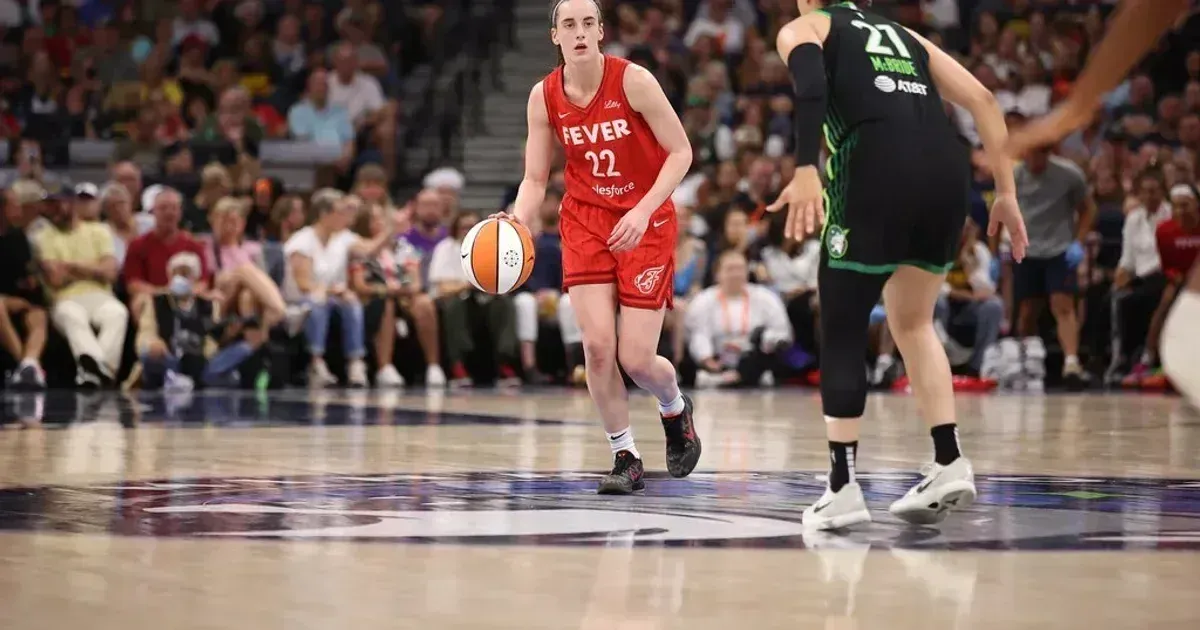
Clark's loss created two separate storylines: health management and how she responds to physical defense. The Fever cannot treat either question as a one-night issue. Indiana Fever guard Caitlin Clark faced intense physical and professional scrutiny during a challenging road loss to the Dallas Wings. The May 10, 2026, contest raised questions about the health of one of the league's most high-profile guards. Observations from the arena floor indicated that Clark made multiple trips to the locker room throughout the game, sparking immediate speculation regarding a potential injury. Medical staff accompanied the star player behind the scenes on several occasions while her teammates struggled to maintain momentum on the court.
Reports indicate that Clark addressed these concerns shortly after the final buzzer sounded. Despite the visible exits from the floor, Clark downplayed the severity of her condition. Professional basketball at the WNBA level presents a considerably more grueling schedule than the collegiate environment she dominated at Iowa. Observers noted that the frequency of her locker room visits suggested a persistent issue rather than a single, acute event. The team has not yet released an official diagnostic report regarding her status for upcoming practices.
Physicality in the professional league has become a central theme of Clark's debut season. Opponents often employ aggressive defensive tactics to limit her scoring range and disrupt her rhythm. In Dallas, this pressure appeared to reach a boiling point. A video circulating on social media captured Clark confronting a player for the Dallas Wings during a break in play. In the footage, Clark appears to call out her opponent for flopping, a move that quickly polarized the basketball community.
Caitlin Clark addressed the physical nature of the game and her health during the post-game media session, stating she had to visit the locker room multiple times during the matchup.
Critics of the Fever star seized on the video to question her focus. Some fans argued that the rookie should prioritize her own on-court execution instead of officiating the behavior of veteran players. Caitlin Clark has maintained a high level of productivity, yet her team continues to search for consistency in the win column. Digital commentators suggested that her frustration with the officiating or the tactics of her opponents could be a distraction. Others defended the player, noting that her high usage rate makes her a target for contact that often goes uncalled.
This friction between high expectations and professional reality is common for young franchise players. However, the sheer volume of attention on Clark amplifies every gesture and comment. While the video drew criticism, it also highlighted the intense competitive drive that defined her college career. Whether that drive can overcome the physical toll of a 40-game season is the primary concern for the Indiana front office. Training staff members are reportedly monitoring her recovery closely to ensure she does not aggravate any underlying fatigue.
Managing the health of a franchise foundation is a delicate balancing act. The Fever organization relies heavily on Clark to drive ticket sales and television ratings, making her presence on the floor a commercial necessity. If her locker room visits become a recurring pattern, the team may need to adjust her minutes to prevent long-term damage. Such a move would impact the team's competitiveness in an increasingly crowded playoff race.
Mental fatigue often mirrors physical exhaustion in elite sports. Clark is navigating a unique landscape where her every move is analyzed by millions of viewers. The transition from being a collegiate icon to a professional franchise lead requires a recalibration of both body and mind. Veterans in the league have previously noted that the speed of the professional game leaves little room for error or recovery. Clark is finding that the margin for error is thinner than ever before.
Expectations for the Indiana roster remain high despite the early season setbacks. Fans in Indianapolis are eager to see the team gel and provide Clark with the support necessary to turn individual talent into collective victories. The defensive lapses and offensive dry spells seen in the Dallas loss suggest that the team is still in a developmental phase. Every game provides a new data point for the coaching staff to refine their approach around their star player.
Recovery protocols will likely dominate the conversation heading into the next matchup. Clark must find a way to maintain her health while enduring the most physical defense of her career. The discussion surrounding her behavior and her body will continue to dominate the headlines as the season progresses. Hard facts regarding her durability will eventually emerge as the schedule intensifies in the summer months.
Locker Room Visits Spark Injury Speculation
Medical professionals frequently note that multiple exits during a game usually signal a recurring problem. Clark's inability to stay on the bench during the loss to the Wings concerned analysts who track player longevity. The Indiana medical team has remained tight-lipped about the specific nature of the visits, though they emphasized the importance of precautionary measures. Protecting the most valuable asset in the league is a priority that outweighs any single regular-season result.
Player safety protocols in the WNBA have improved, but recovery still depends on careful management of travel, rest and back-to-back scheduling. Clark is experiencing how quickly minor issues can accumulate when every opponent is prepared for her scoring range. The accumulation of minor bumps and bruises can lead to serious issues if not addressed with professional rigor. Observers will be watching the injury report closely before the Fever takes the court again.
The Flopping Controversy and Fan Backlash
Behavioral scrutiny is an inescapable part of being the face of a sport. The video of Clark calling out a Wings player for flopping became a focal point for those who believe she needs to adapt more quickly to the league's culture. In the professional ranks, veteran players often use tactical exaggeration to draw fouls, a practice that guards must learn to navigate without losing composure. Clark's vocal opposition to the tactic was interpreted by some as a sign of frustration with the team's performance.
Fan reactions varied across different platforms, reflecting the split in public perception of the star. While many supporters see her outspokenness as a sign of leadership, detractors view it as a lack of discipline. The Indiana coaching staff has not commented on the specific exchange. They remain focused on improving the team's defensive rotation and shooting efficiency. Maintaining a professional demeanor during losing streaks is a hurdle that every great player has had to clear during the early years of their career.
What Clark and the Fever Must Manage
The intersection of health scares and public criticism creates a volatile environment for any athlete. For Caitlin Clark, this period is a test of her resilience under a microscope. The WNBA is demonstrating that it will not roll out a red carpet for its most famous newcomer; instead, the league is meeting her with the highest level of physical and mental resistance. Multiple locker room trips suggest that the transition from a 30-game college season to a professional grind is already taking a visible toll. This is the first time in Clark's career that her durability has been a primary talking point in the national media.
Fever management must prioritize long-term sustainability over short-term narrative control. If the locker room visits indicate a legitimate injury, the organization faces a difficult choice between maintaining its competitive stance and protecting its future. The flopping incident is a secondary concern that will likely fade if the team begins to win. However, if the losses mount and the physical issues persist, the pressure on Clark will only intensify. Success in this environment requires shooting range as well as a level of physical and emotional endurance that is only forged through the difficulties of a long professional season.