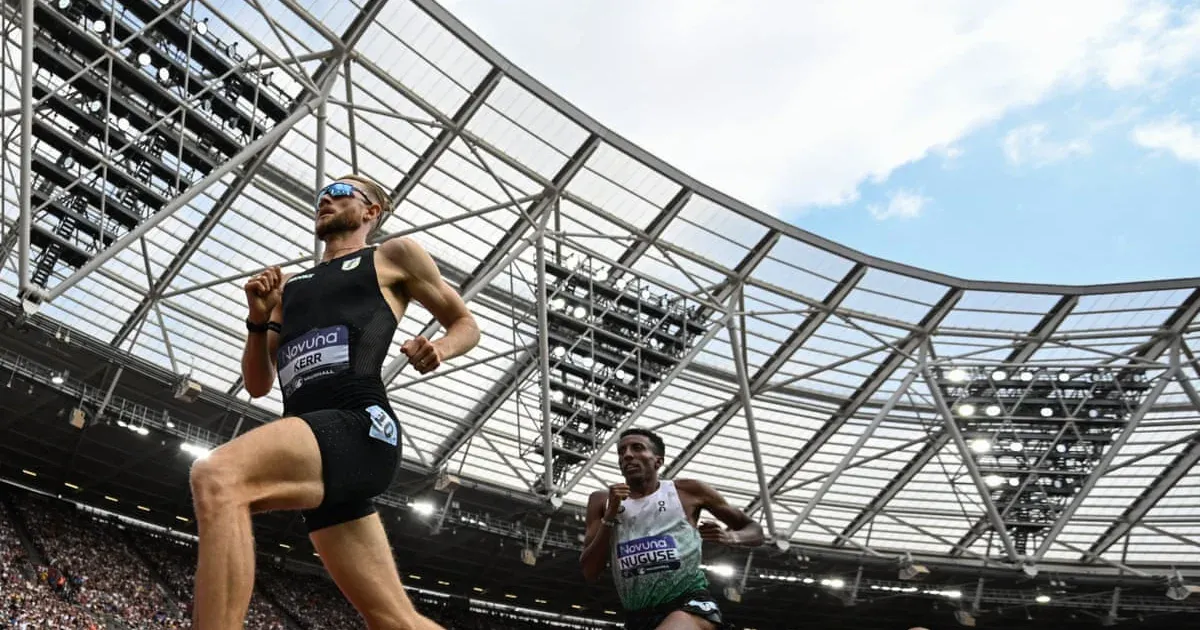
London's campaign to bring the 2029 World Athletics Championships to the capital now has an agreement with West Ham for a September event at the London Stadium. The deal removes the most immediate obstacle to the proposal: a clash between a major athletics meeting and the football club's domestic schedule. It also gives the campaign a venue with a recognised Olympic history, which organisers can use as part of the case for bringing another global championship to the capital.
Rome, Munich and Nairobi have also applied, leaving London in a field of at least four cities. World Athletics has not yet announced a final candidate list, so the agreement gives London a platform for the contest rather than a guarantee of hosting rights. The rival applications also mean the bid will be judged on delivery, legacy and value, not only on whether the stadium can be made available for a September programme.
West Ham Deal Removes the Stadium Obstacle
West Ham had objected to the bid because it regarded the stadium as its priority during the football season. Negotiators from the mayor's office, the event company Athletics Ventures and Whitehall's culture department eventually produced a compromise that keeps the September event possible while recognising the club's fixture demands. Reaching that compromise was important because a venue dispute could have weakened London's application before the international selection process had properly begun.
If London wins, West Ham's away schedule would be capped at two consecutive Premier League fixtures or three EFL fixtures during the 2029-30 season. The condition does not decide the sporting bid, but it converts a potential veto into a scheduling rule that organisers and the club can plan around. It is a practical concession designed to protect the stadium's availability without treating the football calendar as an afterthought.
UK Athletics chief executive Jack Buckner, who co-founded Athletics Ventures, welcomed the agreement. He linked the London Stadium to the legacy of the 2012 Olympics and said securing the venue was central to the country's plans for another global athletics event. His support underlines the importance of the site to the bid team: London is offering both an existing major-events facility and a familiar setting for athletes, spectators and broadcasters.
“The showpiece of London 2012,” Buckner said of the stadium.
Hugh Brasher, who leads London Marathon Events and also co-founded Athletics Ventures, said organisers calculate that the bid could deliver a combined gain above £400m across London and the wider country. That figure is an organiser's estimate, not a guaranteed return, but it explains why the campaign extends beyond the competition itself. The wider promise includes activity for businesses, public attention for athletics and a chance to use a large event to connect the stadium with communities beyond its match-day role.
Budapest Sets the Next Decision Point
Sadiq Khan's office also welcomed the agreement and presented a 2029 championship as part of London's record of staging major sports events. As of Thursday, 6 August 2026, the city's immediate task is to turn the stadium compromise into a persuasive bid against Rome, Munich and Nairobi. The next selection checkpoint comes with September's Ultimate Championships in Budapest. That timetable gives the London team a short period to demonstrate that its local agreement is stable and that the proposed event can be delivered without renewed conflict over the venue.
The agreement changes London's position from a venue-constrained proposal to a credible candidate. Its next test is broader: the bid must persuade World Athletics that the economic case, Olympic legacy and delivery plan justify choosing London over three international rivals. The West Ham arrangement makes that argument possible, but the September decision will determine whether it succeeds.