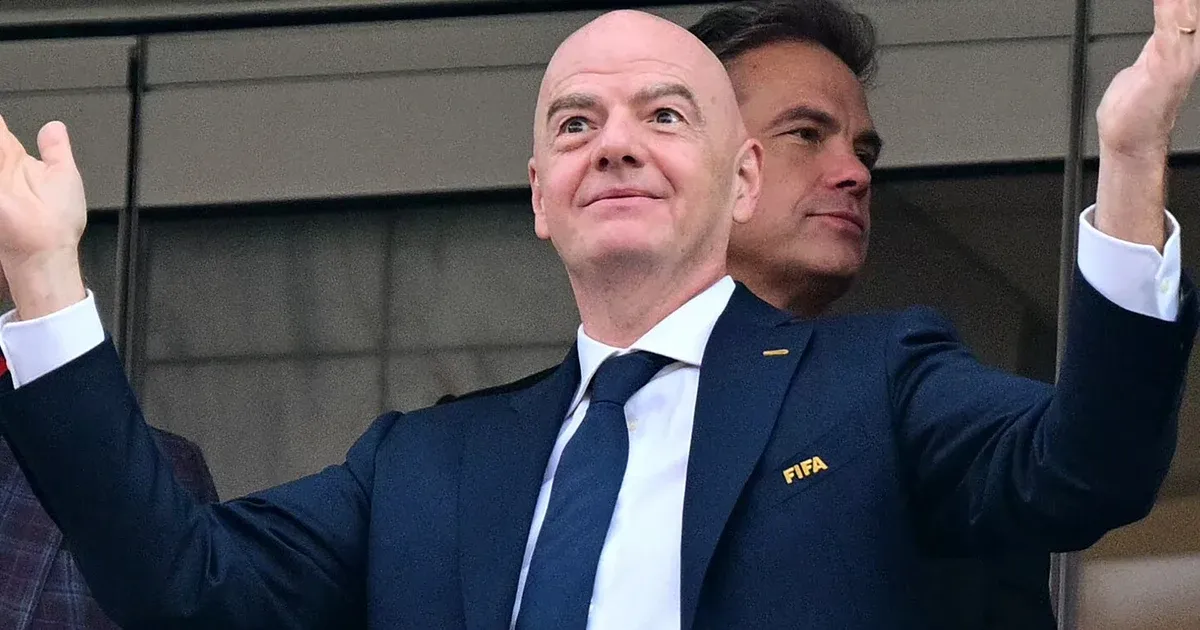
FIFA's senior management has rallied around President Gianni Infantino, but the vote of confidence has not ended a widening dispute with football confederations over power, money and his political future. The confrontation began with a failed plan to bring private investors into a company holding major competition rights. It now includes resignation calls, document-preservation demands and reports that continental bodies are discussing competitions outside FIFA's control.
The management board met in Rabat on August 5, 2026. Secretary-General Mattias Grafstrom said the body had reaffirmed its support for Infantino, although FIFA did not publish a complete attendance list. The organization also accepted that mistakes had been made during the commercial proposal and promised a review, while warning that it would defend FIFA and its president against what it described as attacks.
That response establishes FIFA's internal position without resolving the external challenge. UEFA says it has lost confidence in Infantino. Concacaf and the Asian Football Confederation opposed the commercial project, and national associations in Wales, Sweden and Serbia have said they will not support him. The dispute will therefore be tested by formal decisions from members and confederations, not by the management board's statement alone.
A Withdrawn Rights Company Left a Governance Fight Behind
The immediate trigger was FIFA Forward Enterprise, a proposed company that would have brought in private capital while controlling commercial rights connected to leading tournaments. FIFA would have retained 80%, with investors taking a 20% minority stake. Al Jazeera reported that the investment round was intended to raise about $4.2 billion. FIFA withdrew the proposal after coordinated opposition from confederations made it politically untenable.
The retreat did not close the matter because opponents are questioning how the proposal was developed and presented. UEFA has asked FIFA to preserve documents connected to the project. Carlos Cordeiro resigned from his role as a senior adviser, while Arsene Wenger distanced himself from it. Those moves shifted scrutiny from the plan's price and ownership structure to accountability inside the institution.
The earlier withdrawal of the rights venture showed that confederations could stop the commercial package before a member vote. The new phase asks a different question: whether the same coalition can force personnel changes or durable limits on presidential authority. That is why the Rabat meeting matters even though it produced no new commercial proposal.
Confederations Are Signaling Pressure Beyond Public Criticism
The strongest potential escalation remains unconfirmed. Both reports cited The Times as saying the three confederations were weighing severe measures if Infantino did not step aside, potentially including rival competitions. None of those bodies had formally announced such a break. For now, it is a reported option within a pressure campaign, not an established tournament plan.
Support from FIFA's management board does not amount to a mandate from the 211 national associations.
The distinction matters because Infantino also retains organized backing. Qatar and several African football associations have publicly supported him. That leaves the president facing a divided electorate rather than a unanimous institutional revolt. Statements from individual federations can weaken his position, but only a coordinated voting bloc or a credible challenger would convert dissatisfaction into a change of leadership.
Morocco Allegation Adds a Separate Test of Credibility
A second controversy now sits beside the commercial-rights fight. Yahoo Sports described an accusation involving a bargain: electoral backing for Infantino in return for placing the 2030 final in Morocco. FIFA categorically denied the allegation, and Morocco's football federation had not issued a public response. The claim should not be treated as established fact; its importance lies in the demand it creates for evidence, records and a clear account of how venue decisions are made.
Morocco will co-host the 2030 tournament with Spain and Portugal, while Saudi Arabia has the 2034 World Cup. Final-site decisions carry exceptional commercial and political value, so any suggestion that one was connected to electoral support reaches beyond ordinary campaign bargaining. FIFA's denial answers the accusation at the level of its official position, but the document requests and promised internal review will determine whether additional verifiable information emerges.
The March 2027 Election Is the Next Binding Test
Infantino's current term leads to a presidential election in March 2027. No challenger had declared by the time of the two reports. Former star Luis Figo has called for Infantino to resign, but a public demand is not an election campaign. Opponents still need to decide whether they want reforms from the current leadership, an early departure or a candidate capable of assembling support across all six confederations.
The timetable gives both sides room to organize but also prolongs the institutional uncertainty. FIFA's review can identify who approved the rights proposal, what national associations were told and how conflicts were handled. Confederations can turn broad warnings into defined resolutions. National federations can state whether their opposition concerns the abandoned company alone or the president's continued tenure.
Three developments would change the balance materially: publication of FIFA's review, a formal confederation action and the entry of a credible presidential challenger. Until one occurs, the management board's endorsement protects Infantino inside headquarters while leaving his wider mandate disputed. The commercial proposal has already disappeared; the unresolved contest is now over who bears responsibility for it and who will command FIFA after the next election.