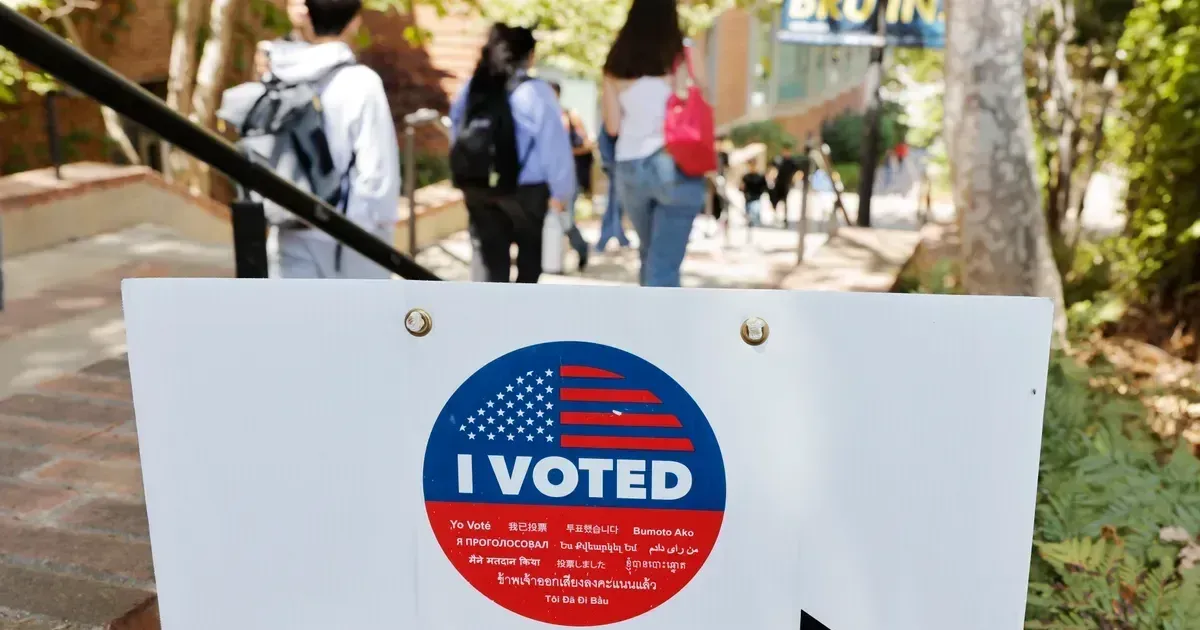
California voters join residents in five other states Tuesday to decide several closely watched primary contests. The primary night gives both parties a scattered but useful read on voter mood. Local contests can expose national weaknesses before November messaging hardens. Residents in Iowa, Montana, New Jersey, New Mexico, and South Dakota are casting ballots to select nominees for federal and state offices. The June 2, 2026, elections span a broad geographic range from the Pacific coast to the Great Plains. Political observers are watching the results closely for early indicators of voter sentiment ahead of the general election cycle. High-profile races in major metropolitan areas and competitive legislative districts highlight the day's docket.
Multiple local and state jurisdictions reported steady turnout during the morning hours. California attracts intense attention because of the open field to replace Gavin Newsom in the governor's mansion. Newsom, who has been an influential figure in national Democratic circles, is reaching the end of his term, leaving a vacuum that several high-profile candidates hope to fill. The race to succeed him has remained unpredictable for months as contenders navigate complex issues involving the state's budget and housing policies. Voters are also weighing in on legislative seats that could determine the balance of power in Sacramento.
California Power Struggle and the Los Angeles Mayoralty
Los Angeles is a central battleground where Mayor Karen Bass is attempting to secure her political future. Bass faces two challengers in a primary that has increasingly focused on public safety and the city's ongoing homelessness crisis. The incumbent mayor has campaigned on her record of expanding temporary housing programs, while her opponents argue that the pace of progress is insufficient. Recent polling suggested a tightening race as the primary date approached, with large portions of the electorate remaining undecided until the final weeks of the campaign.
Spencer Pratt, a reality television personality turned political candidate, has surged in the Los Angeles mayoral contest. Backed by former President Donald Trump, Pratt has used a high-energy campaign style to attract voters frustrated with the status quo. His platform emphasizes a hardline approach to urban management and a rejection of traditional bureaucratic processes. Political analysts note that his presence in the race has shifted the rhetorical focus toward more aggressive policing and property rights. His rise in the polls reflects a broader trend of non-traditional candidates gaining traction in urban elections.
Newsom criticized the broader Democratic approach to social issues during the lead-up to this primary. He specifically targeted what he described as a victim mindset that has hindered progress on the homelessness front. This public critique from the outgoing governor has added a layer of intra-party tension to the various contests across the state. Candidates for the state legislature have been forced to align themselves with or distance themselves from these remarks as they seek to capture the party's base. These internal ideological divisions are becoming a hallmark of the 2026 primary season. Beyond the gubernatorial race, Gavin Newsom has recently taken legislative action regarding the security of state ballot procedures.
California remains an indicator for national urban policy debates.
Legislative Fronts in Iowa and Montana
In Iowa, the focus shifts to a highly competitive Democratic Senate primary. Party leadership identifies this seat as a primary target for gains in the upcoming general election. Several candidates with diverse professional backgrounds are vying for the nomination, each offering different strategies for appealing to rural and suburban voters. The primary is a test of whether the party can bridge the divide between its progressive and moderate wings in a state that has trended Republican in recent cycles. Campaign spending in the state has reached high levels as outside groups attempt to influence the outcome.
"Newsom blasted the Democratic Party's 'victim mindset' regarding homelessness issues during a recent address," according to a report from the field.
Montana presents another intriguing legislative contest with a contested House primary. One candidate, a professional smokejumper, is running on a platform centered on land management and natural resource protection. His background as a first responder in the state's rugged interior has connected with voters who prioritize environmental issues and rural infrastructure. The primary has become a focal point for national groups interested in conservation policy and western land use rights. Montana's increasing population has made these legislative seats more competitive than in previous decades.
Iowa is a critical testing ground for the Democratic strategy in the Midwest.
State-level officials in New Jersey and New Mexico reported no major technical disruptions as polls opened. South Dakota voters are also participating in a series of local and statewide primaries that will set the stage for the fall. Each of these states offers unique insights into the regional priorities of the American electorate, from agricultural policy in the Dakotas to industrial and environmental concerns in the Northeast. Results from these states are expected to trickle in throughout the evening as county clerks begin the tabulation process. The final tallies will provide a detailed map of the political landscape heading into the summer months.
Populist Challenges Will Shape the November Message
What defines the current primary cycle is the widening gap between traditional institutionalism and populist disruption. In California, the rise of a celebrity candidate like Spencer Pratt highlights a growing voter appetite for figures who exist outside the standard political machine. This trend is not isolated to the West Coast but appears as a recurring theme in various statewide contests where voters express fatigue with established policy frameworks. That an incumbent like Karen Bass faces such a spirited challenge indicates that even major urban leaders are no longer immune to the pressures of local dissatisfaction.
Strategic maneuvering within the Democratic Party also suggests a pivot toward more assertive messaging on social disorder. Newsom's public frustration with his own party's handling of homelessness marks a departure from standard partisan solidarity. The shift implies that Democratic leaders are increasingly aware that permissive policies may be reaching a point of diminishing returns with the broader electorate. If the primary results favor candidates who emphasize enforcement and fiscal accountability, it could signal a broader national realignment in how urban centers are governed. The electoral verdict tonight will serve as the first hard data point in this developing narrative.