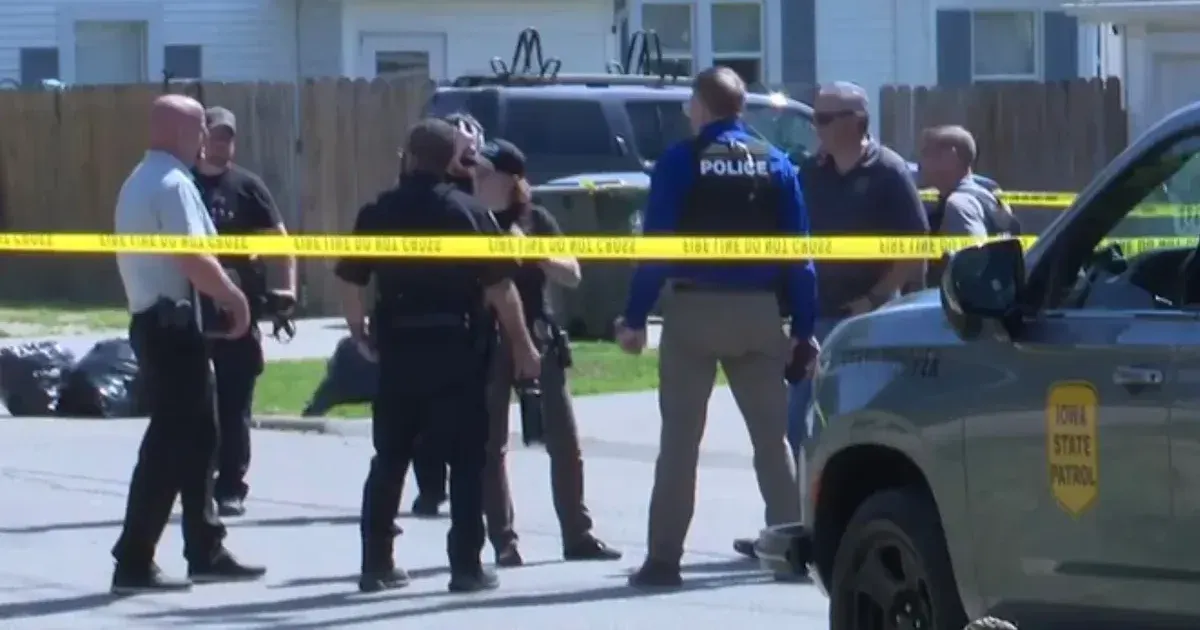
Muscatine investigators began processing multiple crime scenes after a domestic dispute turned into a mass casualty event. The case has left local officials balancing public safety updates with the need to protect the investigation. Ryan Willis McFarland is suspected of killing six family members before ending his own life during a standoff with law enforcement. This violence occurred on June 1, 2026, in a quiet residential area of Muscatine, Iowa, located roughly 50 miles southeast of Cedar Rapids.
Police Chief Anthony Kies confirmed during a news conference that the casualties included six victims and the gunman. Officers reached the primary residence during the afternoon hours and discovered four bodies inside the home. Two additional victims were located at a separate site nearby, though authorities have not yet specified the relationship between the two locations. Evidence gathered at the scene suggests the suspect acted alone during the late-night or early-morning hours before police received the initial report.
Negotiations with McFarland began shortly after police tracked him to a specific location in the city. Officers managed to establish communication with the suspect as they attempted to resolve the situation without further loss of life. Reports indicate that McFarland took his own life while actively speaking with the officers on the scene. Chief Kies described the events as an act of evil that has shaken the local community. Legal records regarding any prior domestic incidents involving the suspect are currently under review by state and local agencies.
Timeline of the Muscatine Domestic Shooting
Initial emergency calls alerted the Muscatine Police Department to a potential disturbance involving firearms at a family residence. Law enforcement personnel arrived to find a scene of severe violence, with four individuals pronounced dead on the premises. Investigation teams immediately cordoned off the area while searching for a suspect who had already fled the immediate vicinity. The discovery of two more victims at a secondary location expanded the scope of the investigation across the city.
Authorities in Iowa are investigating the fatal shootings of six people they believe were killed by a relative who took his own life when confronted by police.
Detection of the suspect's vehicle allowed police to contain the threat within a localized perimeter. Specialized units arrived to assist with the negotiation process, hoping to convince the gunman to surrender into custody. McFarland, however, remained defiant throughout the brief dialogue with crisis responders. The tactical team reported hearing a single gunshot inside the suspect's vehicle or temporary position while the negotiation was still in progress. Emergency medical technicians reached the suspect immediately but were unable to revive him.
Forensic teams from the Iowa Division of Criminal Investigation are currently assisting Muscatine police with the recovery of physical evidence. Identifying the six victims has proven difficult because of the nature of the crime and the need to notify extended family members across multiple jurisdictions. Authorities spent the night of June 1, 2026, documenting the ballistics and entry points at both residential scenes. Neighbors reported hearing muffled sounds earlier in the day but did not initially associate them with gunfire.
Community Impact and Investigatory Procedures
Local schools and community centers in Muscatine implemented safety protocols as news of the multiple fatalities spread. Residents gathered at the police perimeter, seeking information about friends and family members who lived in the affected neighborhoods. Chief Kies emphasized that the threat to the general public was neutralized once McFarland was confirmed dead. Support services for first responders have been activated to help officers manage the psychological impact of the discovery. This incident marks the highest death toll from a single shooting event in Muscatine County history.
Procedural reviews of the police interaction with McFarland are standard in cases involving a suspect's death during a confrontation. Body camera footage from the responding officers will be examined to ensure that all engagement protocols were followed during the standoff. Preliminary findings suggest that the officers did not discharge their weapons during the interaction with the suspect. Detectives are now focusing on the motive behind the domestic dispute, interviewing friends and colleagues of the deceased to build a psychological profile of the gunman.
Public records searches for Ryan Willis McFarland have not yet revealed a long history of violent criminal activity in the Muscatine area. Investigators are looking into whether any restraining orders or domestic violence calls were logged at the addresses in the weeks leading up to the shooting. Financial records and communication logs from the suspect's personal devices are also being scrutinized for signs of premeditation. Results from the official autopsies are expected within the next 48 to 72 hours, providing a clearer picture of the sequence of events.
Domestic Violence Cases Strain Small-City Response
Domestic violence cases involving multiple victims present unique challenges for law enforcement agencies, particularly regarding rapid intervention and threat assessment. The proximity of the victims to the suspect often eliminates the early warning signs that police look for in public-facing threats. The tragedy highlights the extreme risk of escalation when firearms are present in volatile family situations. Police departments across the Midwest have increasingly focused on integrated response teams that pair tactical officers with mental health professionals during active standoffs. Such a combination was deployed in Muscatine, yet the speed of the suspect's final action bypassed the traditional goals of a negotiated surrender.
Resource allocation for smaller municipalities like Muscatine is often strained during mass casualty investigations. Reliance on state-level assets like the Iowa Division of Criminal Investigation is necessary to maintain the integrity of multiple crime scenes. Future policy discussions in the state legislature may focus on enhancing the tracking of domestic threats before they reach the level of lethal violence. The immediate focus stays on the forensic reconstruction of the final hours leading up to the tragedy. Security protocols for local officers during negotiations will also likely undergo a thorough evaluation following the suspect's self-inflicted death while in contact with police.