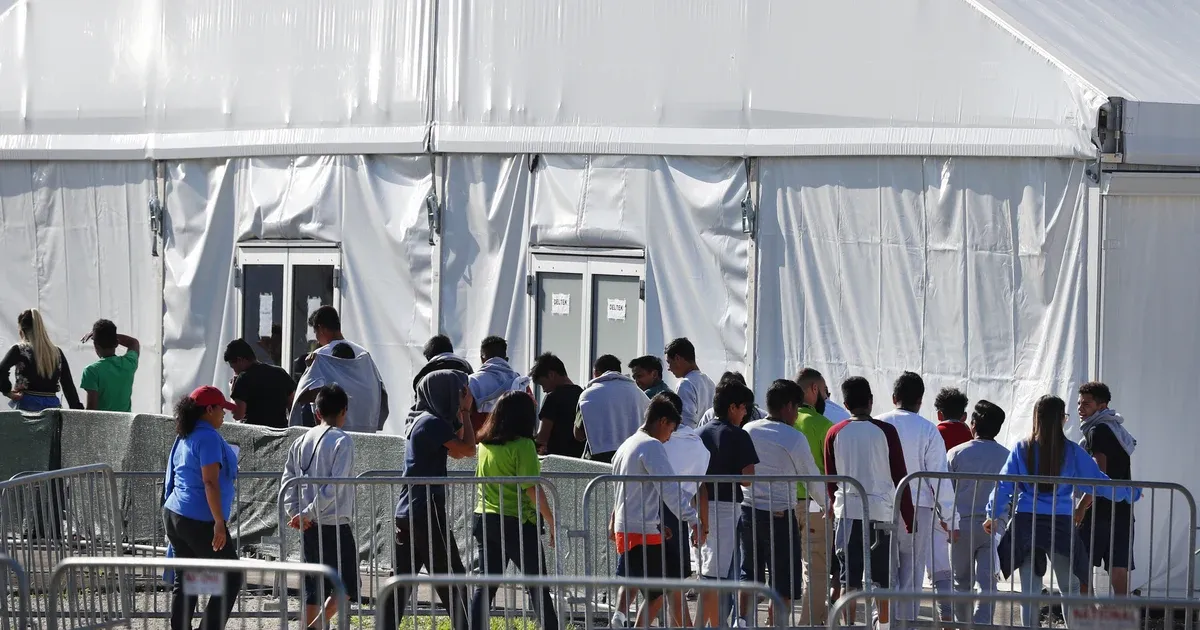
A proposed federal procurement would send up to $150 million to Houston-based Burke Law Group for counsel in immigration cases involving children held without guardians. Burke Law Group lists 24 attorneys; NPR's roster count found immigration or asylum work listed for two of them. The proposed work would cover children facing immigration proceedings without a parent or guardian. It arrives just after a network of nearly 100 nonprofit legal providers lost its federal contract.
On August 5, 2026, NPR reported that the award was scheduled to appear in the Federal Register the following day. The Department of Health and Human Services is the awarding agency, and the proposed agreement is due to take effect on August 15. That schedule leaves a two-week interval after the previous nonprofit contract ended on July 31.
A $150 Million Contract Meets a Two-Lawyer Specialty Bench
Burke Law Group describes its core work as advising companies on environmental, regulatory and enforcement matters. Immigration and asylum are specialties for two of its 24 lawyers, according to the firm's roster reviewed by NPR. The contrast does not establish that the firm cannot build a larger team. NPR found no published hiring plan, subcontractor network or caseload model for the $150 million proposed award.
The firm's leadership also has federal connections. Co-founder Marcella Burke worked at the Interior Department and Environmental Protection Agency during President Donald Trump's first administration. Another Burke founder, Jeffrey Hall, now holds a senior EPA post as an assistant administrator. Sen. Sheldon Whitehouse had also challenged Hall's environmental record during his confirmation. Burke Law Group and HHS did not answer NPR's requests for comment, while the EPA did not respond to a separate question about Hall.
The stakes go beyond an ordinary civil filing. The federal government has long been required to protect children who enter the country without guardians because they may face exploitation, abuse or trafficking. Some are too young to speak. Lawyers help them understand immigration proceedings, present asylum claims where applicable and avoid facing a removal process without an adult able to protect their interests.
The Coverage Math Leaves Most Children Outside Shelter Care
Former providers put the funded shelter cohort at roughly 1,800 children. Advocates counted nearly 22,000 additional children outside HHS shelters, with no clear route to representation. The two figures describe different populations, so the contract's headline value cannot be read as nationwide coverage. It identifies a funded group while leaving a much larger group without a publicly explained successor arrangement.
The handoff is already under strain. A coalition of almost 100 nonprofit providers handled similar work until its contract expired at the end of July. Those organizations said they would continue serving children without payment for now because of their professional obligations, but only while their remaining resources last. Their temporary decision is filling the gap; it is not a funded extension of the old agreement.
Money from the previous arrangement is also disputed. Payments to the nonprofit network ceased last November. NPR linked the cutoff to the lawyers' refusal to disclose protected details about their child clients. The providers say attorney-client privilege protects that information, claim the government owes them $65 million and are pursuing the issue in court. Any successor must therefore manage both legal representation and the unresolved boundary between agency data demands and client confidentiality.
Acacia Center for Justice held the earlier contract through July 31. It said any replacement needs extensive immigration-system experience and training for work with children who may have fled violence, trafficking or abuse. That requirement is distinct from general litigation skill: interviews, consent, trauma, language access and immigration deadlines all shape how a child's case can be prepared. NPR found no public description of the training Burke personnel would receive before the August 15 start.
Implementation Will Be Measured in Lawyers, Files and Missing Coverage
The procurement figure is large, but delivery depends on capacity that the award notice alone does not show. The immediate questions are how many qualified lawyers will be assigned, where they will work, how cases will transfer from nonprofit providers and whether records can move without compromising privilege. A 24-lawyer firm can expand through hiring or partners, but NPR reported no such structure. The first operational evidence will come from staffing and completed handoffs, not the contract ceiling.
The wider test concerns the nearly 22,000 children outside shelters. If the new agreement serves only the 1,800 children in HHS facilities, the government still needs a route for the larger group to obtain counsel. That gap matters because immigration cases continue even when a child leaves federal custody. A contract can stabilize one part of the system while leaving another part dependent on unpaid organizations.
The August 15 start date gives HHS little time to show that the transition is workable. Clear caseload assignments, specialist staffing and a lawful rule for handling confidential information would answer the central concerns raised by former providers. Without those details, the proposed award remains a funding decision whose practical reach is uncertain. Its success will be measured by whether children receive continuous, competent representation across both sides of the shelter boundary.