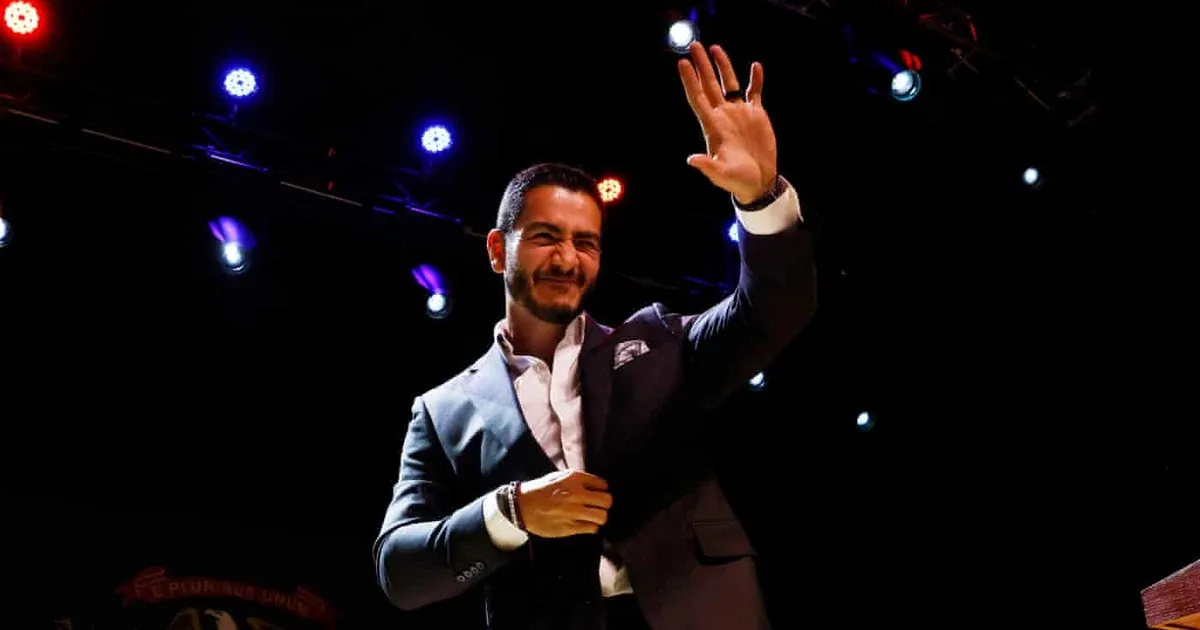
Abdul El-Sayed has won Michigan's Democratic nomination for the U.S. Senate, but the scale of the victory leaves him with an immediate coalition problem. The former public health official defeated Representative Haley Stevens after a campaign that divided Democrats over ideology, Israel policy and the role of outside money.
On August 5, 2026, the projected margin stood at less than one percentage point. Fewer than 15,000 votes separated the candidates after more than 1.5 million ballots had been counted, according to the BBC. El-Sayed will face Republican Mike Rogers in November for the seat being vacated by retiring Democratic Senator Gary Peters.
A Sub-One-Point Margin Qualifies the Progressive Breakthrough
El-Sayed entered the race as a former Michigan health official rather than a member of Congress. He made universal coverage under Medicare central to his campaign and paired it with proposals to cut prescription-drug costs, raise taxes on wealthy Americans and change campaign financing. He has described himself as a capitalist who wants stronger checks on monopolies, not as a democratic socialist. Senators Bernie Sanders and Elizabeth Warren and Representative Alexandria Ocasio-Cortez backed him, while Stevens drew support from Senate Democratic leader Chuck Schumer, Governor Gretchen Whitmer and Peters.
The result gave the party's left a major statewide nomination, yet it was substantially closer than pre-election surveys had suggested. BBC analysis found that El-Sayed performed well among higher-educated liberal voters. By contrast, Stevens drew more strength from working-class Detroit precincts and rural communities. Black voters had become a particular focus as both campaigns organized at churches and festivals; they accounted for roughly 20 percent of Democrats casting primary ballots. Those differences matter because a primary can be won by mobilizing one part of a party, while a statewide general election requires nearly all of it.
Money became a central argument in the closing weeks. The Guardian reported that more than $40 million in outside spending supported Stevens or attacked El-Sayed, with AIPAC-linked organizations among the funders. BBC analysis placed pro-Stevens outside support even higher in one comparison and said outside groups favored her by nine to one. El-Sayed used that imbalance to present his victory as proof that a grassroots organization could withstand a large advertising disadvantage.
Israel policy also separated the candidates. El-Sayed opposed U.S. military involvement in the Middle East and aid to Israel, while Stevens supported continued aid without conditions. He rejected accusations of antisemitism and said opposition to antisemitism could coexist with concern for suffering across communities. The issue will remain available to Rogers and allied groups, but the primary result shows it did not prevent El-Sayed from winning a Democratic electorate.
Rogers Inherits a Race With No Safe Statewide Coalition
Rogers, a former congressman, ran without opposition for the Republican nomination. The 2024 Senate ballot also carried his name; Democrat Elissa Slotkin defeated him. Michigan has not elected a Republican U.S. senator since 1994, but its presidential record is much less stable: Donald Trump carried the state in 2016 and 2024, while Joe Biden won it in 2020.
That history gives both nominees a plausible route and a clear weakness. El-Sayed can point to an energized progressive base and a campaign that survived heavy outside spending. Rogers can argue that the Democratic nominee sits left of some voters who backed Stevens. Neither advantage settles the contest because the seat is central to Democratic hopes of regaining Senate control and Michigan repeatedly changes sides in national elections.
The field itself changed during the campaign. State Senator Mallory McMorrow, once supported through Warren's McMorrow endorsement, withdrew and later backed El-Sayed. Stevens conceded and offered him her support after the result. Those endorsements provide a formal path toward unity, but they do not automatically transfer the preferences of voters who chose a more moderate candidate.
El-Sayed's biography adds another national dimension. The 41-year-old son of Egyptian immigrants would become the first Muslim U.S. senator if elected. His campaign also linked health policy to household costs and the influence of large donors. Rogers will try to convert those positions into ideological risk; El-Sayed must convert them into a broader economic case that reaches voters who did not select him in the primary.
Detroit and Rural Defections Now Control the Rogers Matchup
The narrow result identifies where the general election will be won or lost. El-Sayed does not need to abandon the policies that produced his nomination, but he does need Stevens voters in lower-income Detroit communities and rural counties to see a reason to remain with the Democratic ticket. Rogers needs enough of those voters to defect while preserving Republican turnout in a state Trump carried two years ago. More than 1.2 million people voted before election day, including nearly 139,000 during nine days of early in-person voting, so both campaigns already have a substantial turnout map to study.
The national consequence is unusually direct because Democrats cannot afford to surrender a seat they already hold while trying to change control of the Senate. El-Sayed's primary campaign proved that organization could overcome a large spending imbalance inside his party. November measures a different capability: whether that organization can absorb a divided primary electorate and compete across Michigan's urban, suburban and rural map. The less-than-one-point margin supplies the first list of counties and voter groups where that work must begin.