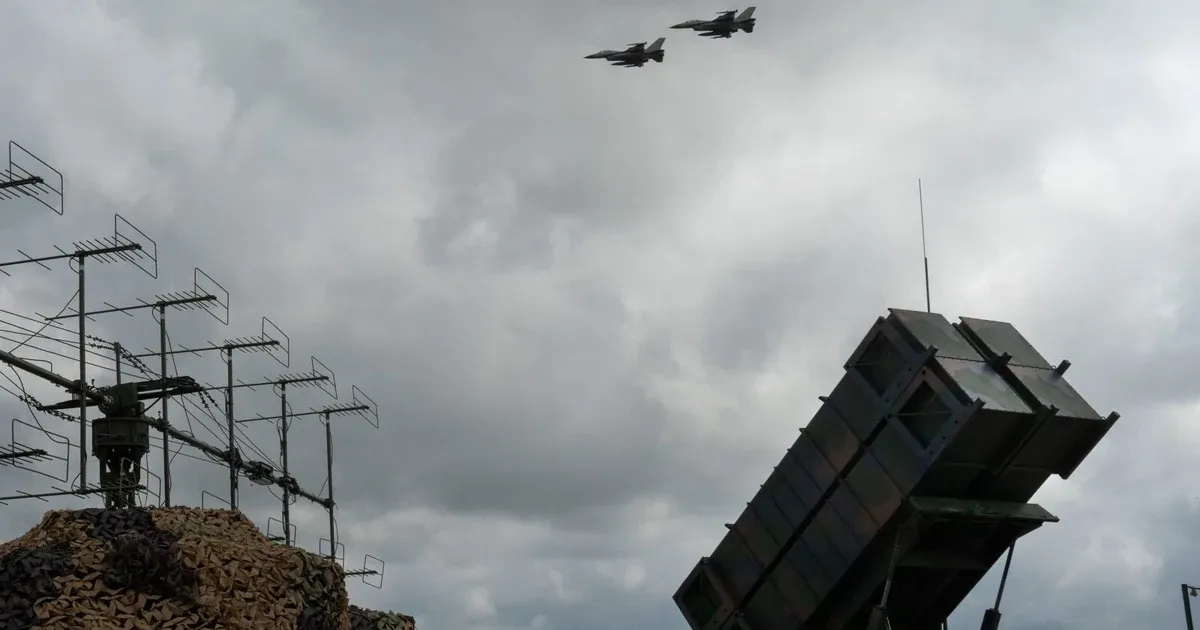
A Russian barrage over Kyiv exposed a shortage that reaches far beyond Ukraine. Twenty-seven ballistic missiles were launched, President Volodymyr Zelenskyy said, and Ukrainian forces intercepted only one. The same Patriot interceptors Kyiv needs are also being drawn down by U.S. operations and guarded closely by allies in the Middle East.
Nine people were killed and more than 30 wounded in the August 1, 2026 attack. Ukraine has other air-defense systems, but NPR reported that Patriot remains its only reliable defense against Russia's ballistic missiles. The immediate request is for more rounds; the harder problem is that the available pool cannot be replenished at the speed it is being used.
The numbers behind that pressure are classified. CSIS calculated in July that Washington held more than 2,300 Patriot interceptors before the Iran war started on February 28, compared with about 800 after the fighting. An unnamed U.S. official told NPR that those estimates appeared accurate. They are not an official inventory release, but they show the scale of the reported drawdown. The estimate also should not be read as a count of missiles that Washington can freely send abroad. Some interceptors must remain positioned with U.S. forces or committed to existing defense plans. The relevant supply for a new transfer is therefore smaller than the headline total, even before allied requests are considered. That difference between total inventory and available inventory helps explain why an urgent battlefield need can coexist with hesitation in Washington.
Three Regions Are Pulling From the Same Patriot Supply
Ukraine is not competing with one U.S. mission for replacements. American forces expended interceptors during the Iran war, while Gulf partners want protection against another attack. Nearly 20 U.S. allies operate Patriot, creating a wider set of governments that must weigh their own readiness against transfers to Kyiv.
That is why Zelenskyy's appeal to allies has produced no public pledge of additional stockpiled missiles. A transfer can strengthen Ukraine immediately while reducing the donor's reserve for an uncertain period. The calculus is especially difficult for states that see an active ballistic-missile threat in their own region.
A second U.S.-made system illustrates the same strain. CSIS estimated that the THAAD interceptor stockpile fell from about 450 before the Iran war to around 250. THAAD units also protect two Gulf allies, Saudi Arabia and the UAE. That decline reinforces the broader pattern: regional wars are consuming specialized defenses faster than current factories can replace them.
Production Is Below the Pace of Missile Use
RTX's Raytheon unit builds Patriot batteries and interceptors, while Lockheed Martin also manufactures the missiles. Together they produce fewer than 1,000 interceptors a year, according to NPR. Each costs roughly $4 million. Both companies plan to increase output, but neither has provided a timetable that would close the near-term gap.
Defense Secretary Pete Hegseth challenged the premise of shortage reporting when asked about it in June. In April, however, he had warned that sophisticated munitions require months or years to replace. The latter description fits the industrial constraint: production depends on specialized components, qualified suppliers and capacity that cannot be added by ordering another shift. Higher annual output would also have to serve more than Ukraine. It would rebuild rounds used by U.S. forces, support allies that already operate the system and restore a reserve for future attacks. A production increase can look large in isolation while still leaving the inventory under pressure if current users continue firing at wartime rates. The comparison that matters is not this year's factory total against last year's total, but new missiles against combined use and replenishment commitments.
Analyst Rob Lee described the shortage this way:
It's a really big stockpile problem. I don't know if there's any immediate solution.
The bottleneck is annual output, not simply political willingness. Even a decision to allocate more missiles to Ukraine would redistribute a limited inventory before it created a single new interceptor.
A Ukrainian Factory Would Not Solve This Year's Shortage
President Donald Trump said at a NATO summit in Turkey that he would give Ukraine a license to produce Patriot missiles. After Zelenskyy met Lockheed Martin representatives at the White House, Trump stepped back from that position on Friday, citing concerns about sharing the technology.
Licensing would be consequential because only Germany and Japan currently make Patriots under U.S. authority. Representative Don Bacon has argued that Ukraine should be allowed to build them. Yet a Ukrainian production line would still require protected facilities, suppliers, technical transfers and certification. NPR reported that assembling that chain could take years. Zelenskyy's meeting with Lockheed Martin showed that Kyiv is pursuing the industrial route as well as immediate transfers. The two tracks operate on different clocks. Missiles moved from an existing stockpile can reach a battery far sooner, but leave the donor with fewer rounds. A licensed line could add durable capacity without repeating that trade, though not in time to shape the next months of air defense.
A license is therefore a long-term capacity decision, not an emergency resupply package. It could expand the number of producers and place manufacturing closer to the main European battlefield, but it would not replenish launchers after the next Russian barrage.
Washington Must Choose Where Scarce Interceptors Sit
The near-term options all carry a cost. Washington can release more from its own inventory, persuade allies to accept smaller reserves or keep Ukraine dependent on irregular transfers. It can also accelerate contracts and licensing, but those steps address future output rather than missiles already needed in launchers.
The latest Kyiv strike turned those tradeoffs into a measurable operational failure: 26 ballistic missiles reached their targets or evaded interception, based on Zelenskyy's figures. Until production rises, every Patriot transfer remains an allocation choice among exposed fronts. The decisive U.S. question is not whether demand exists. It is which threat receives protection while factories catch up.