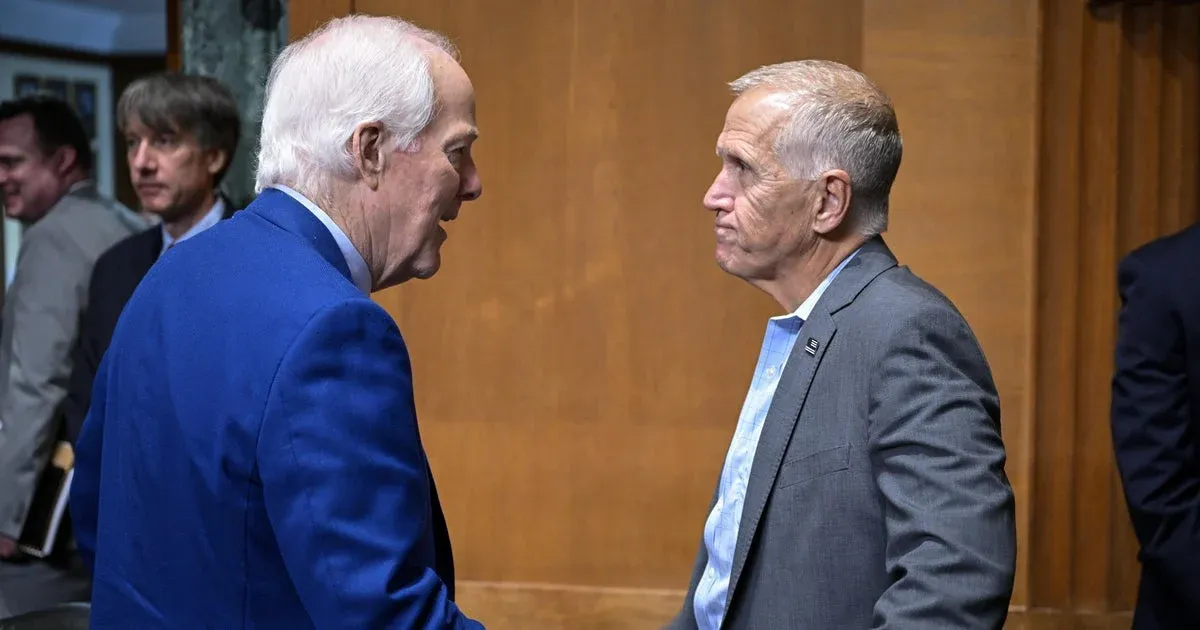
Two Republican senators who had stalled Todd Blanche's attorney-general nomination now say they will support moving it forward. Their switch restores a path through the Senate Judiciary Committee but does not complete the confirmation. On August 3, 2026, Texas Senator John Cornyn and North Carolina Senator Thom Tillis announced that written Justice Department orders had resolved the conditions behind their opposition.
The department formally terminated a planned $1.8 billion anti-weaponization fund. A separate binding order narrowed the reach of tax-audit protection created by a settlement involving Donald Trump, his family and the Internal Revenue Service. Cornyn and Tillis said the protection is limited to the plaintiffs and returns already covered by the settlement, rather than extending indefinitely to later filings.
The postponed committee vote had made those two demands the immediate test for Blanche. Republican leaders removed the nomination from a previous meeting after the senators withheld support, even though Blanche had publicly described the compensation program as dead. Committee staff tied the delay to an effort to find the votes needed for a favorable report of Blanche's nomination to the full Senate. The holdouts insisted that a statement was not enough and sought enforceable language before another vote.
Written Orders Replaced Political Assurances
The contested program came from a May agreement resolving Trump's suit over tax records improperly disclosed by a contractor. People alleging that federal agencies had been used against them could have applied for compensation. Members of both parties raised concern that people convicted of assaulting law-enforcement officers during the January 6, 2021 Capitol attack could receive taxpayer-funded payments. Blanche later told a House committee that the department was not proceeding with the fund, but that testimony did not end the senators' objections.
The audit provision created a second dispute. The agreement applied to the president, Donald Trump Jr., Eric Trump, the Trump Organization and related businesses. Cornyn and Tillis wanted the protection confined to the listed parties and tax returns already filed with the IRS, leaving future tax filings outside the agreement's protection. Ending the fund did not answer that separate question, so the senators negotiated for both terms in writing. A federal judge overseeing the lawsuit had also criticized how the government defended the case and questioned whether the resulting arrangement improperly benefited the president.
Cornyn and Tillis said the final documents met that test:
“We are pleased that the Department of Justice has issued a formal order terminating the anti-weaponization fund.”
Blanche's order rescinded his May directive that had created the compensation program. It also specified that the audit protection applies only to Trump, Donald Trump Jr., Eric Trump and the Trump Organization and only to returns already filed. CBS News reported that the underlying settlement signed by Trump and his lawyers was not itself rewritten. Blanche said the order followed meetings with Judiciary Committee members and discussions about their concerns.
The change followed a weekend confrontation with the White House. Trump's weekend message said the acting appointment could continue and the compensation plan could return unless the opposition ended. Tillis responded that the reversal would prevent confirmation even though he considered Blanche qualified. He nevertheless held open the possibility of resolving the dispute before the next committee meeting. Blanche issued the rescission order the following day.
With Cornyn and Tillis now backing the nominee, the Judiciary Committee was expected to meet Tuesday and send the nomination to the full Senate. Their support supplies two Republican votes that committee leaders lacked at the postponed meeting. Both senators are due to leave the Senate early next year, but they remain pivotal committee votes in the current confirmation fight. The committee action would remove the current obstacle; Blanche would still need approval in a separate Senate vote.
The distinction between the order and the settlement remains important. The Justice Department ended its own fund directive and defined how it will interpret the audit protection, while the written settlement with Trump stayed in place. That structure gave the senators enforceable departmental instructions without reopening the entire court agreement.
Two Documents Now Control Blanche's Senate Path
The nomination moved because the dispute was converted from competing public claims into two written limits. One closes the compensation program; the other prevents the audit language from reaching future tax returns. Cornyn and Tillis can now point to specific text supporting their votes, while the department remains responsible for following those restrictions.
The next record will be procedural rather than rhetorical. The committee must report the nomination, the full Senate must vote and the Justice Department must comply with its orders. Cornyn and Tillis have promised only to advance Blanche from committee, so their announcement should not be read as a final Senate result. Nor does the agreement itself install Blanche permanently; he remains acting attorney general while the confirmation process continues. The committee meeting was scheduled for Tuesday morning, but no date had been announced for a vote by the full Senate. Those steps separate a negotiated breakthrough from a completed confirmation and make any later effort to revive the fund or broaden audit protection visible against the documents that secured support.