Nova Scotia’s wildfire ban ruling turned a local hiking ticket into a test of how precisely emergency powers must be written. Justice Timothy Gabriel delivered a ruling on April 25, 2026, striking down provincial regulations that penalized citizens for entering forested areas during wildfire emergencies. The decision originated from a legal challenge brought by Adam Zita, a resident who contested an enormous fine issued during the record-breaking fire season of 2023. Zita argued that the provincial government lacked the authority to impose vague restrictions that failed to provide clear geographic boundaries for where the public could legally walk.
Government officials in Nova Scotia issued the blanket ban in May 2023 as multiple fires consumed tens of thousands of hectares across the province. Authorities sought to prevent human-caused ignitions and ensure that emergency responders could operate without civilian interference. Penalties for violating the order were set at $25,000, a sum designed to serve as a deterrent during a period of extreme environmental instability. This fine represented more than half of the median annual income for individuals in the region.
Nova Scotia Wildfire Emergency and Executive Overreach
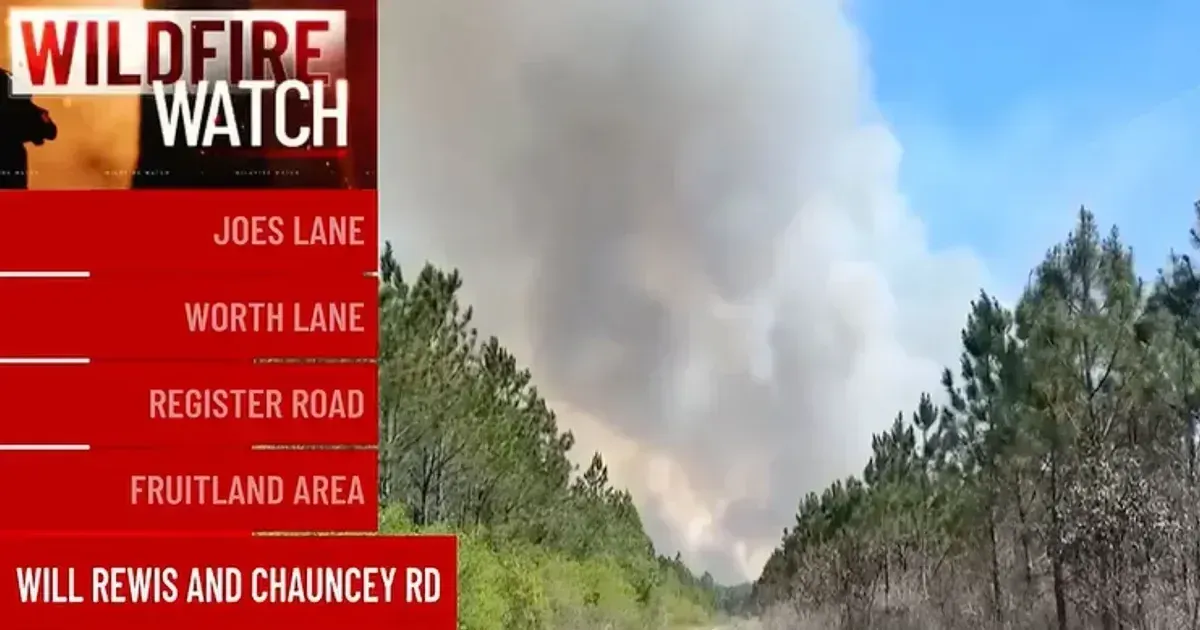
Wildfires burned through the Tantallon and Shelburne areas with historic speed during the early summer months of 2023. These fires forced the evacuation of more than 16,000 residents and destroyed approximately 200 homes. Provincial leaders used the Emergency Management Act to restrict movement, effectively closing all wooded areas to hiking, fishing, and biking. Enforcement officers began patrolling trailheads and public lands to ensure compliance with the ministerial directive. Police encountered Zita on a trail that he believed fell outside the restricted zone. The ensuing citation sparked a three-year legal battle regarding the precision of legislative language. Zita contended that the term "the woods" was never defined in the provincial order, leaving citizens to guess which specific environments were off-limits. He maintained that his presence on a well-maintained, clear path did not constitute a violation of the spirit of the safety measures.
Legal experts tracked the case as a test of how far emergency powers can extend when they conflict with fundamental rights of movement. The province argued that the urgency of the fire situation justified broad language to ensure public safety. Data from the 2023 season showed that human activity was still a primary cause of accidental ignitions in the Atlantic provinces. Proponents of the ban asserted that the high cost of the fine was necessary to prevent catastrophic property loss.
Legal Conflict Over Geographic Definitions
Justice Gabriel focused his analysis on the lack of semantic clarity within the government order. He found that the term "the woods" was too subjective to support a criminal or quasi-criminal penalty of such magnitude. A resident might consider a backyard treeline to be the woods, while another might only apply the term to deep, unmanaged wilderness. This ambiguity created an environment where law enforcement had too much discretion in determining who was breaking the law.
"The lack of any definition for 'the woods' in the order, or for that matter in the act, is a serious omission," Justice Timothy Gabriel wrote in his decision.
Constitutional protections in Canada require that laws be clear enough for a reasonable person to understand what behavior is prohibited. Gabriel noted that the provincial government could have used more precise terms, such as crown lands, provincial parks, or specific map coordinates. Instead, the administration relied on colloquialisms that failed the test of legal scrutiny. The court found that the public cannot be expected to follow rules that are not clearly outlined in the text of the order.
Arguments presented by the defense highlighted the inconsistency of enforcement across different municipalities. Some officers ignored walkers on paved paths near forests, while others issued tickets to people near the edges of their own properties. Zita provided evidence that his location at the time of the citation was a transition zone between urban development and natural growth. The court agreed that such zones create a "grey area" that the government failed to address.
Financial Penalties and Civil Liberties
The $25,000 fine became a central point of contention during the investigative proceedings. Critics of the Nova Scotia government labeled the penalty as punitive rather than preventative. While the province intended to protect the environment, the financial burden placed on individuals appeared disproportionate to the risk posed by a solitary hiker on a clear trail. The court examined whether the fine amount influenced the interpretation of the law's validity. Records from the Nova Scotia Department of Natural Resources indicated that the 2023 season resulted in 220 separate wildfires. These fires burned over 25,000 hectares, a total that exceeded the combined sum of the previous eight years. High temperatures and prolonged drought conditions made the landscape particularly vulnerable to even minor heat sources. Government attorneys argued that the severity of the environmental crisis required the severity of the legal response.
Judicial precedent in Canada often balances individual liberty against the collective good during states of emergency. Gabriel, however, ruled that even during a crisis, the government must adhere to basic principles of legislative drafting. He stated that the severity of a situation does not grant the state the right to use imprecise language that compromises the predictability of the law. The ruling effectively voided Zita's ticket and set a standard for future emergency orders.
Judicial Ruling on Legislative Clarity
Future emergency declarations in the province will now require specific geographic markers or defined terms to remain enforceable. Government agencies are currently reviewing the Emergency Management Act to integrate more rigorous definitions of natural environments. This process involves categorizing land types to prevent a repeat of the legal collapse seen in the Zita case. Officials suggest that future bans will likely refer to specific Parcel Identification numbers or registered provincial park boundaries. Legislative analysts suggest the ruling is a check on executive power during rapid-response scenarios. When a province declares a state of emergency, the normal process of debate and refinement is bypassed in favor of speed. Justice Gabriel's decision emphasizes that speed does not excuse the drafting of unconstitutional or vague mandates. The Nova Scotia government has not yet indicated whether it will appeal the decision to a higher court.
Zita expressed satisfaction with the outcome, noting that his goal was to ensure that laws are applied fairly to all citizens. The case has already prompted similar reviews of wildfire-related bylaws in neighboring provinces like New Brunswick and Prince Edward Island. These jurisdictions are seeking to avoid the same pitfalls by updating their definitions of "forested land" and "restricted zones." The decision remains an important point of reference for administrative law in Canada.
Emergency Powers Do Not Excuse Vague Laws
Vague laws are the preferred tool of incompetent administrators who prioritize optics over enforceable policy. The Nova Scotia government attempted to substitute sound legislative drafting with the blunt instrument of a $25,000 fine, hoping that fear would compensate for their lack of clarity. When the state uses colloquialisms like "the woods" to define the limits of human liberty, it is not practicing public safety; it is practicing laziness. Justice Gabriel was correct to dismantle this order, as the precedent of allowing a government to fine citizens based on "commonsense definitions" would eventually lead to a total erosion of the rule of law.
Does the government truly believe that a hiker on a paved trail poses the same threat as a campfire in a dry ravine? By failing to differentiate between these behaviors, the province signaled that its primary objective was total control instead of targeted risk mitigation. The approach alienates the very public whose cooperation is essential during a natural disaster. When the penalty for a walk in the park is half a year's salary, the law ceases to be a guardian of the peace and becomes an agent of state-sponsored extortion. The ruling is a necessary reminder that emergencies do not grant the government a holiday from the constitution. Bureaucrats must now face the reality that they cannot govern through ambiguity. Precision is the price of power. If the province wants to close the forests, it must draw a map. If it wants to levy fines, it must define the crime. The era of the blank-check emergency order is over. Accountability wins.