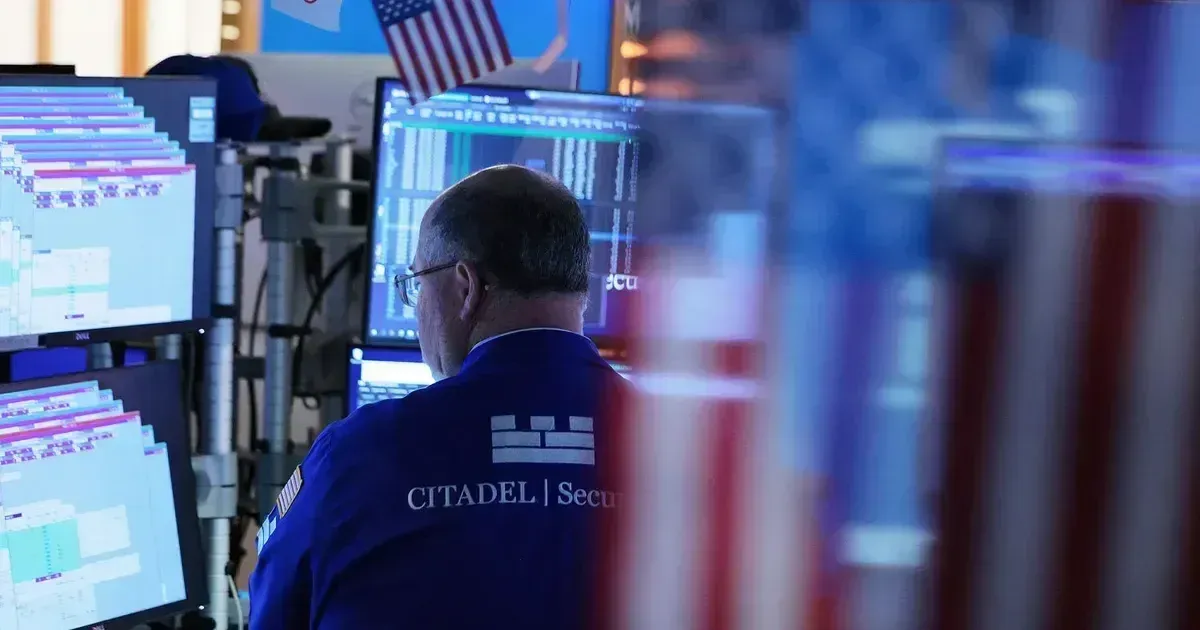
Wall Street treated the ceasefire as permission to take risk again. Technology shares led the move while global investors looked for relief from geopolitical pressure. The rally depended on confidence that the ceasefire would hold beyond the first headline. On April 16, 2026, S&P 500 traders pushed the index to a record close of 7,022.95, marking the first time the benchmark crossed the 7,000 threshold. Geopolitical stability triggered a broad wave of buying across every major global exchange. Equity markets in North America and Asia surged simultaneously because of a breakthrough ceasefire agreement in the Middle East. Optimism regarding the cessation of hostilities lowered risk premiums and encouraged a rotation back into high-growth assets.
Investors globally adjusted their portfolios to account for reduced supply-chain uncertainty. Technological firms, which are particularly sensitive to geopolitical risk, led the afternoon rally. Nasdaq composite gains accelerated late in the session as institutional desks increased their exposure to semiconductor and software stocks. Market participants interpreted the regional peace deal as a catalyst for sustained economic expansion through the fiscal year.
Total volume on the New York Stock Exchange surpassed 3.5 billion shares during this historic session. Gains were not confined to domestic borders. Regional markets mirrored the exuberance seen in New York. Asian traders reacted to the overnight momentum with a coordinated buying spree that lifted indices in Tokyo and Seoul.
Wall Street Breakthrough and Tech Sector Growth
Tech stocks dominated the price action throughout the trading day. Nasdaq composite performance reached 24,016.02, a gain of 1.59%. This extension of the winning run to 11 consecutive sessions is a period of extreme bullish conviction. Software developers and artificial intelligence hardware manufacturers saw the most aggressive buy orders. Lower energy costs, a direct result of the ceasefire, are expected to improve corporate margins for energy-intensive data centers.
Market analysts cited the resolution of regional conflict as a primary driver for tech valuations. When geopolitical tensions dissipate, capital tends to flow toward the most liquid and growth-oriented sectors. Tech companies with serious international operations stand to benefit most from the stabilization of global trade routes. Institutional investors moved billions of dollars from defensive utilities into aggressive growth sectors within the first hour of trading.
Index heavyweights provided the necessary buoyancy to breach psychological resistance levels. Breaking the 7,000 mark on the S&P 500 required a coordinated effort from the financial and consumer discretionary sectors. Large-cap banking stocks climbed because of improved outlooks for international lending. Global trade finance activities are projected to increase as shipping lanes in the Middle East reopen to unrestricted traffic.
Asian Markets Respond to American Momentum
Japan's benchmark Nikkei 225 index rose 1.6% during early morning trading. Broader market sentiment in Tokyo remained resilient, with the Topix index gaining 1.1%. Electronics manufacturers and automotive exporters led the Nikkei higher as the Japanese yen stabilized against the dollar. Traders in Japan have been closely monitoring Wall Street performance to gauge the direction of global capital flows. The strength of the American close provided a definitive signal for Asian sessions.
South Korea's blue-chip Kospi index advanced 1.5%. Heavy industry and shipping companies in Seoul saw their stock prices appreciate due to the ceasefire news. South Korean exporters rely heavily on the stability of energy prices and maritime safety. The positive movement in the Kospi reflects a regional sigh of relief regarding the security of essential commercial waterways. Analysts noted that the Kospi has often lagged behind the Nikkei, but the current rally shows synchronized regional strength.
Liquidity remained high throughout the Asian trading window. Institutional buyers from Singapore and Hong Kong increased their positions in regional ETFs. These investors are betting that the ceasefire will lead to a more predictable inflationary environment. Central banks in the region may find more room to maintain current interest rates if energy prices continue to decline. Regional stability is a requirement for the continued outperformance of emerging market equities.
Geopolitical Impacts on Global Investment Flow
Conflict resolution has immediate effects on the cost of equity. When the ceasefire agreement was announced, the volatility index plummeted. Lower volatility allows algorithmic trading systems to increase position sizes without exceeding risk limits. This technical buying pressure creates a feedback loop that drives prices higher. Such a phenomenon was evident in the final ninety minutes of the Wall Street session.
Capital flight from safe-haven assets like gold and government bonds accelerated the equity surge. Investors liquidated positions in precious metals to fund purchases in the S&P 500 and other risk assets. Yields on the 10-year Treasury note rose as investors moved away from the perceived safety of debt. This shift in capital allocation confirms a transition from a defensive posture to an offensive strategy focused on growth. Credit markets showed signs of easing as corporate bond spreads narrowed sharply.
Energy markets also adjusted to the new geopolitical reality. Crude oil futures dropped as the risk of supply disruptions faded. Cheaper fuel costs act as a de facto tax cut for consumers and businesses alike. Transnational logistics companies saw their share prices hit multi-month highs because of these lower operational costs. Reduced transportation expenses are expected to filter through the economy and dampen inflationary pressures in the coming quarters.
Risk Appetite Returns
Crossing the 7,000 threshold may reflect renewed prosperity or only a short-lived geopolitical sugar high. The collective euphoria surrounding the Middle East ceasefire has blinded the market to the underlying structural weaknesses in the global economy. Investors are behaving as if a cessation of rocket fire automatically repairs broken balance sheets and erases years of inflationary damage. It is a dangerous delusion. The S&P 500 is currently trading at multiples that assume a level of perfection rarely seen in human history. The market may already have priced in a peace that could prove fleeting and fragile.
Political agreements are often written in sand, yet the financial world treats them as if they are etched in granite. If the ceasefire collapses next month, the resulting correction will be twice as violent as the current rally. The 11-session streak of the Nasdaq is not a sign of health but a symptom of a manic-depressive market that has forgotten how to price risk. The rally has features of a blow-off top disguised as a peace dividend. Smart money should be looking for the exit while the retail crowd celebrates the 7,000 milestone. The market appears overbought and highly dependent on the ceasefire holding.