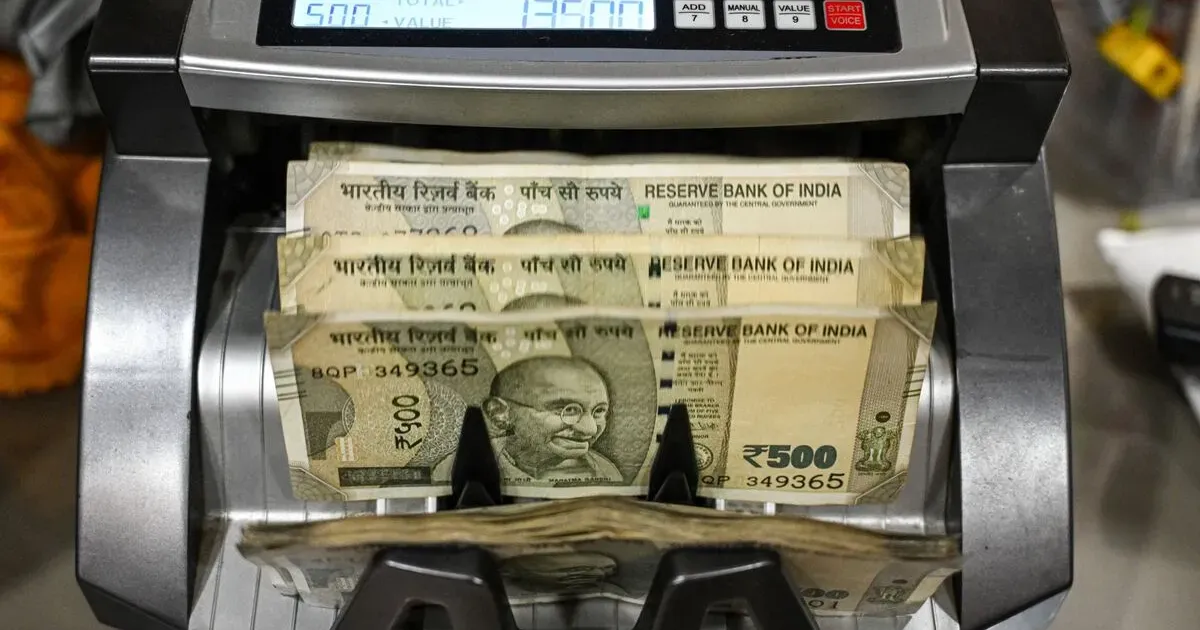
The rebound in the rupee did not settle the deeper question facing policymakers. The rebound did not settle the market's trust problem. Reserve Bank of India officials executed a series of aggressive market interventions on March 30, 2026, to halt the downward spiral of the national currency. Indian Rupee valuations surged immediately after the central bank imposed the most restrictive measures on currency speculation seen in over a decade. Traders in Mumbai reported a sudden withdrawal of short positions as the cost of betting against the currency rose sharply within minutes of the announcement. This aggressive stance mirrors strategies employed during the 2013 currency crisis when the nation faced severe capital outflows. Analysts noted that the scale of the intervention suggests a determination to maintain stability at any cost.
Market participants initially reacted with skepticism before the volume of central bank activity forced a repricing across the board. The sudden appreciation represents the sharpest single-day rebound for the currency since early February. While the move provided temporary relief to importers, it did little to address the underlying macroeconomic pressures that have weighed on the currency for months. Higher energy prices and a widening trade deficit continue to exert downward pressure on the domestic unit. Direct intervention in the spot market typically consumes foreign exchange reserves, which stood at $600 billion prior to this latest action.
Reserve Bank of India Speculation Curbs
Policy makers directed banks and financial institutions to limit their exposure to non-deliverable forwards and other offshore derivatives used to short the currency. Such restrictions aim to disconnect the onshore rupee market from volatile international sentiment. Speculators often use offshore hubs to place leveraged bets that influence the domestic price, creating a feedback loop of depreciation. Reserve Bank of India governors have historically viewed these speculative attacks as a threat to national financial sovereignty. By squeezing liquidity in these specific channels, the central bank forced speculators to cover their positions or face prohibitive costs.
Institutional investors expressed surprise at the timing of the crackdown. Most expected a more gradual approach involving interest rate adjustments rather than direct administrative curbs. The bank instead chose a path of direct confrontation with currency traders. Some desks reported that liquidity in the rupee-dollar pair dried up momentarily as participants waited for clarity on the new rules. Daily trading volumes dropped by nearly 30 percent in the hours following the announcement. Official data showed that the central bank sold dollars in multiple tranches across different tenors to ensure the currency did not breach critical psychological levels.
Structural Economic Hurdles for Indian Rupee
Abbas Keshvani, Asia Macro Strategy Director at RBC Capital Markets, argues that administrative curbs are a temporary fix for a structural problem. External factors like global interest rate differentials and domestic inflation continue to sap the strength of the currency. The United States Federal Reserve has maintained a restrictive policy stance, drawing capital away from emerging markets toward dollar-denominated assets. India's reliance on imported crude oil makes it particularly vulnerable to geopolitical shocks in the Middle East. High energy costs translate directly into a larger current account deficit, which naturally weakens the domestic currency over time. These specific Reserve Bank of India Speculation Curbs were part of a broader effort to forcefully unwind short positions in the market.
Bloomberg correspondent Ruth Carson observed that the effectiveness of central bank interventions often diminishes if the broader economic outlook does not improve. Investors generally prefer fundamental stability over artificial price supports. A persistent gap between domestic inflation and the inflation rates of major trading partners creates a natural depreciation bias. When the Indian Rupee loses purchasing power internally, its external value eventually reflects that loss. Historical data from similar interventions in 2013 and 2018 suggest that the market eventually tests the central bank's resolve again within weeks of the initial moves.
Abbas Keshvani of RBC Capital Markets stated that curbs on speculation are unlikely to provide a long-term resolution to the rupee's weakness given the current global macro environment.
Capital flight is still the primary driver of this depreciation. Foreign portfolio investors have been net sellers of Indian equities and bonds for three consecutive quarters. This steady exit of capital creates a constant demand for dollars that sporadic central bank intervention can only offset temporarily. Abbas Keshvani noted that without a reversal in these capital flows, the pressure on the currency is unlikely to vanish. Local corporations with large external debt obligations also contribute to the demand for foreign currency as they hedge their future exposures.
Market Analysts Predict Continued Rupee Volatility
Despite the current rebound, many analysts believe the currency remains on a long-term weakening trajectory. Technical indicators suggest that the rupee has formed a pattern of lower highs and lower lows over the past year. The central bank may succeed in smoothing the volatility, but reversing the trend requires a shift in global risk appetite. Traders have begun to price in a higher probability of another intervention if the currency slides back toward its record low. This cat-and-mouse game between the central bank and the market often leads to periods of extreme volatility followed by eerie calm.
Domestic exporters have criticized the intervention, arguing that a stronger rupee makes their goods less competitive in the global market. They prefer a currency that reflects the true economic fundamentals instead of one propped up by administrative fiat. By contrast, importers of electronics and machinery welcomed the move as it reduces their cost of business. The balance between these two competing interests is a constant challenge for the Mumbai-based regulators. Current projections from major investment banks suggest the currency could still end the year weaker than its current level. Policy makers have exhausted their traditional arsenal. The reality leaves the market in a state of high alert.
Currency Defense Limits
Central bank interventions of this magnitude are rarely the sign of a healthy economy. By resorting to heavy-handed curbs on speculation, the Reserve Bank of India is effectively admitting that it cannot defend the currency through market-friendly mechanisms. It is a desperate attempt to ignore the gravity of global macroeconomics. The belief that administrative fiat can override the large tides of capital fleeing emerging markets is a hallmark of bureaucratic hubris. India is burning through its precious reserves to maintain a facade of stability that the market sees through with ease.
If the underlying causes, namely the widening trade gap and the attractive yields in the United States, are not addressed, these curbs will only serve to bottle up pressure. When that bottle eventually breaks, the resulting currency collapse will be far more destructive than a gradual depreciation would have been. Investors do not like being trapped by capital controls. Every time the RBI tightens the screws on speculators, it sends a signal to global funds that India is a place where it is easy to enter but difficult to exit.
The policy will backfire by scaring away the very long-term investment the country needs to balance its books. The rupee's weakness is not a symptom of speculation. It is a symptom of reality. Intervention is futile.