Energy traders opened the week with war risk already priced into every barrel. The fifth week of fighting pushed the market into a new stress band. The price move matters because energy shocks quickly reach transport, food and industrial costs. Another layer is whether institutions can adapt before the next deadline. Tehran and Jerusalem entered their fifth week of open conflict on March 30, 2026, sending Brent crude prices soaring above $115 per barrel. Market instability intensified overnight following confirmed missile strikes from Yemen-based forces targeting Israeli territory. Global energy benchmarks reacted instantly to the widening theater of war, which now involves multiple regional proxies and increasing deployments of American combat forces. Brent crude climbed to $115.73 per barrel shortly after markets reopened on Sunday evening. West Texas Intermediate followed a similar trajectory, hitting $103.13 per barrel as traders factored in the growing probability of a prolonged disruption to Middle Eastern supply lines.
Houthi militants in Yemen escalated the confrontation by launching cruise missiles and drones at Israel, confirming their direct entry into the conflict. Yahya Saree, a spokesman for the group, verified the attacks through social media statements. This development has forced the United States to accelerate its military buildup across the region. Members of the 31st Marine Expeditionary Unit arrived in the Middle East this weekend, joining thousands of paratroopers from the 82nd Airborne Division who are already positioned for potential escalation. Reports suggest another 10,000 U.S. troops are under consideration for deployment to provide security for critical energy infrastructure and maritime passages.
Houthi Missile Attacks Expand Regional Combat Zone
Militant activity in Yemen has transformed the Iran-Israel war from a bilateral exchange into a regional fire with direct consequences for the Strait of Hormuz. Drone and missile launches by Houthi forces targeted Israeli population centers, marking a meaningful expansion of the combat zone. These strikes forced Israeli defense systems into high-intensity engagement while simultaneously rattling energy traders in London and New York. Previously, the conflict stayed largely confined to airstrikes between the primary combatants. The introduction of Yemeni assets suggests a coordinated effort by Tehran to stretch Israeli and American defensive capabilities across multiple fronts.
Wall Street futures plummeted in response to the weekend escalation. Dow Jones Industrial Average futures fell 298 points, or 0.66%, while S&P 500 and Nasdaq futures saw drops exceeding 0.6%. Investors are shifting capital into safe-haven assets, causing the 10-year Treasury yield to fall to 4.428%. Borrowing costs rose last week after bond auctions attracted weak demand, reflecting a growing skepticism regarding the duration of the war. Washington now faces a multi-front logistical crisis that extends from the Mediterranean to the Persian Gulf.
Pentagon Prepares Ground Raids Near Strait of Hormuz
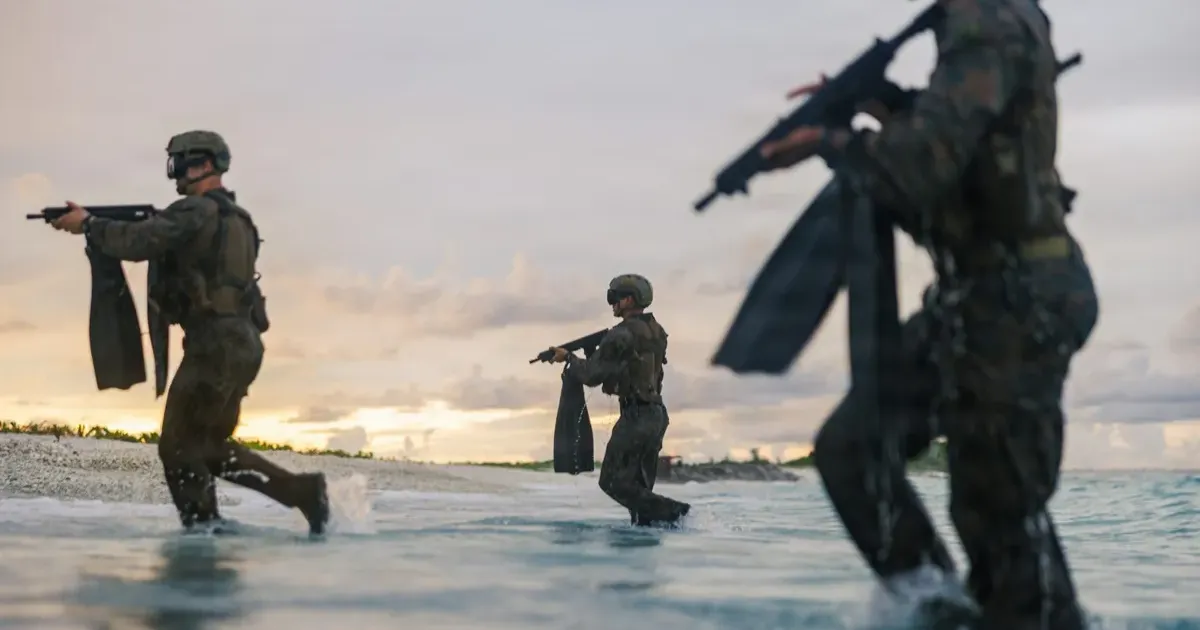
Pentagon officials have reviewed contingency options for operations tied to essential shipping lanes. While the White House maintains that no final decision has been made, contingency plans involve special forces and conventional infantry units. Primary targets for these proposed raids include Kharg Island, a critical facility that handles 90% of Iran oil exports. Coastal areas near the Strait of Hormuz are also listed as high-priority zones for neutralising Iranian drone launch sites. These locations are essential to the de facto control Tehran currently exerts over the waterway, where it has threatened to destroy any commercial vessels passing without its explicit permission.
Washington maintains a large naval presence to deter further Iranian aggression against merchant shipping.
Yahya Saree, the spokesman for the Yemeni Armed Forces, confirmed the attacks on X, noting that the group launched cruise missiles and drones at Israel over the weekend.
Raids on Iranian soil would represent a shift from the air-only campaign that has characterized the first month of the war. Military analysts suggest that airstrikes alone have failed to reopen the Strait of Hormuz to free navigation. Iranian authorities have successfully demanded millions of dollars in protection fees from countries seeking safe passage for their tankers. This extortion scheme has bypassed traditional maritime law and created a bifurcated shipping market where only those who pay Tehran can operate without fear of drone strikes. Ground intervention would remain a high-risk option for any coalition trying to secure the sea from the air.
Global Supply Chains Suffer Under Shipping Levies
American consumers are feeling the immediate impact of the Persian Gulf blockade at the pump. National average gasoline prices reached $3.98 a gallon on Sunday, a full dollar higher than the averages recorded in February. The International Energy Agency attempted to stabilize the market by releasing 400 million barrels of oil from strategic reserves, yet this move failed to stop the price climbs. Energy Secretary Chris Wright previously stated the war would be short-term, but that assessment has been contradicted by the escalating troop movements and the lack of a clear exit strategy from either the Trump administration or Iranian leadership.
Inflationary pressure is mounting across the global economy as energy costs trickle down to manufacturing and logistics. About 20% of the world oil supply and liquefied natural gas passes through the waterway now contested by Iranian drones. Major oil hubs across the Middle East have sustained damage during the exchange of fire, further straining the global supply chain. Traders are increasingly convinced that the economic effects of the war will persist for months. Yields on sovereign debt are fluctuating as central banks weigh the risk of an energy-induced recession against the necessity of funding a major military engagement.
International Diplomats Seek Ceasefire in Islamabad
Diplomatic efforts to contain the violence are centering on Pakistan, where Foreign Minister Mohammad Ishaq Dar is hosting talks with counterparts from Egypt, Saudi Arabia, and Turkey. These nations are attempting to broker a de-escalation before American ground forces launch their planned raids on Kharg Island. Dar described the discussions in Islamabad as detailed and in-depth, though no formal agreement has emerged from the summit. The group of regional powers is particularly concerned about the potential for a total shutdown of energy exports if the U.S. military occupies Iranian oil terminals. Any damage to the 10,000 specialized valves and pipes on Kharg Island could take years to repair, permanently altering global energy flows.
Tehran persists in its defiance despite the destruction of much of its conventional military hardware by US and Israeli airstrikes. The Iranian government continues to leverage its geographic position to hold the global economy hostage. Safe passage through the Strait of Hormuz has become the primary bargaining chip for Iranian officials who are facing domestic unrest and military encirclement. International leaders are urging both sides to find a diplomatic off-ramp, yet the arrival of the 11th Marine Expeditionary Unit in the region suggests that the military timeline is moving faster than the diplomatic one. Market volatility persists as the fifth week of combat begins without a ceasefire in sight.
Energy Market Stress
Does the Pentagon actually believe that limited ground raids on Kharg Island will end this conflict? Historical precedent from the 1980s Tanker War suggests that half-measures in the Persian Gulf only invite more creative forms of sabotage. By telegraphing plans for special operations raids rather than a full-scale maritime security operation, the Trump administration has signaled a lack of resolve that Tehran is already exploiting. The Iranian strategy of charging millions for safe passage is not just a wartime tactic; it is a fundamental reconfiguration of maritime sovereignty that the West has failed to counter with anything other than expensive, reactive airstrikes.
Washington is sleepwalking into an escalation trap where it must either occupy the Iranian coastline or accept permanently higher energy prices. The release of 400 million barrels from the strategic reserve is a cosmetic fix for a structural disaster. Once those reserves are depleted, the U.S. will have no leverage left to prevent oil from hitting $150 if the Strait of Hormuz stays contested. Attempting to manage this war through surgical strikes and small-team raids is a fantasy that will dissolve the moment the first American boots hit the beaches of Kharg Island. Expect a prolonged, grueling regional depression. The risk is that markets stay hostage to escalation faster than diplomacy can contain it.