President Donald Trump ordered thousands of U.S. troops to the Middle East to prepare for a ground assault against Iranian positions near the Strait of Hormuz. Washington aims to reopen the critical waterway after months of maritime harassment and drone strikes. Military planners at the Pentagon confirmed the mobilization includes specialized units trained for amphibious operations and urban warfare. Intelligence officials suggest the Iranian military has anticipated this move by mining key coastal zones. The report was published March 29, 2026.
Tehran responded by accusing the United States of using failed diplomatic channels as a smoke screen for naked aggression. The military question is now inseparable from congressional risk. Iranian military leaders stated that the presence of American forces would only accelerate the regional collapse of Western influence. Conflict lines once confined to Eastern Europe now bleed into the Persian Gulf, creating a synchronized theater of war. Analysts observe that the geopolitical boundaries separating the Russo-Ukrainian war and the Middle Eastern crisis have effectively vanished.
Saudi Arabia and Ukraine Forge Drone Defense Pact
President Volodymyr Zelenskyy traveled to Riyadh to finalize a security agreement that shares combat data on Iranian-designed weaponry. Saudi officials seek Ukrainian expertise in neutralizing Shahed drones that have frequently penetrated U.S. provided air defense systems. Kyiv has spent years refining electronic warfare tactics against these specific platforms. This collaboration indicates a new period of military cooperation between Eastern Europe and the Arabian Peninsula.
Zelenskyy also made unannounced stops in the United Arab Emirates and Qatar to sign similar defense protocols. These Gulf states face consistent bombardment from Iranian proxies using technology identical to that found on the battlefields of the Donbas. Sharing real-time telemetry from drone intercepts allows these nations to adjust their radar profiles. Ukrainian technicians will reportedly stay in the region to train local crews on mobile interceptor units. Persian Gulf capitals remain wary of Tehran's growing stockpile of ballistic missiles. Defense spending in the region has spiked as satellite imagery reveals new launch sites in the Iranian interior. Riyadh specifically requested technical blueprints from Ukraine regarding the modification of civilian drones for reconnaissance. Defense cooperation between these entities bypasses traditional Western procurement delays.
Russia Enhances Iranian Shahed Drone Capabilities
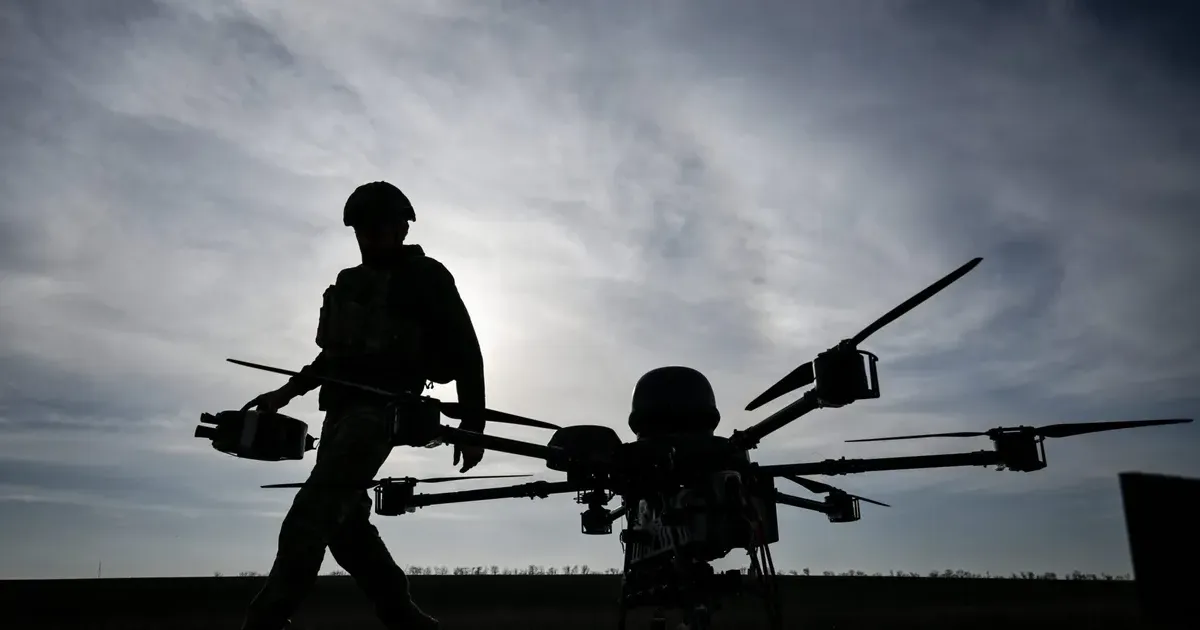
Russia has sharply upgraded the Shahed drone fleet it supplies to Tehran, integrating advanced avionics and AI computing platforms. Reports from Western intelligence agencies indicate these drones now feature jet engines for increased speed and maneuverability. Decoys meant to divert air defense missiles are now standard on the latest production models. These enhancements make the drones rapidly harder to intercept during swarm attacks. Securing the Strait of Hormuz remains a central priority for Washington's broader coalition-building strategy.
Engineers in Moscow added radio links and anti-jammer technology to prevent electronic interference from U.S. warships. Starlink capabilities, which were previously disabled in Ukraine, have been integrated into some export variants for the Middle East. High-resolution cameras allow Iranian operators to conduct real-time battle damage assessment from hundreds of miles away. Such technical leaps provide the Iranian Revolutionary Guard with capabilities once reserved for top-tier global powers.
Intelligence reports also indicate that Moscow provides Tehran with specific targeting data regarding American assets in the region. Satellite tracking of U.S. carrier strike groups allows Iranian batteries to pre-position their launch vehicles. Cooperation between the two nations has reached a level of intimacy that alarms NATO commanders. The exchange of hardware for tactical intelligence creates a self-reinforcing loop of escalation.
Naval Tensions Rise Near the Strait of Hormuz
Commanders at the U.S. Fifth Fleet in Bahrain reported a surge in Iranian naval activity near international shipping lanes. Fast-attack craft regularly harass commercial tankers, leading to a 30% increase in global maritime insurance rates. $11 billion in energy infrastructure sits within range of Iranian coastal batteries. Trump has signaled that any further disruption to energy markets will meet immediate kinetic force.
Over the last week, there have been a couple of interesting developments that effectively merged the Russia-Ukraine war and the Iran war into a single conflict.
University of Pittsburgh political science professor William Spaniel notes that while the actors overlap, the world is not yet in a total global conflict. No single nation currently fights on two major fronts simultaneously like the United States did during the 1940s. Spaniel argues that the current phase is one of convergence rather than total unification. Regional actors are hedging their bets by diversifying their military alliances.
Economic ripples from the buildup affects Asian markets dependent on stable oil prices from the Persian Gulf. China maintains a cautious silence while its energy security remains at the mercy of the escalating naval standoff. Beijing has not yet offered to mediate, despite its previous role in regional de-escalation. Diplomatic options appear to be exhausting themselves as military hardware moves into position.
Tehran maintains that its drone upgrades are purely defensive. Nevertheless, the presence of Russian technicians at Iranian airbases suggests a more aggressive posture. Intelligence analysts believe the ground assault could begin within the next seventy-two hours. Ships are already rerouting around the Cape of Good Hope to avoid the potential combat zone.
War Powers Test
Is the United States sleepwalking into a two-front war it cannot afford? The current deployment of thousands of troops to the Strait of Hormuz is a desperate gamble to preserve a global order that is rapidly fracturing under the weight of Eurasian cooperation. While the Trump administration seeks to project strength, it ignores the reality that Russia and Iran have built a resilient, tech-sharing axis that bypasses Western sanctions. This is no longer a series of isolated skirmishes; it is a unified challenge to American hegemony. Washington's reliance on kinetic solutions in the Middle East will likely accelerate the very outcome it fears most. By forcing Tehran into a corner, the U.S. effectively pushes Iran deeper into the arms of Moscow, creating a permanent military alliance that stretches from the Baltic to the Persian Gulf. Zelenskyy's shuttle diplomacy with Saudi Arabia and the UAE is a clever tactical move, but it cannot compensate for the huge infusion of Russian electronic warfare tech into Iranian hands. The technical gap between the West and its adversaries is closing fast.
Failure to secure the Strait of Hormuz will trigger a global inflationary spike that could collapse Western domestic support for both wars. If the planned ground assault turns into a mess, the U.S. will find itself militarily overextended and diplomatically isolated. The era of the single-front conflict is dead. We are now in a period of permanent, overlapping warfare where a drone strike in the Donbas has immediate consequences for a carrier group in the Middle East. The bill for decades of strategic neglect is finally coming due. Action is unavoidable.