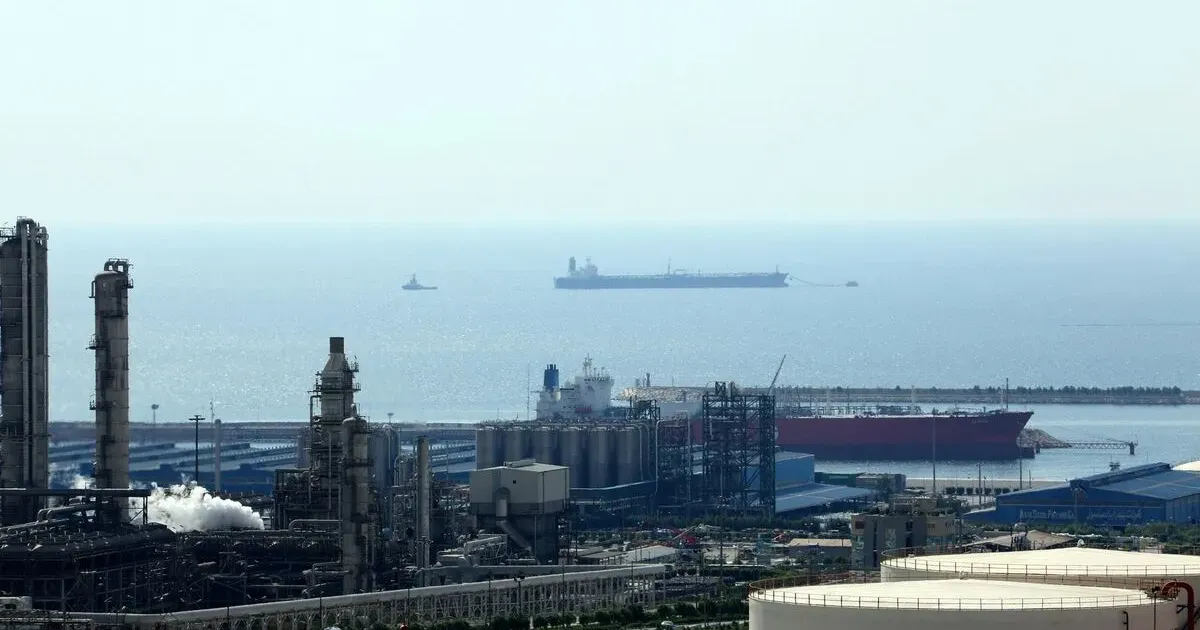
President Donald Trump demanded immediate naval assistance from NATO allies on March 19, 2026, to secure the Strait of Hormuz against escalating Iranian aggression. Washington insists that the security of global energy trade should no longer remain a solely American financial and military burden. Officials at the White House described the current situation as a collective security crisis that requires a collective response. Iranian forces intensified the pressure early Thursday by striking multiple energy processing facilities across the region.
But the escalation extends beyond verbal threats or small-scale skirmishes. Bloomberg reports that Iran launched a series of drone and missile attacks targeting refinery infrastructure in neighboring states. These strikes occurred despite repeated warnings from the American administration to cease interference with regional energy hubs. Crude prices reacted instantly to the news of the damaged facilities. Brent futures jumped to $115 per barrel during morning trading in London.
Still, the American president remains firm on the requirement for international participation. Trump stated during a press briefing that the United States has spent decades protecting these waters for the benefit of other nations. He noted that NATO members are finally acknowledging the necessity of shared responsibility.
The United States is defending the Strait for everybody, but our allies are finally getting much nicer about helping us pay for it.
And the shift in European attitudes appears to be driven by necessity.
Financial Times sources indicate that several European capitals are preparing to deploy frigates and surveillance aircraft to the Persian Gulf. These deployments aim to deter further Iranian strikes on tankers and pipelines. Previous attempts to maintain a neutral maritime presence have failed to prevent the targeting of commercial vessels. France and the United Kingdom are reportedly coordinating their naval schedules to ensure constant coverage of the shipping lanes.
Iran Strikes Gulf Infrastructure Despite Warnings
Meanwhile, the physical damage to regional infrastructure has created an immediate supply crunch. Iranian military units used low-flying suicide drones to bypass radar systems at several inland refineries. Bloomberg analysis suggests these operations demonstrate a major leap in Iranian precision capabilities. Energy analysts warn that long-term repairs could take months. Saudi Arabian officials have not yet confirmed the total volume of production currently offline.
For instance, one facility near the eastern coast reported a total loss of power after three drones struck its primary electrical substation. This move by Tehran targets the economic heart of its regional rivals while avoiding direct combat with American naval assets. Pentagon officials are monitoring satellite imagery to assess the readiness of additional Iranian missile batteries. The risk of miscalculation grows as more sensors and weapons systems enter the crowded waterway.
According to Bloomberg, the cost of the widening conflict is reflected in skyrocketing insurance rates for merchant ships. Hull and machinery premiums for tankers entering the Gulf have tripled over the last forty-eight hours. Shipping companies are passing these costs directly to consumers. Some smaller operators have suspended operations in the region entirely. They cite the lack of a clear security guarantee as the primary reason for the hiatus.
In turn, global logistics chains are bracing for prolonged delays. Vessels are choosing to loiter outside the Gulf of Oman while waiting for military escorts. This selective access to the waterway creates a bottleneck that affects everything from refined gasoline to liquefied natural gas. Port authorities in Jebel Ali report a 20 percent decrease in container traffic since the beginning of the week.
Trump Pressures NATO Allies for Naval Support
By contrast, the political pressure in Washington is focused on the distribution of the defense bill. Trump has long criticized European partners for their perceived lack of contribution to Middle Eastern security operations. He argues that the free flow of oil is more essential to the European economy than the American one. Internal memos from the State Department suggest that the administration may tie future trade concessions to maritime cooperation. Several NATO representatives in Brussels have expressed private frustration with this transactional approach.
Even so, the urgency of the situation is forcing a consensus. The United Kingdom recently increased its presence by sending a second Type 45 destroyer to the region. Italy and Greece are also considering contributions to a maritime task force. These nations rely heavily on the energy transiting through the Strait of Hormuz every day. Failure to secure the passage could trigger a recession across the Eurozone.
Separately, the White House is coordinating with Pacific allies to ensure consistent pressure on Tehran. Japan and South Korea receive a major portion of their energy needs from the Persian Gulf. Trump has hinted that these nations should also provide financial or logistical support for the security mission. Publicly, the administration maintains that all beneficiaries of Gulf oil must contribute to its protection. Private negotiations continue regarding the specific rules of engagement for any international flotilla.
Shipping lanes have turned into a chessboard.
Tehran Selects Favored Vessels for Transit
In particular, the Iranian strategy has shifted toward a policy of favoritism. Iranian naval patrols are selectively allowing a handful of vessels to pass through the Strait without the usual harassment. Financial Times reports indicate that these ships typically belong to nations that have maintained diplomatic or economic ties with Tehran. This maneuver allows Iran to project dominance over the waterway while avoiding total international isolation. It creates a tiered system of maritime access based on political alignment.
Yet, the criteria for this favored status remain opaque and unpredictable. Analysts suspect that Tehran is using these permits as leverage in ongoing sanctions negotiations. By allowing certain tankers through, they hope to drive a wedge between the United States and its global partners. Ships flying the flags of China or Russia have reportedly faced fewer inspections and delays compared to Western-flagged vessels. The trend forces shipping companies to reconsider their registration and insurance strategies.
So, the geopolitical field is fracturing into distinct maritime blocs. Companies that refuse to engage in these political games face the highest risks. The Iranian Revolutionary Guard Corps maintains a constant presence near the narrowest point of the Strait. They frequently use fast-attack boats to swarm merchant ships and demand cargo manifests. These interactions often result in brief detentions that disrupt delivery schedules for weeks.
In fact, the use of maritime transit as a diplomatic tool is not a new tactic for Tehran. During the 1980s, the so-called Tanker War saw hundreds of vessels attacked in the same waters. The current strategy is more refined, using intelligence and specific targeting to achieve political goals. Iranian officials appear confident that they can manage the level of escalation without triggering a full-scale war. They rely on the reluctance of many nations to enter another protracted Middle Eastern conflict.
Energy Market Volatility and Shipping Costs
For one, the economic fallout is no longer confined to the energy sector. Higher fuel costs are driving up the price of air freight and ocean shipping globally. Manufacturers in Germany and South Korea report that their profit margins are thinning because of the increased logistics expenses. If the standoff continues, retail prices for consumer goods will likely rise in the coming months. The International Monetary Fund warned that prolonged instability in the Strait could shave half a percent off global GDP growth.
Energy security now hinges on political patronage.
International traders are watching the situation with extreme caution. The volume of oil currently sitting on tankers waiting to pass the Strait has reached a five-year high. The floating storage acts as a temporary buffer, but it cannot offset a permanent disruption of the flow. Analysts at Goldman Sachs suggest that any permanent closure of the waterway would send oil prices well above record highs. Markets remain sensitive to every statement coming out of Tehran or Washington.
The Elite Tribune Perspective
Transactional diplomacy now defines the maritime security of the Persian Gulf, and the result is a precarious global economy held hostage by geopolitical leverage. Relying on NATO to subsidize the protection of the Strait of Hormuz is a gamble that fundamentally miscalculates the interests of European capitals. The American administration's demand for allies to have skin in the game ignores the reality that naval power alone cannot solve a crisis rooted in political desperation. While President Donald Trump views this as a victory for burden-sharing, he is actually presiding over the fragmentation of international maritime law.
When Iran is allowed to pick winners and losers among commercial shipping, the very concept of freedom of navigation becomes an obsolete relic of the 20th century. The new reality rewards those who appease regional aggressors and punishes those who adhere to traditional alliances. The world is not witnessing a temporary disruption but rather the birth of a bifurcated trade system where safety is a commodity purchased through diplomatic concessions.
If the West continues to treat the security of the world's most essential waterway as a negotiable expense, it should not be surprised when the bills come due in the form of permanent economic instability.