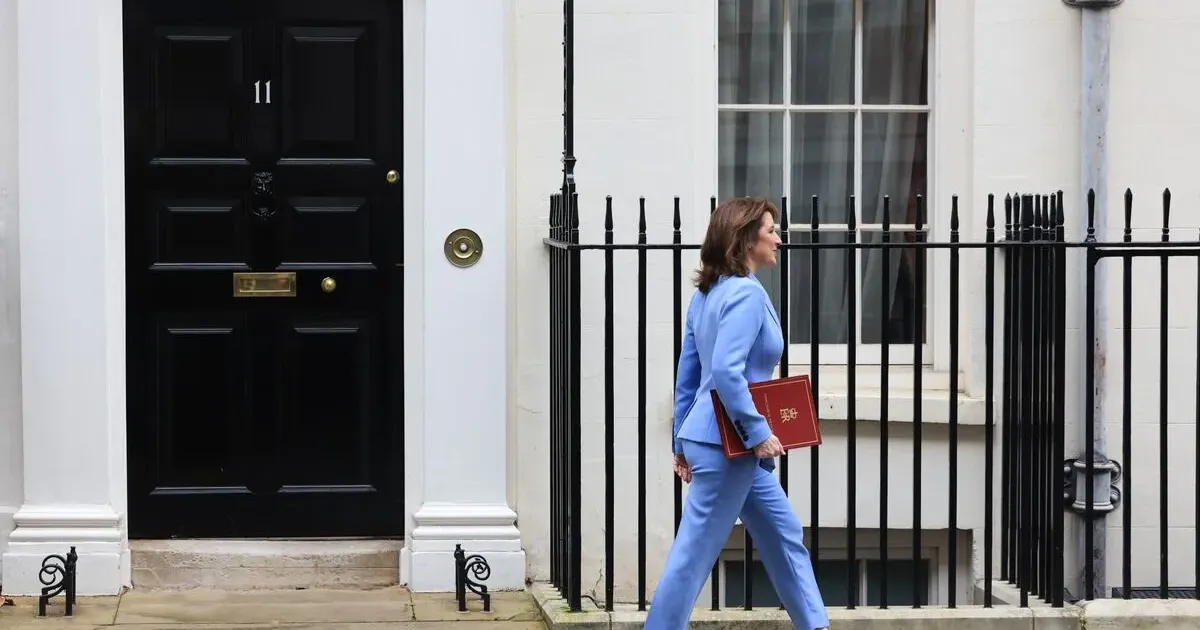
Chancellor Rachel Reeves struggled with a vanishing fiscal cushion as a violent selloff in UK government bonds forced a radical reassessment of the national budget. Market volatility stemming from the escalating conflict in Iran triggered a surge in yields, effectively stripping the Treasury of its narrow breathing room. Analysis suggests the sudden spike in borrowing costs will consume over a tenth of the remaining fiscal buffer, leaving the government with almost no margin for error in its spring economic projections. The fiscal hit became harder to ignore as gilt yields kept moving against the Treasury. Bond markets reacted with immediate hostility to the heightening tensions in the Middle East. Yields on benchmark 10-year gilts climbed sharply, reflecting investor anxiety over energy supply disruptions and a potential return to double-digit inflation. Higher yields translate directly into increased debt-servicing costs for the UK government, which manages one of the largest debt piles in the developed world. Financial analysts at Bloomberg Economics estimate that the recent market move will cost the Treasury approximately £3 billion in lost headroom.
UK Gilt Selloff Erodes Fiscal Cushion
Borrowing costs serve as the silent arbiter of British political ambition. Chancellor Reeves had previously banked on a modest reserve to fund infrastructure projects and public sector pay settlements, yet that capital is now being diverted to satisfy bondholders. Gilt yields act as a primary indicator of national credit risk. When these yields rise, the cost of issuing new debt increases, compounding the pressure on a Treasury already stretched by stagnant growth. Estimates indicate the current selloff has erased 10 percent of the buffer Reeves intended to use for tax adjustments.
Internal Treasury documents indicate that every 10 basis point rise in gilt yields adds billions to the annual interest bill. Recent weeks saw yields climb far beyond those baseline projections. Debt management officials are now forced to navigate a landscape where international events dictate domestic spending limits. Investors demand a higher premium for holding UK debt when global energy markets face such deep uncertainty. Government debt as a percentage of GDP remains uncomfortably close to the 100 percent mark.
Meanwhile, the selloff reflects a broader lack of confidence in the global bond market. While the UK is not alone in facing higher borrowing costs, its specific sensitivity to energy imports makes it particularly vulnerable to the Iran conflict. Traders have begun pricing in the possibility that the Bank of England will be forced to keep interest rates higher for longer to combat imported inflation. High-interest environments naturally depress the value of existing bonds, leading to further selling pressure in a self-reinforcing cycle. Treasury’s fiscal rules depend on debt falling in the fifth year of a forecast, a target that now looks increasingly elusive.
Mortgage Markets React to Rising Yields
Homeowners are the first to feel the secondary effects of this bond market turbulence. Mortgage lenders started pulling products from the market yesterday, citing the increased cost of wholesale funding. Fixed-rate deals are priced based on swap rates, which track closely with gilt yields. As yields surged, lenders moved to protect their margins by hiking rates on two-year and five-year fixed contracts. Financial experts predict that the average five-year fixed rate could soon surpass 5.5 percent again.
New rises in UK mortgage rates are very likely as lenders rapidly reprice deals to reflect the higher cost of borrowing on international markets.
Families approaching the end of their current fixed-rate terms face a major jump in monthly repayments. A typical household renewing a mortgage in the current climate could see costs rise by several hundred pounds per month. This reduction in disposable income threatens to sap the strength of the UK’s service-oriented economy. Retailers and hospitality businesses are already reporting a slowdown in consumer spending. Lenders argue they have no choice but to pass on the higher costs to borrowers to maintain financial stability.
For instance, major high-street banks have already adjusted their internal pricing models. Some institutions have increased rates by 25 basis points in a single 24-hour period. Market participants expect further adjustments as the full extent of the Iran-related energy shock becomes clear. Housing market activity usually slows when mortgage rates climb, leading to a cooling of property prices in London and the Southeast. Transaction volumes have already begun to dip in early spring data.
Energy Volatility Intensifies Inflation Risks
Energy prices remain the primary driver of the current economic instability. Global oil prices jumped following news of the maritime blockades in the Persian Gulf, raising the cost of transport and manufacturing across the UK. Inflation had been approaching the Bank of England’s 2 percent target, but these external shocks have reversed that downward trend. Higher energy costs feed through to the price of nearly all consumer goods. Analysts now fear a second wave of cost-of-living pressures that will prevent further interest rate cuts this year.
In fact, the relationship between energy and bonds is currently at its most sensitive point in years. Because the UK relies heavily on natural gas for electricity generation and heating, any threat to global supply chains hits the British economy harder than many of its European peers. Inflation expectations among the public are starting to drift upward again. This shift puts the Bank of England in a difficult position, as it must choose between supporting growth and suppressing price increases. Core inflation, which excludes volatile energy and food prices, has remained stubbornly high throughout the winter.
The gilt selloff turns a technical budget problem into a political constraint. Reeves can still choose taxes, cuts or borrowing, but bond markets are narrowing the space in which those choices look affordable. the gilt selloff turns fiscal credibility into Rachel Reeves's central constraint. Markets are not only pricing debt; they are judging whether the government can fund promises without losing control of borrowing costs.