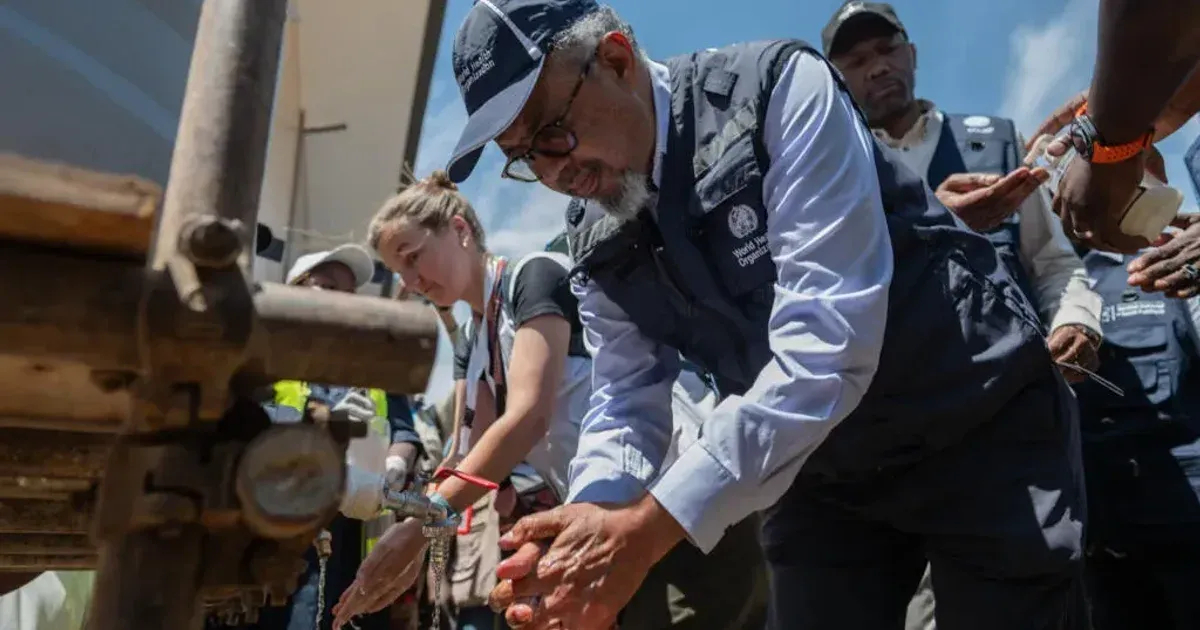
WHO chief Tedros Adhanom Ghebreyesus visited Bunia as the Democratic Republic of Congo faced a fast-moving Ebola outbreak centered in the country's east. The WHO visit puts international attention directly on the communities where Ebola surveillance is hardest. Health workers are trying to expand testing while insecurity limits the time they can spend in some villages. The visit also gives local health teams a chance to press for supplies, security access and clearer case reporting. The visit on May 30, 2026, brought the head of the World Health Organization to Ituri Province, where health officials are trying to contain a surge that has already crossed provincial and national lines. Tedros said the response must be led with communities, not only by outside medical teams.
Africa CDC figures cited this week put the scale of the outbreak at 1,077 suspected cases in the DRC since it was declared on May 15. The same figures listed 246 deaths, while Uganda has also reported confirmed infections connected to the wider regional emergency. Health officials have warned that the true spread may be larger because insecurity, limited testing, and delayed reporting can hide cases in remote areas.
The outbreak has been linked to the Bundibugyo strain of Ebola, a form that complicates the response because it is less familiar to many communities than more widely discussed Ebola outbreaks. The disease can cause fever, weakness, vomiting, diarrhea, and in severe cases bleeding and organ failure. It spreads through direct contact with bodily fluids, which makes household care, unsafe burial practices, and crowded displacement settings especially dangerous.
Bunia Visit Puts Communities at Center
Tedros said he came to Bunia to listen to affected communities, meet local authorities, and assess the response. That approach reflects a lesson from earlier Ebola outbreaks in Congo: medical infrastructure alone cannot stop transmission if residents distrust health workers or avoid treatment centers. Community leaders, local health volunteers, religious figures, and families all shape whether suspected cases are reported quickly and whether safe burial rules are followed.
The WHO leader emphasized that international support is already working under the leadership of the DRC government, but he also said community ownership is essential. That wording matters because externally driven campaigns can meet resistance in areas that have experienced years of conflict and political neglect. Local participation can make case reporting faster, reduce rumors, and help families accept isolation measures that are emotionally difficult but medically necessary.
"Success will depend on our ability to engage the community and let them lead the response," Tedros said during the visit.
Bunia is a strategic response hub because Ituri sits near areas affected by armed groups, displacement, and cross-border movement. Treatment capacity, laboratory confirmation, vaccination planning, and contact tracing all depend on roads, security, fuel, and communications. When any one of those systems fails, health teams lose time, and Ebola gains opportunities to move through households or markets before contacts are identified.
Conflict and Mobility Complicate Containment
Eastern Congo's security crisis is one of the hardest barriers facing the response. Armed groups operate across parts of Ituri, North Kivu, and South Kivu, and violence can prevent mobile teams from reaching villages where symptoms have been reported. Displaced families often live in crowded conditions, making isolation harder and increasing the risk that sick people move before they are identified. Those realities turn a clinical emergency into a logistical and security challenge.
The regional dimension is also serious. Uganda has reported infections, and border communities rely on trade, family ties, and routine movement that cannot be shut down without economic and humanitarian consequences. Screening at crossings may reduce risk, but it cannot replace rapid case detection inside affected communities. Health authorities must therefore balance containment with the need to keep essential goods, medical supplies, and humanitarian access moving.
Supplies are another pressure point. Ebola response teams need protective equipment, trained staff, treatment capacity, safe transport, laboratory support, and clear public messaging. Vaccination strategy depends on the strain involved and available tools, so officials must communicate carefully about what is known, what is being tested, and what protection can realistically be offered. Overpromising would damage trust, especially if communities later see gaps between official statements and local experience.
Health Stakes Extend Beyond Congo
The outbreak is not currently being described as a global emergency on the scale of a pandemic, but regional health risk is real. More than 1,000 suspected cases in a conflict-affected area create a dangerous combination of delayed detection, fear, and population movement. If contact tracing weakens or treatment centers fill, the outbreak could spread into additional health zones before response teams can map transmission chains.
For Congo and its neighbors, the next phase depends on speed and trust. Faster testing, safer burials, reliable community reporting, and secure access for health workers can reduce the outbreak's reach. Delays would raise the human cost and increase the pressure for border restrictions that can damage trade and humanitarian supply lines. Tedros's visit is therefore more than a symbolic stop; it is a signal that the response now depends on turning international concern into local containment before the outbreak widens further. International teams will watch whether the visit produces more than visibility. The practical test is whether clinics receive enough protective gear, transport support and laboratory capacity to shorten the time between a suspected case and a confirmed response. Aligning local responders with international laboratories, vaccination teams and logistics groups will require donor support for vehicles, cold-chain capacity and safe access. Without those basics, even accurate warnings can arrive too late.