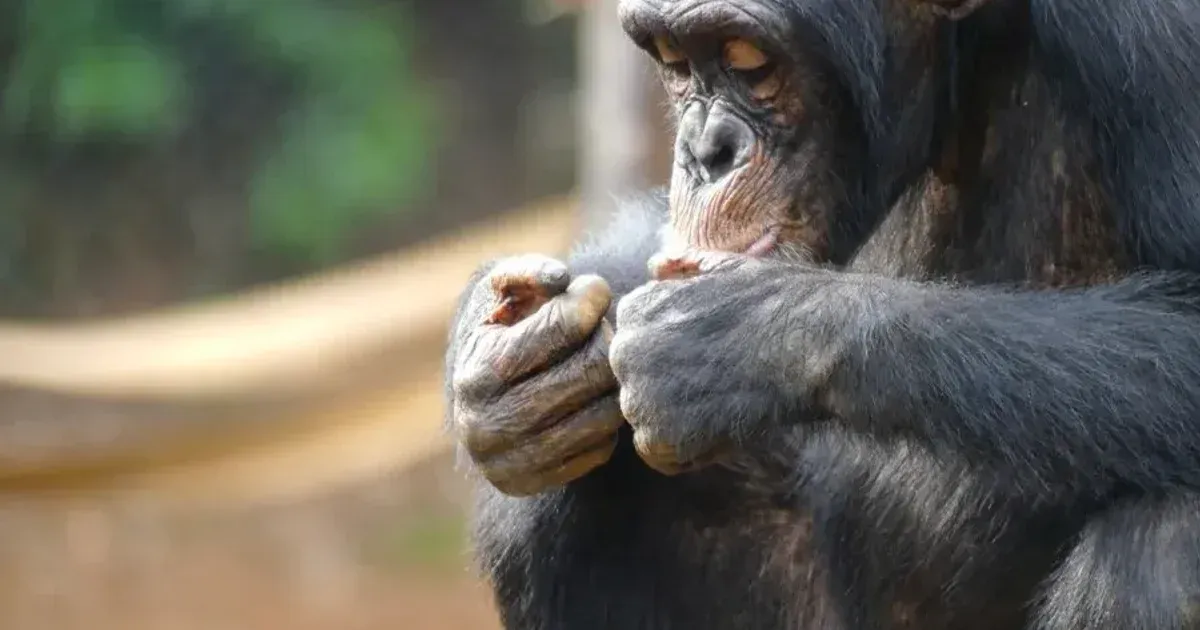
Researchers studying the Ngogo chimpanzee community in Uganda have documented a violent split that offers new evidence about how large social groups fracture. The long-running field work at Kibale National Park followed the same population for decades. The April 11, 2026, findings connect chimpanzee territorial violence with broader questions about the evolutionary roots of organized conflict.
The study is important because it tracks a society before, during and after internal division. Many accounts of animal violence capture isolated attacks, but this case shows how alliances, borders and repeated killings can emerge from a once-unified group.
Ngogo Split Reveals Social Fracture
The Ngogo chimpanzee community was unusually large, with more than 200 members at its peak. That size gave researchers a rare opportunity to observe what happens when social bonds become too difficult to maintain across a population. As relationships weakened, subgroups began forming around familiar alliances.
The eventual split produced two factions that fought over territory and access to resources. Males who had once cooperated in hunting and border defense began treating former associates as rivals. That shift from alliance to hostility is what makes the case so valuable for evolutionary research.
Long-term observation was essential. A shorter study might have seen only scattered attacks and missed the gradual erosion of trust. Decades of data allowed researchers to connect population pressure, social distance and lethal aggression in a single timeline.
Territory and Coalition Violence
Violence in the Kibale National Park study was not random. Patrols, ambushes and coordinated attacks showed that chimpanzees can use group strategy against former members of their own community. The behavior resembles earlier research on territorial defense, but here the enemy emerged from inside the original group.
Resource competition likely intensified the conflict. Food-rich areas, mating opportunities and safer movement routes all became more valuable once factions separated. Eliminating rivals could increase access to those resources, making violence a brutal but functional strategy.
The findings do not mean human war is inevitable or biologically fixed. They do suggest that the building blocks of coalitionary aggression existed before modern states, armies or ideology. Culture changes the scale and meaning of conflict, but the capacity for group violence has deep primate roots.
Human Conflict Lessons
The Science report adds weight to a long-running debate about whether large-scale violence is mainly cultural or partly inherited. Chimpanzees cannot provide a direct model for human societies, but they can reveal patterns in territorial behavior, alliance formation and out-group hostility.
One lesson is that social cohesion has limits. Large communities require repeated interaction, trust and shared incentives. When those ties become too thin, factions can form quickly and past cooperation may not prevent future violence.
The study also warns against simplistic conclusions. Humans have institutions, laws and moral systems that chimpanzees do not. Those tools can restrain aggression, but they must be maintained. The biological inheritance is not destiny; it is pressure that social systems have to manage.
For scientists, the Ngogo case will remain a landmark because it captured social collapse in real time. For readers, its value is more practical: it shows that peace depends on relationships, resources and boundaries holding together. When those supports fail, even long-standing alliances can become fragile. The findings also help explain why conservation and long-term field research matter. Without decades of observation, the Ngogo split might have appeared to be a sudden outbreak of violence rather than the result of slow social strain. Researchers could see which males maintained bonds, which borders hardened and how repeated patrols changed the risk of lethal encounters. That depth gives the study value beyond primatology. It shows how large groups can exceed the social mechanisms that once kept them stable. Human societies have more tools for preventing that outcome, including law, institutions and shared narratives, but those tools require active maintenance. The Ngogo case is a reminder that social peace is built, not assumed, and that group identity can turn dangerous when resources and trust both narrow. The research also challenges overly romantic ideas about animal societies. Chimpanzees show cooperation, social learning and long memory, but the same capacities can support organized hostility when group identity changes. That duality is part of why the findings matter. They do not reduce humans to animals; they show that the raw material for violence and restraint can exist in the same social species. Future work will likely compare Ngogo with other primate communities to see whether similar splits follow the same pattern. If they do, researchers will have stronger evidence that coalition violence follows predictable social pressures rather than isolated local conditions. The next step is comparative. If other long-term chimpanzee studies show similar fracture points, Ngogo will become a model for how primate societies move from cooperation into organized violence. That comparison will matter for conflict research across future field studies. The comparison may also refine how scientists distinguish ordinary territorial aggression from sustained internal war.