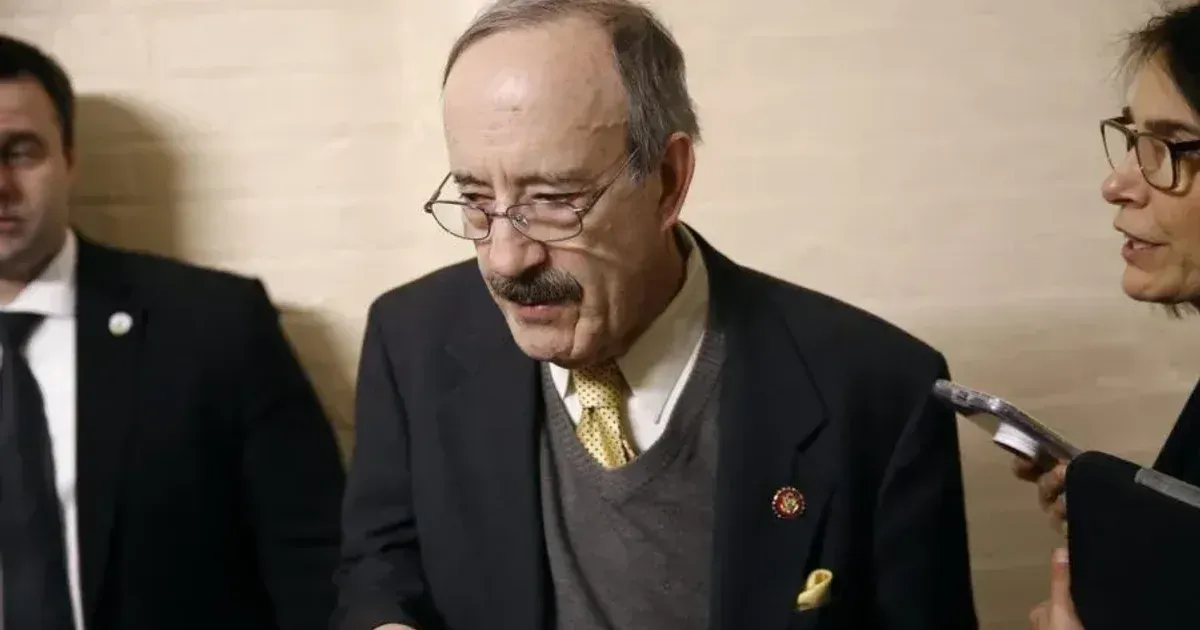
Eliot Engel, the influential Bronx lawmaker who steered American diplomacy from the halls of Congress, died at the age of 79. Family members confirmed his passing in a statement shared on social media, noting that the former congressman died surrounded by loved ones. Throughout a career spanning 32 years in the House of Representatives, the Democrat became a fixture of the New York political machine and a powerhouse in global affairs. His death marks the end of a long chapter for the 16th Congressional District, which he represented across portions of the Bronx and Westchester County. His family announced the death on April 11, 2026.
Politics defined his life since his initial election to the New York State Assembly in 1977. He eventually climbed to the federal stage in 1988, defeating incumbent Mario Biaggi to claim a seat he would hold for more than three decades. His legislative focus often drifted toward the complexities of international relations, eventually earning him the gavel of the House Foreign Affairs Committee in 2019. Colleagues described him as a staunch institutionalist who believed in the power of American leverage abroad. He championed causes ranging from Balkan independence to the security of Israel, often aligning with the hawkish wing of his party.
Engel’s Legislative Record in the Bronx
Residents of the Bronx and Westchester saw a shift in local representation during his long tenure. His early years were characterized by a focus on urban development and public housing, issues critical to his constituency in the northern reaches of New York City. Despite his growing stature in Washington, he maintained a physical presence in the district through much of the 1990s and early 2000s. He secured federal funding for local infrastructure projects and transit improvements that connected his suburban voters with the city core. These efforts built a base of support that appeared impenetrable for several election cycles.
Voters routinely returned him to office with overwhelming margins. His ability to manage the intricacies of the Democratic caucus allowed him to bring resources back to a district that faced meaningful economic disparities. Meanwhile, his seniority provided a level of clout few other New York representatives could match at the time. He leveraged his position on the Energy and Commerce Committee to advocate for healthcare access and consumer protections. These local wins provided the political capital necessary for his more controversial forays into global interventionism.
Foreign Policy Leadership of Engel
International diplomacy became the hallmark of his later career. As a senior member of the House, he was instrumental in shaping U.S. policy toward the Balkans during the 1990s, where he was a vocal advocate for the independence of Kosovo. Streets in the Kosovar capital of Pristina bear his name, a rare honor for an American legislator. His commitment to the region stemmed from a belief that the United States must play an active role in preventing genocide and promoting democratic transitions. This interventionist streak was a consistent theme across several administrations. Controversies over foreign aid to Israel continue to define modern political debates within the halls of Congress.
"Eliot Engel was a dedicated public servant who spent his life fighting for his constituents and for a stronger America," his family stated in a message shared on social media on April 11, 2026.
His stance on the Middle East often put him at odds with the progressive wing of the Democratic Party. He was one of the few Democrats to oppose the Joint Comprehensive Plan of Action, known as the Iran nuclear deal, in 2015. He argued that the agreement did not go far enough in curbing the long-term nuclear ambitions of Tehran. Critics suggested his positions were too closely aligned with lobbying groups, but he maintained that his votes were guided by a desire to ensure the long-term safety of the United States and its allies. His tenure saw the passage of billions in aid to Israel, a policy he defended until his final days in office.
Impeachment proceedings in late 2019 thrust him into the center of a domestic constitutional crisis. As chairman of the House Foreign Affairs Committee, he helped lead the initial inquiry into President Donald Trump regarding the withholding of military aid to Ukraine. His committee was one of three that conducted the depositions and investigations forming the basis of the articles of impeachment. He worked closely with Adam Schiff of the Intelligence Committee to build a case that the executive branch had abused its power for personal political gain. This period cemented his status as a key antagonist of the Trump administration.
Oversight became his primary mission during this period. He issued subpoenas for State Department records and testimony from high-ranking diplomats who had witnessed the pressure campaign against Kyiv. Because of his efforts, the public gained a clearer understanding of the shadow foreign policy being conducted outside of traditional diplomatic channels. He characterized the administration's actions as a direct threat to national security and a betrayal of the transatlantic alliance. The rigor of his investigation drew praise from party leadership but made him a target for frequent attacks from the White House.
Political shifts within the Democratic Party eventually caught up with the veteran lawmaker. In 2020, he faced a primary challenge from Jamaal Bowman, a middle school principal backed by the Justice Democrats. The campaign highlighted a growing divide between the party establishment and a younger, more progressive base. During a public event, a hot microphone captured him telling a colleague that he only wanted to speak because he had a primary challenge, stating he would not care otherwise. The comment proved damaging, fueling the narrative that he had lost touch with his constituents after decades in power.
Primary results in June 2020 confirmed his exit. Bowman defeated him by more than 15 percentage points, a margin that shocked many in the political establishment. His loss was part of a broader trend of insurgent candidates toppling long-term incumbents in safe Democratic seats. It signaled a desire for change in representation that favored domestic social reform over foreign policy expertise. Despite the loss, he served out the remainder of his term with a focus on a smooth transition for the incoming administration in 2021.