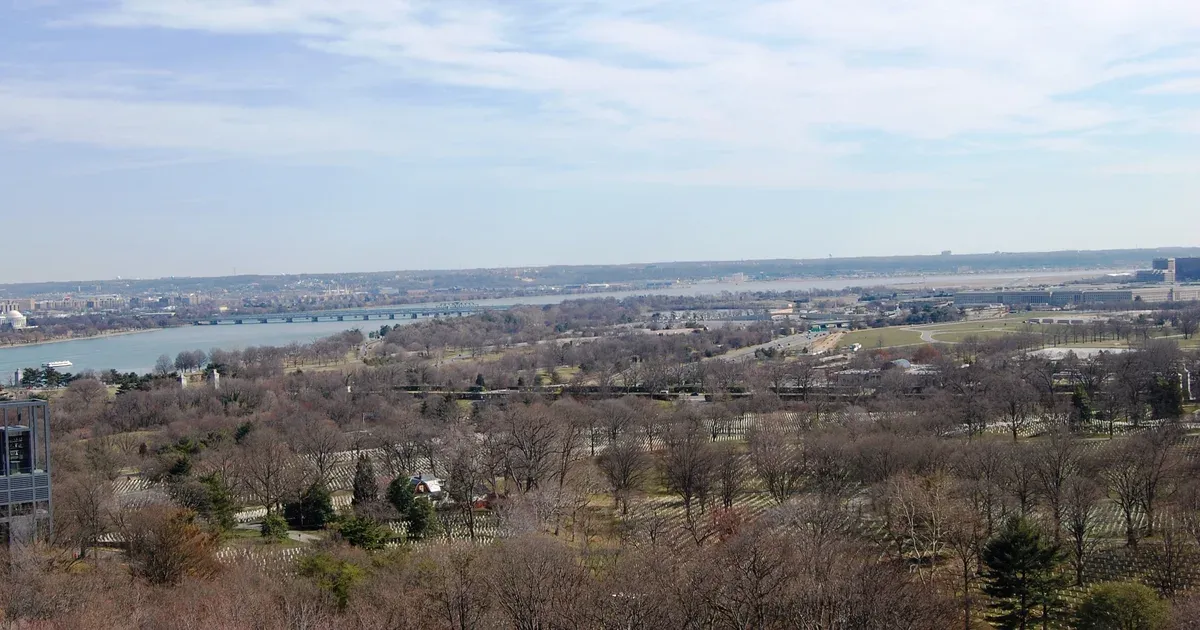
Plans released by the White House describe an enormous granite structure intended to overlook the Potomac River. Opponents argue the monument would permanently damage the visual integrity of Arlington National Cemetery. The lawsuit was filed on April 10, 2026, as veterans groups challenged the memorial proposal. Legal documents filed in federal court allege that the administration bypassed standard environmental and historical reviews to fast-track the project. The proposed structure’s height of 250 feet would make it one of the tallest landmarks in the region, second only to the Washington Monument and the National Cathedral.
Construction plans call for the use of domestic white granite and reinforced concrete. White House spokespeople stated that the design draws inspiration from classical Roman triumphal arches but on a scale never before seen in American civic architecture. Plaintiffs in the lawsuit, led by the group Veterans for Heritage Preservation, claim the arch would dominate the horizon when viewed from the Tomb of the Unknown Soldier. Lawyers representing the veterans submitted site-line simulations showing the arch appearing directly behind the cemetery’s most hallowed grounds. They contend this placement constitutes a desecration of the quiet dignity required for military honors.
Arlington National Cemetery Legal Challenge
Attorneys for the veterans argue that the project violates the National Environmental Policy Act and the National Historic Preservation Act. These statutes require federal agencies to conduct exhaustive studies on how new construction affects the surrounding environment and historic views. No such study has been released to the public since Donald Trump first announced the initiative. Government lawyers countered that the executive branch maintains broad authority over federal land use for commemorative purposes. The Justice Department maintains that the arch is a matter of national security and cultural morale, which grants it certain exemptions from standard zoning restrictions.
Preservationists worry about the precedent this sets for the National Mall and surrounding federal lands. Historically, the 1910 Height of Buildings Act has kept the Washington skyline low to ensure that the Capitol and the Washington Monument remain the primary focal points. This project would effectively shatter that enduring architectural tradition. Judicial experts believe the case may reach the Supreme Court if a preliminary injunction is granted to halt the site preparation. Work crews have already begun clearing brush near the construction site despite the pending litigation.
National Park Service Regulatory Oversight
Internal memos from the Department of the Interior suggest that staff scientists voiced concerns about the structural stability of the riverbank. Soil samples indicate that the weight of 15,000 tons of granite could cause significant erosion near the Potomac. Engineers ignored these warnings in favor of a more aggressive construction timeline. Public records show that the contract for the arch was awarded to a private firm without a competitive bidding process. This lack of transparency has drawn criticism from fiscal watchdogs in both parties. Officials insist that the accelerated schedule is necessary to complete the project before the end of the current term.
Budgetary estimates for the monument have ballooned to $450 million according to recent congressional testimony. Funding is being diverted from the National Park Service maintenance backlog to cover the initial phases of masonry work. Congressional leaders expressed surprise at the scale of the reallocation, noting that dozens of other national parks are facing critical infrastructure failures. The administration argues that the arch will generate significant tourism revenue for the District of Columbia. Critics, however, point to the lack of a long-term maintenance plan for such a large stone structure. Weathering and pollution in the capital often require expensive cleaning for white granite monuments.
Commemorative Works Act Compliance Issues
The Commemorative Works Act of 1986 is the primary legislative hurdle for any new monument in the capital region. This law requires that any work of art or architecture be approved by the Commission of Fine Arts and the National Capital Planning Commission. Documents obtained via freedom of information requests show that the Donald Trump administration sought to reclassify the arch as a utility structure to avoid these approvals. Regulatory boards have so far been frozen out of the design phase. Members of the Commission of Fine Arts have publicly criticized the design as being out of scale with the existing neoclassical landscape of Washington.
The proposed structure is an aesthetic intrusion that fundamentally alters the character of the nation's most hallowed ground and ignores a century of careful urban planning. Heritage experts argue that the arch lacks the subtle symbolism found in the Lincoln or Jefferson memorials. Rather than using metaphorical elements, the design relies on sheer physical dominance to convey its message. Veterans groups have organized rallies near the Arlington National Cemetery entrance to protest the construction equipment currently arriving on-site. Security forces have established a perimeter around the work zone to prevent disruptions. Tension between local activists and federal contractors continues to rise as the first foundation stones are laid.
Department of the Interior Construction Costs
Cost overruns are already appearing in early reports from the project managers. The specialty granite required for the exterior facing must be quarried from a specific site in Vermont that is currently operating at maximum capacity. Transportation costs for the huge slabs have exceeded original projections by 30 percent. Labor unions have also raised concerns about the safety protocols for workers tasked with mounting the upper sections of the arch. At 250 feet, the structure requires specialized cranes that must be shipped from overseas. These logistical hurdles have not deterred the Department of the Interior from moving forward with the site dedication ceremony.
Supporters of the arch claim it will be a source of national pride for generations. They argue that the capital needs new, bold symbols to reflect the current era of American influence. Donald Trump has personally reviewed the lighting designs, which include high-intensity LEDs that would be visible from several miles away. Light pollution concerns from the nearby Naval Observatory have been dismissed by project planners. The final design includes an observation deck at the top of the arch, though security agencies have not yet approved the public access plan. Local residents in Northern Virginia have expressed concern about the increased traffic such an attraction would bring to the George Washington Memorial Parkway.
Executive Monument Tests Arlington’s Civic Limits
Monuments built by executive fiat rarely survive the scrutiny of the centuries they intend to dominate. The decision to plant a 250-foot arch on the doorstep of Arlington National Cemetery is a calculated provocation that prioritizes personal legacy over the collective sanctity of the American landscape. By bypassing the Commemorative Works Act, the administration is doing more than building a monument; it is dismantling the regulatory framework that has protected the visual coherence of Washington since the McMillan Plan. It is an architectural land grab that treats public space as a private canvas for vanity.
The aesthetic cost to the Tomb of the Unknown Soldier is permanent and cannot be reduced by the quality of the granite or the height of the spire. Predicting the outcome of the veterans' lawsuit is difficult, but the optics are already disastrous. When the men and women who served the nation sue to protect their own cemetery from their Commander-in-Chief, the moral authority of the project evaporates. The administration is betting that the physical reality of the arch will eventually outweigh the legal and ethical objections. Once the foundation is poured and the marble is stacked, the structure becomes an irreversible fact. The strategy relies on the exhaustion of the public and the courts.
It is a gamble that risks turning a symbol of national triumph into a permanent monument to discord. The arch will not be a bridge between eras, but a wall between the government and the governed. Expect a verdict of failure.