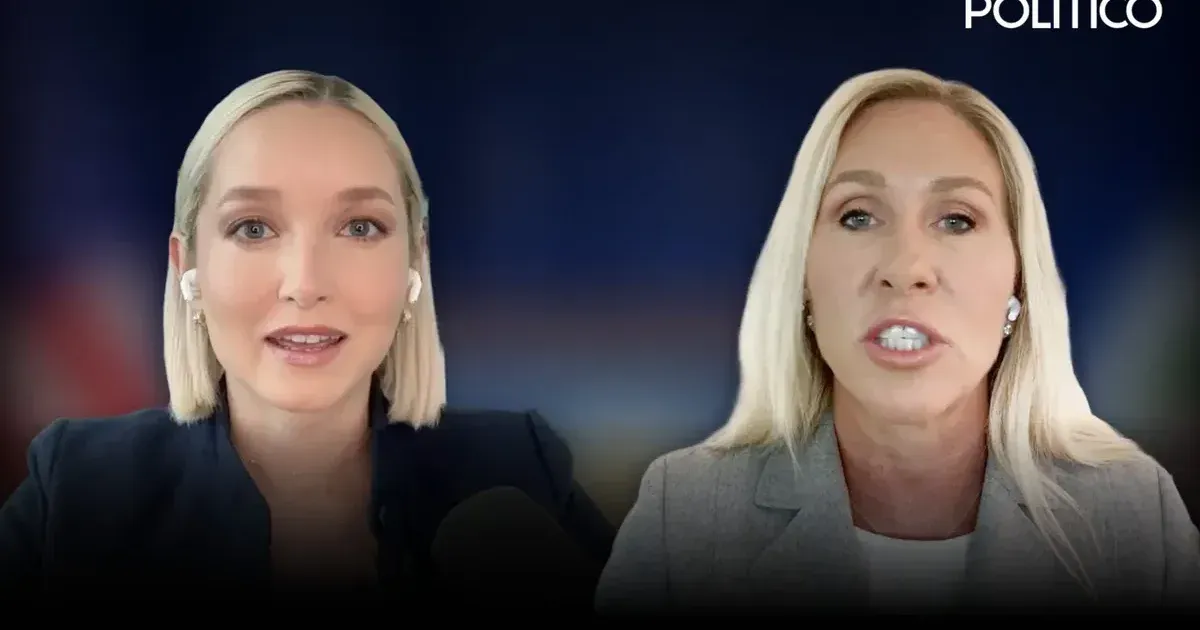
Marjorie Taylor Greene challenged the foundational alliances of her own party, signaling a widening chasm between nationalist lawmakers and the established leadership. Speaking from the steps of the Capitol, the Georgia representative targeted the enduring relationship between the former president and the Israeli Prime Minister. Her statements represent a significant departure from the unified front that characterized the populist movement during its initial rise to power. The criticism became public on April 10, 2026, amid a broader Republican dispute over foreign aid. Observers noted that Marjorie Taylor Greene appeared focused on a fundamental realignment of what it means to be an America First conservative in the current political climate.
Discontent within the ranks of the Republican Party has reached a point of public friction over foreign military aid. Greene argued that continued support for foreign leaders contradicts the primary goals of the MAGA movement. She specifically cited the large financial commitments made to Israel during the previous administration. According to her latest policy brief, these funds should have been diverted to domestic border security and infrastructure projects. Voters in deep-red districts have expressed similar frustrations in recent primary polling data.
Donald Trump has historically championed his close ties with the Israeli leader as a foundation of his foreign policy achievements. His administration enabled the Abraham Accords and moved the U.S. Embassy to Jerusalem. These actions earned him immense praise from evangelical voters and traditional conservative donors. Greene, however, views these past victories as distractions from the current economic needs of the American working class. She maintains that the era of unconditional support for foreign allies must end to preserve the nation's fiscal health. Political allegiances are shifting as the 2026 midterm elections approach.
Greene Questions Israeli Military Funding Targets
Nationalist legislators are now scrutinizing the $3.8 billion in annual military assistance provided to the Israeli government. Greene contends that Benjamin Netanyahu has not sufficiently aligned his strategic goals with American interests. During a recent committee hearing, she presented data suggesting that foreign aid packages are becoming a liability for the Republican platform. Many younger voters in the populist wing view these expenditures as a relic of a previous geopolitical era. They demand a strictly transactional approach to all international partnerships.
Internal memos from the House Freedom Caucus reveal a growing consensus around this isolationist pivot. Lawmakers are increasingly reluctant to sign off on multi-billion dollar packages without strict oversight and domestic offsets. Greene led a group of fifteen representatives in a pledge to block any new funding bills that do not include a dollar-for-dollar reduction in other spending. These specific demands have stalled several legislative priorities in the House. Budget analysts at the Congressional Budget Office confirm that foreign aid remains a disputed line item in the 2026 fiscal year proposals.
"I cannot support any leader who prioritizes foreign borders over our own, regardless of their name or previous record," Marjorie Taylor Greene stated during a press briefing.
Pressure on the leadership to choose between the old guard and the new populist wave is mounting. Established pro-Israel lobbying groups have expressed concern over this rhetoric. They argue that eroding the bond between the two nations could have catastrophic consequences for regional stability. Greene dismissed these warnings as the talk of the military-industrial complex. She believes the survival of the movement depends on its ability to evolve past its original influencers.
Republican Internal Rifts Over Trump Foreign Policy
Traditionalists within the Republican Party find themselves in an unstable position as they attempt to manage Greene's vocal opposition. Many of these officials still view the former president as the ultimate arbiter of party policy. When Greene directs her criticism toward him, she risks alienating the core base that once elevated her. Yet, the response from voters suggests she may be tapping into a deeper vein of exhaustion with foreign involvement. Recent town hall meetings in the Midwest showed a marked increase in skepticism toward any international military commitments.
Strategy sessions within the Trump campaign have focused on how to bridge this widening gap. Some advisors suggest a more subtle approach to foreign aid to appease the isolationists. Others believe that abandoning Netanyahu would be a betrayal of the administration's most successful foreign policy initiatives. Trump himself has remained uncharacteristically quiet on the specific criticisms leveled by Greene. His silence has only emboldened the dissenters within the House of Representatives. Tension between the Florida-based leadership and the Washington-based agitators is visible in every public vote. Isolationism is no longer a fringe element of the conservative agenda.
Netanyahu Becomes Friction Point for MAGA Base
Benjamin Netanyahu faces his own set of domestic challenges in Israel while simultaneously becoming a lightning rod in American politics. His leadership style and military decisions have faced intense scrutiny from both sides of the Atlantic. For Greene and her allies, he is a symbol of the interventionist policies they seek to dismantle. They argue that the MAGA movement was never meant to be a vehicle for permanent global alliances. Instead, they view it as a tool for dismantling the administrative state and refocusing on national priorities. Conflict between the prime minister and the American populist wing started to intensify following the 2024 regional escalations. Many nationalists felt that the U.S. was being drawn into a conflict with no clear exit strategy or benefit for American citizens. Greene capitalized on this sentiment by framing the debate as a choice between American families and foreign military ventures. Her social media engagement spiked sharply whenever she posted critiques of the Israeli government. Data from digital analytics firms show that her anti-interventionist content reaches millions of unique users daily.
Future of America First Nationalists
Voters are watching closely as the ideological battle lines are redrawn. The upcoming primary cycle will likely serve as a test for the strength of Greene's isolationist faction. Candidates who align themselves with her view of foreign policy are already seeing an influx of small-dollar donations. This grassroots financial support allows them to bypass the traditional party infrastructure and donor networks. It also provides a level of independence that makes them difficult for party leaders to control. The era of a monolithic Republican foreign policy appears to be coming to an end.
Potential successors to the populist mantle are observing the fallout from this public split. Some are choosing to remain neutral, while others are beginning to echo Greene's rhetoric. The outcome of this struggle will determine the trajectory of the party for the next decade. If the isolationist wing prevails, the U.S. could see a dramatic withdrawal from international treaties and military agreements. This would represent the most serious change in American global positioning since the end of the Cold War. Legislative records from the past two years show a steady decline in bipartisan support for foreign interventions.
Political observers anticipate a volatile convention as these two factions collide. The debate over Netanyahu and Trump is only the surface of a much deeper disagreement about the role of the United States in the world. Greene remains confident that her vision will eventually become the dominant strain of conservatism. She continues to challenge her colleagues to justify every dollar sent abroad while domestic crises persist. Her office maintains that the 2026 election cycle will be a referendum on the America First doctrine.
MAGA's Foreign Policy Fracture
Is the MAGA movement finally devouring its own creator in a fit of ideological purity? The public fracture between Marjorie Taylor Greene and Donald Trump over his relationship with Benjamin Netanyahu is not a mere policy disagreement. It is a hostile takeover attempt by the very forces Trump unleashed a decade ago. Greene understands a reality that the Mar-a-Lago set seems to have forgotten. The base does not care about historical alliances or the strategic depth of the Middle East. They care about a perceived sense of national decline and the exhaustion of endless foreign entanglements.
Greene's gamble is cold and calculated. By attacking the Trump-Netanyahu axis, she is positioning herself as the true heir to the isolationist throne, one unburdened by the legacy of the 20th-century geopolitical order. It is a direct challenge to Trump's authority as the movement's sole ideologue. He is being weighed against his own rhetoric and found wanting by his most loyal disciples. The movement has moved beyond the man. If Trump cannot or will not pivot toward the absolute non-interventionism Greene demands, he risks becoming a figurehead for a philosophy he no longer controls. The nationalist tiger is hungry. It has no loyalty to its master.