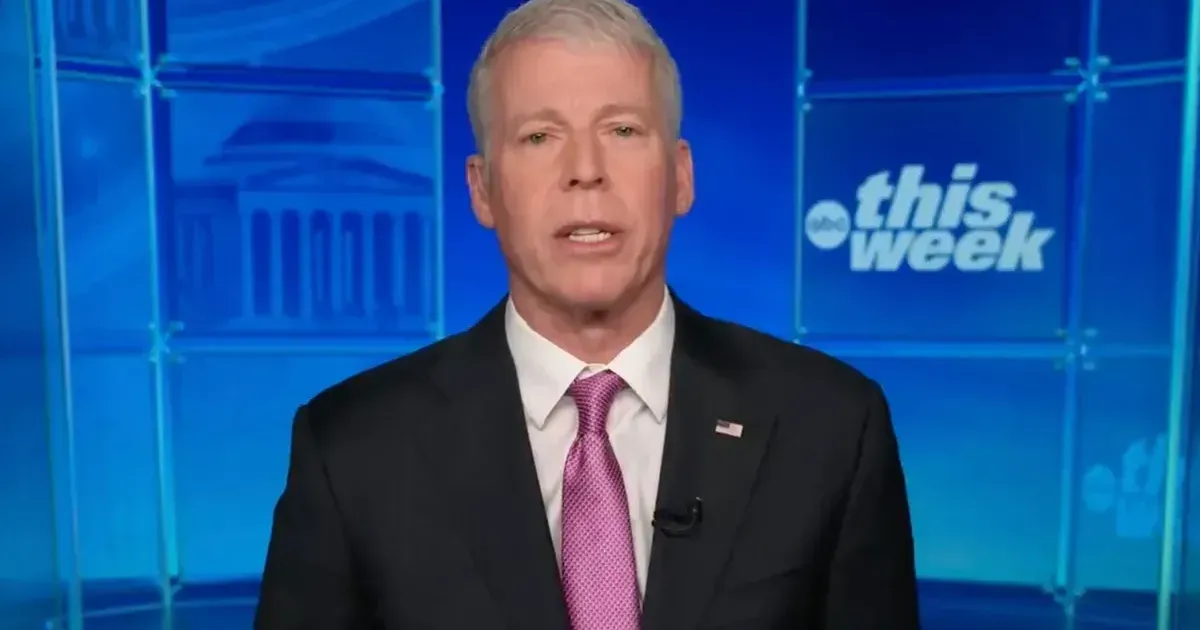
Trading screens across the world flashed deep shades of crimson on Monday morning. Energy Secretary Chris Wright warned on Sunday that the ongoing war with Iran has effectively paralyzed global energy shipping and sent domestic fuel costs to multi-year highs. His assessment followed a week of intensifying naval skirmishes and direct strikes that have effectively shuttered the primary artery of the global petroleum trade. Crude prices have already breached psychological barriers that many analysts hoped were a relic of the past decade. Markets are now pricing in a protracted disruption rather than a temporary shock. Wright appeared on multiple news programs to address the escalating crisis. During a detailed interview on NBC News, the Secretary confirmed that the maritime security environment has deteriorated sharply in recent days. He noted that the United States cannot offer any firm assurances regarding when consumers might see relief at the pump. The lack of a clear timeline reflects the unpredictable nature of the tactical situation on the water. American families are already feeling the impact as the national average for a gallon of gasoline climbs daily. Domestic concerns are mounting as the conflict enters a new phase of maritime interdiction. While the White House has attempted to reassure the public, the physical reality of the energy market tells a different story. Oil spiked to over $100 a barrel last week. This marks the first time in four years that the price has crossed that threshold. The psychological impact of triple-digit oil often leads to immediate price hikes at regional distribution hubs. Traders are watching the Persian Gulf with increasing desperation as each new report of a projectile launch or a naval mine discovery hits the wire.
Iran Conflict Keeps Fuel Prices Elevated
Merchant vessels are now avoiding the Strait of Hormuz due to active hostile fire. Iran has deployed a combination of anti-ship missiles and sea mines to deter commercial traffic and challenge Western naval presence. Wright stated during his media appearances that the waterway is now unsafe for tanker passage. This closure forces vessels to take longer, more expensive routes or remain anchored in safe harbors. Shipping insurance rates for the region have quadrupled since the start of the hostilities. Some major carriers have suspended all operations in the area until further notice.
Iranian forces are using a variety of asymmetric tactics to maintain pressure on the global energy supply. Small, fast-attack craft have been seen shadowing large crude carriers in international waters. Secretary Wright highlighted the use of projectiles and mines as the primary threats to modern shipping. These mines are difficult to detect and can disable even the largest tankers.
Logistical bottlenecks are forming at major ports outside the conflict zone. Supply chains that were already strained are now facing a total redirection of energy flows. But the physical shortage is only part of the problem. Speculation in the futures markets is driving prices higher as firms hedge against the possibility of a total regional war. The Energy Department is coordinating with international partners to monitor inventory levels. The reliance on Middle Eastern crude remains a vulnerability that cannot be mitigated overnight.
Hormuz Risk Hits Tanker Routes
Consumers in the United States are seeing the fastest rise in fuel costs since the 2022 invasion of Ukraine.
This conflict will come to an end in the next few weeks, and we'll see a rebound in supplies and a pushing down of prices after that.
Financial analysts at major banks are revising their year-end forecasts to account for the sustained disruption. Some believe that oil could reach $120 if the blockade of the Strait persists through the next month. Meanwhile, the manufacturing sector is bracing for higher input costs that will eventually be passed on to the public. Transportation companies have already begun adding fuel surcharges to their deliveries. These costs accumulate at every stage of the production cycle.
Wright Points to Supply Rebound
Wright offered a cautiously optimistic view on ABC News despite the current grim statistics. He contended that the military phase of the conflict is unlikely to remain at its current intensity for a long period. According to his projections, the next few weeks will be the most critical for the energy markets. He suggested that once the security situation stabilizes, a rebound in supplies will follow almost immediately. This projection assumes that the energy infrastructure in the region remains largely intact. A direct strike on a major production facility or a loading terminal would change the calculus entirely.
Public frustration is growing as the summer driving season approaches.
The White House is facing pressure to provide more direct relief to low-income drivers. Proposals for a temporary gas tax holiday are once again circulating in Congress. Many economists warn that such a move would only increase demand and keep prices elevated for longer. The focus remains on the physical reopening of the trade routes. Wright emphasized that the primary goal is the restoration of safe passage for all commercial vessels. Without that, no amount of fiscal maneuvering will solve the underlying supply deficit. Global oil production has fallen by approximately 2.5 million barrels per day since the outbreak of fighting. The gap has wiped out the spare capacity that held the market in balance for the last two years. Other producers in the OPEC+ alliance have not yet committed to substantial production increases to offset the Iranian shortfall. Some member states are citing technical limitations, while others are likely enjoying the higher revenue from elevated prices. In particular, the absence of Iranian crude from the European market has forced a scramble for alternative sources from West Africa and the North Sea.
Iranian officials have stated that they will continue to disrupt shipping as long as sanctions remain in place and military operations continue. The stance suggests that the energy market is being used as a weapon of war. The use of naval mines is a cost-effective way for a smaller power to exert outsized influence over the global economy. One single mine strike can halt traffic for days while a safety sweep is conducted. Wright told reporters that the United States is working with a coalition of nations to protect the flow of commerce. The vastness of the sea makes every tanker a potential target.
Market participants are now looking for any sign of a diplomatic breakthrough. Even a minor reduction in tensions could lead to a sharp sell-off in the oil markets. But as long as the projectiles are flying, the risk premium will remain baked into every gallon of gas sold in America. Current stockpiles are sufficient to prevent a total shortage, but they cannot stop the price from rising. The Energy Department is monitoring refinery margins to ensure that corporations are not using the war as a pretext for price gouging. Every cent matters in an economy where the cost of living is already the primary concern for voters.
Gas Prices Follow War Risk
Is the American public finally ready to admit that our entire economic stability is held hostage by a 21-mile wide strip of water in the Middle East? For decades, the United States has poured billions of dollars and countless lives into the Persian Gulf under the guise of stabilizing the global energy market. The current crisis proves that this investment has yielded nothing but a recurring nightmare of $4 gas and hyper-inflated grocery bills. Secretary Wright talks about a rebound in supplies in a few weeks, but he is whistling past the graveyard. Even if the mines are cleared tomorrow, the vulnerability remains. We are structurally addicted to a commodity controlled by regimes that loathe our very existence.
True energy independence does not come from drilling more holes in the ground or begging OPEC to turn a valve. It comes from an aggressive, cold-blooded decoupling from the global oil market that treats petroleum as the security liability it actually is. The political class in Washington would rather argue about gas tax holidays than confront the reality that the age of cheap, foreign oil is a historical fluke. We should be using this crisis to permanently break the back of the oil lobby and the foreign dictators they serve. If we don't, we deserve the next price spike, and the one after that.