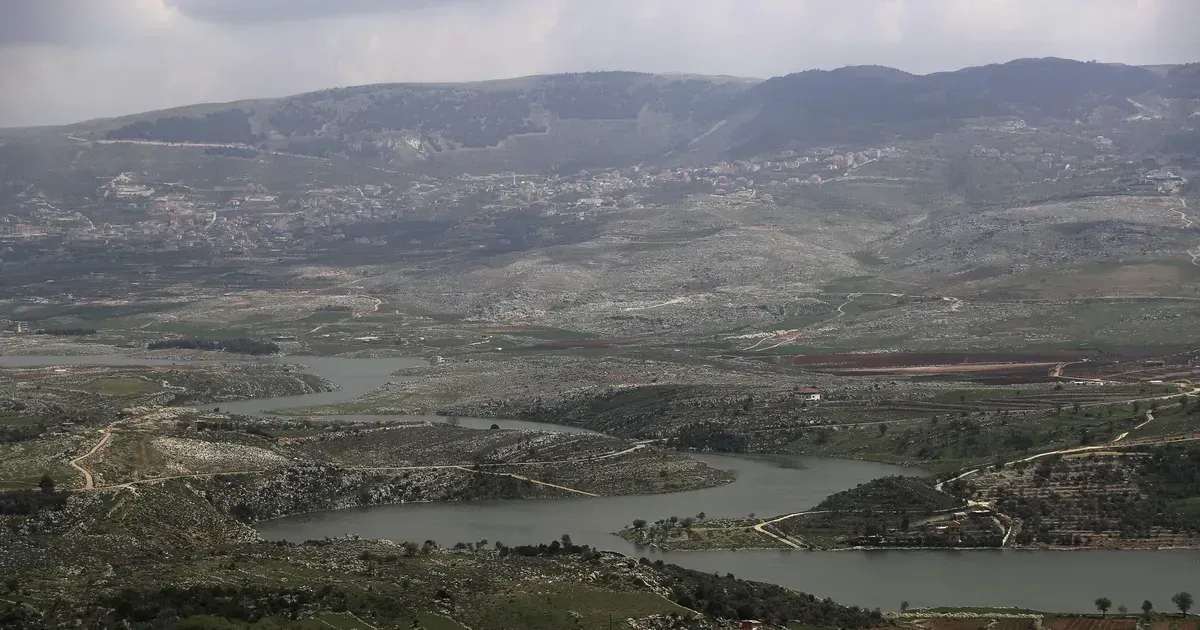
Rain-slicked asphalt surrounded the Temple Beth El gates early Monday morning. Federal investigators identified Ibrahim Muhammad Ghazali as the primary suspect in the West Bloomfield synagogue ramming that injured three children and a security guard. Ghazali drove a heavy-duty rental truck through the perimeter fence during a morning drop-off session. Documents recovered from the vehicle suggest the act was a calculated response to military events occurring thousands of miles away. Local law enforcement officials immediately handed the case over to the FBI as the international implications of the incident became clear. Intelligence gathered in the hours following the crash indicated a deep family tie to militant organizations operating in Lebanon. Reports from the Israel Defense Forces published Sunday morning confirmed that Ghazali's brother served as a high-ranking commander within the Hezbollah organization. This individual allegedly directed tactical operations in the border regions of Southern Lebanon until his recent death. The military intelligence suggests that the Michigan attacker was in frequent contact with his brother through encrypted messaging platforms. Such a link provides a motive that transcends simple domestic grievances or localized radicalization. It places the Michigan incident within a broader context of spillover violence resulting from the escalating kinetic exchanges in the Middle East.
Michigan Attack Draws International Scrutiny
Special agents in Detroit focused their early inquiries on the digital footprint of the suspect. Ghazali lived in a modest apartment in Dearborn where he worked as a delivery driver for several years. Neighbors described him as a quiet individual who rarely engaged in political discussions or local activism. But his private communications tell a different story of radicalization fueled by personal loss. Federal prosecutors believe the trigger for the attack occurred on March 5 during a targeted air strike in the Lebanese village of Kfar Kila. That strike resulted in the deaths of several members of the Ghazali family including his parents and a younger sister. The suspect targeted a preschool specifically because he wanted the pain of the Jewish community to mirror the pain he felt when he lost his own family in Lebanon. Evidence found at the suspect's residence included a handwritten note detailing his intentions to seek retribution. The note did not name a specific organization but referenced the divine right of the oppressed to strike back at the heart of their enemies. Investigators are now tracing the origins of the rental truck used in the crime to determine if any third party assisted in the logistics. So far, the evidence suggests Ghazali acted alone in the execution of the ramming while drawing ideological strength from his overseas connections. By contrast, the sophistication of his brother's role in Lebanon implies a level of systemic training that the Michigan suspect lacked. Federal authorities are looking for any signs of financial transfers between the two brothers in the months leading up to the strike.
Hezbollah Link Raises Federal Stakes
Intelligence officials in Tel Aviv identified the brother as a prominent figure within Hezbollah who oversaw anti-tank missile units. He was responsible for coordinating strikes against northern Israeli settlements and military outposts. The Israel Defense Forces monitored his movements for months before the March 5 operation that neutralized his cell. According to the IDF report, the brother had survived several previous attempts on his life. His role within the organization made him a high-value target in the ongoing campaign to secure the northern border. Yet his death appears to have triggered a chain of events that migrated from the hills of Lebanon to the suburbs of Detroit. Violence does not observe international borders. Still, the connection between a tactical commander in Lebanon and a civilian in Michigan highlights the vulnerability of the domestic front. The FBI has expanded its surveillance of known sympathizers in the region to prevent copycat attacks. Security at Jewish community centers across the United States has reached its highest level in decades. For instance, the Jewish Federation of Metropolitan Detroit announced an emergency increase in its armed security budget.
Synagogue Security Questions Return
Grief and fear have permeated the suspect's hometown in Lebanon.
They described the suspect as a boy who left for America to find a better life only to be pulled back by the gravity of war. Meanwhile the village remains under constant threat of further aerial bombardment.
Personal tragedy often acts as the most potent recruiter for extremist ideology. In particular, the death of children in the March 5 strike was cited by several Lebanese sources as the turning point for the Ghazali family's remaining members. Separately the U.S. State Department issued a travel warning for Lebanon citing the high risk of retaliatory violence against American citizens. To that end the diplomatic fallout from the Michigan attack is likely to complicate ongoing ceasefire negotiations. The Israel Defense Forces have refused to apologize for the strike, claiming it was a necessary defensive action.
In fact, the military spokesperson emphasized that the brother's role in Hezbollah made the entire household a legitimate target under their rules of engagement. Even so the human cost in Michigan has forced a reevaluation of how civilian casualties in the Levant affect public safety in the West.
Technical data from the IDF suggests that the brother of the suspect was part of an elite unit trained by foreign advisors. He had specialized in urban warfare and the use of complex drone technology. His death left a void in the local command structure that Hezbollah is now struggling to fill. The intelligence report notes that he had been in contact with several individuals in Europe and North America. This network of communication is now the primary focus of an international dragnet coordinated by Interpol and the FBI. For one, the digital trail shows that the brother encouraged the Michigan suspect to stay patient and wait for the right moment to strike. The advice was not for a specific date but for a time when the emotional impact would be maximized.
The suspect chose a weekday morning when the preschool was at its most crowded. Investigators recovered a GoPro camera from the dashboard of the truck that was intended to livestream the event. Fortunately the device failed to connect to the local network before the vehicle struck the security bollards. By contrast the physical damage to the synagogue was minimal but the psychological impact on the congregation was serious. Parents in West Bloomfield now question the safety of their children in a world where global conflicts can appear in their own driveways.
At the same time the local Muslim community in Dearborn has condemned the attack while expressing concern over potential Islamophobic retaliation. Security around local mosques has also been increased as a precaution against vigilante justice. The Israel Defense Forces continue to provide the U.S. government with daily updates on the Hezbollah cells linked to the Ghazali family. Only the final forensic analysis of the suspect's phone will reveal if he received direct orders to carry out the ramming.
Local Violence Can Carry Foreign Echoes
Distance is a luxury that the United States can no longer afford in its foreign policy calculations. The notion that kinetic operations in the Levant remain contained within those borders is a dangerous delusion encouraged by a disconnected political class. When the Israel Defense Forces strike a target in Lebanon they are not just hitting a building; they are pulling a thread that vibrates through the diaspora communities of Michigan and beyond. This incident at Temple Beth El should be viewed as a failure of both intelligence and imagination.
We have exported instability for decades and now that instability is returning via the very people we welcomed to our shores. It is naive to expect that a man can watch his entire family perish in a rain of Western-backed fire and then quietly continue his life as a delivery driver in the suburbs. The security state focuses on the mechanics of the truck and the encryption of the phone while ignoring the raw human vengeance that drives the accelerator.
Unless the United States addresses the root cause of these cross-border traumas, the American heartland will continue to serve as the secondary battlefield for the wars of the Middle East. True national security requires a total decoupling from the infinite cycles of Levantine retribution.