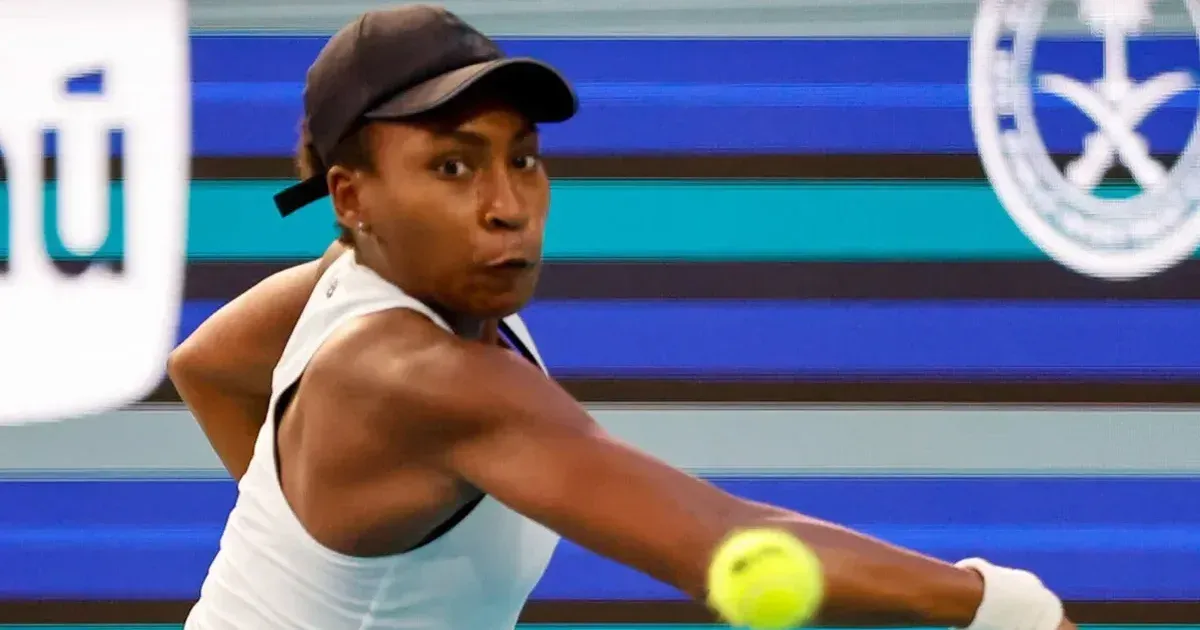
Coco Gauff reached her first Miami Open final with one of the cleanest performances of her season, beating Karolina Muchova 6-1, 6-1 at Hard Rock Stadium. The South Florida crowd treated the semifinal like a home-stage breakthrough. Gauff controlled the pace from the first return game and never allowed Muchova to turn the match into a tactical puzzle. The March 27, 2026 result also gave the tournament a local finalist with genuine title momentum.
The scoreline reflected more than momentum. Gauff served with enough authority to avoid break-point pressure and used her defensive range to make Muchova hit extra balls from uncomfortable positions. Muchova's variety usually gives opponents trouble, but her timing collapsed under Gauff's depth and movement. For Gauff, the win matters because Miami has always carried a different emotional weight. She grew up in Florida, and a run to the final there gives her a local milestone alongside the larger career markers she has already collected. It also shows that her hard-court game can still become more direct when her serve and forehand land together.
The match also showed a more mature version of Gauff's point construction. She did not chase winners from neutral positions or let the scoreline make her careless. Instead, she repeated heavy patterns until Muchova had to create lower-percentage shots. That discipline is often what separates a dominant semifinal from a match that unexpectedly tightens. Her serve made the rest of the plan easier. When Gauff lands first serves and starts rallies from the front foot, opponents have fewer chances to attack her second delivery or drag her into defensive service games.
Gauff Controls the Baseline
The opening set established the pattern. Gauff pushed returns deep, took away Muchova's first-strike options and forced the Czech player to defend from behind the baseline. Once Muchova began missing early in rallies, Gauff had no reason to overcomplicate the match.
The second set brought no real reset. Muchova tried to shorten points with net approaches and drop shots, but Gauff's speed turned several of those choices into risks. The American's court coverage made the match feel smaller for Muchova, who could not consistently find open space. The most encouraging detail for Gauff may be how little drama the win required. She did not need a comeback, a tiebreak or a late emotional surge. She simply played the cleaner match from start to finish.
The short match gives Gauff a practical advantage before the final. She avoided a three-set grind, protected her legs in humid conditions and kept her service rhythm intact. Those details matter late in a tournament, when recovery time can shape the quality of the next performance. It also gives her team a cleaner scouting base. Rather than repairing problems from the semifinal, they can focus on the final opponent and preserve the patterns that worked.
The final also gives Gauff a chance to convert a local run into a title-level statement. Miami is not a major, but it is one of the sport's most visible hard-court events, and winning there can shape confidence for the rest of the spring. For an American player carrying national expectations, that kind of home-market success matters. Muchova will leave with a different lesson: against an elite mover, touch and variety have to be paired with enough depth to stop the first counterpunch.
Final Adds a New Career Marker
Reaching the Miami final gives Gauff another chance to show that her game can hold up under expectation. She has already lived with major attention for years, but tournaments close to home create a different pressure. Every point carries crowd energy, family presence and the feeling that the event is partly built around her rise.
Muchova leaves with a clear technical lesson. Against a defender as quick as Gauff, variety has to be paired with precision. Too many of her changes of direction arrived late, and too many approaches gave Gauff a running target. The final will ask a different question of Gauff, but the semifinal gave her the ideal platform. She conserved energy, sharpened confidence and turned a potentially difficult opponent into a short afternoon. That is exactly the kind of win a title contender wants before the last match of the week. The scoreline also gives the final a clearer narrative: Gauff is not arriving as a survivor of a difficult draw, but as the player who has imposed the cleanest tennis of the week. That changes how the next opponent prepares, because the first task will be stopping her rhythm rather than waiting for errors.