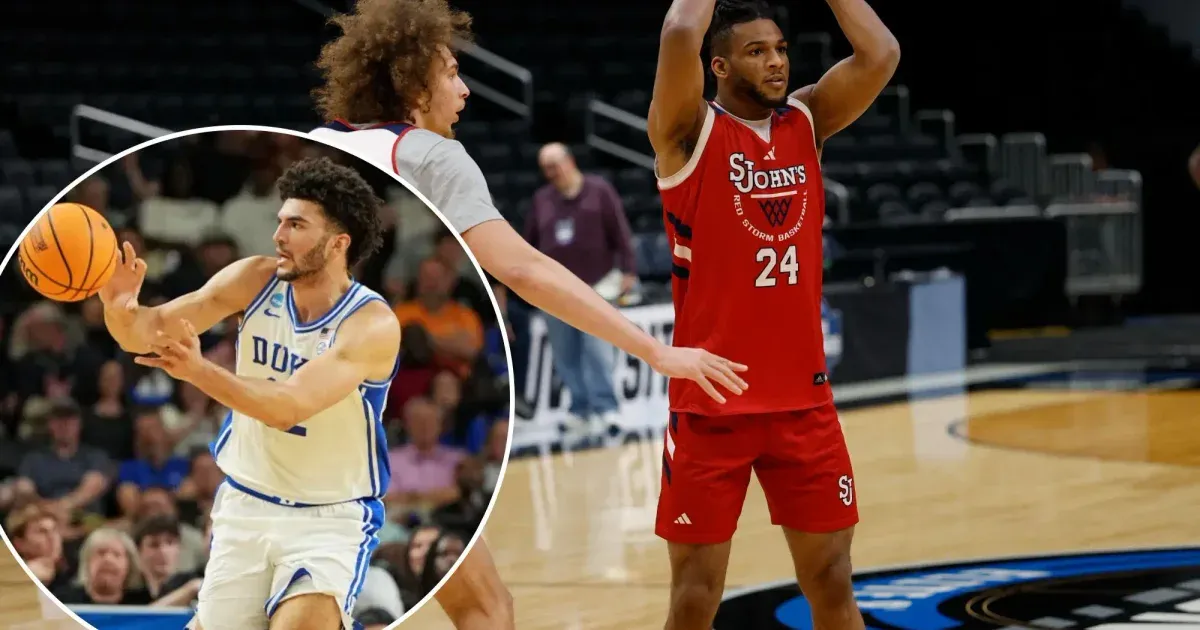
The NCAA Sweet 16 arrived with Duke and St. John's drawing the main on-court attention, but North Carolina's coaching search became the subplot around the regional. The games were set for March 27, 2026, at Capital One Arena, where fans came for tournament basketball and reporters kept asking coaches about a vacancy in Chapel Hill. That overlap turned a normal Sweet 16 media cycle into a coaching-market watch.
Duke and St. John's offered the cleanest basketball story. Rick Pitino's team entered with physical defense, offensive rebounding and the confidence of a Big East group that had already handled several high-pressure games. Duke countered with higher-end talent, a tighter rotation and the expectation that Jon Scheyer's group could win with spacing and late-clock shot creation.
The problem for the tournament is that North Carolina's opening changes the conversation. Major jobs affect contract leverage, recruiting promises and the way coaches answer even routine questions. A coach preparing for a regional semifinal does not want to discuss another school's future, but the speculation follows the bracket anyway.
For players, the coaching rumor cycle can feel distant and immediate at the same time. It may not change a scouting report, but it changes the questions around the team hotel, the practice floor and the press room. Veteran teams usually handle that better because they have clearer internal leadership. The contrast is part of what makes March volatile. A program can spend all year building habits, then face a week where the opponent, the venue and the outside noise all arrive together.
Duke and St. John's Own the Floor
The matchup itself has enough tactical interest without the sideline noise. St. John's wants to make the game physical, crash the glass and turn turnovers into short possessions. Duke wants cleaner spacing, fewer live-ball mistakes and enough defensive rebounding to prevent the Red Storm from extending possessions. Neutral-site energy may not feel neutral. St. John's alumni from New York can travel easily to Washington, while Duke's national fan base is used to filling tournament venues. The atmosphere should be intense from the opening minutes, especially if the game becomes a half-court fight.
North Carolina Changes the Coaching Market
The Tar Heels vacancy matters because it is one of the few jobs capable of reshaping the sport's hierarchy. Coaches with secure positions still have to address rumors, boosters begin reading body language and agents use uncertainty to test market value. Even denials can become part of the story.
Names connected to the search have tried to keep their focus on current teams. That is easier said than done during March, when every press conference is national and every answer can be clipped into a coaching update. The result is a distraction that belongs to North Carolina but spreads across the tournament.
The coaching search also affects recruiting. Prospects and transfers watch whether a program looks stable, and rival staffs can use uncertainty in conversations with players. That makes North Carolina's timeline relevant even for teams that are not directly involved in the search. For the coaches still alive in March, the safest answer is winning. Tournament success quiets speculation better than any press-conference denial.
The games themselves remain the best filter. A coach rumored for a bigger job still has to manage timeouts, foul trouble and late-game possessions. Players still have to defend without fouling and finish through contact. The bracket strips away speculation quickly because losing ends the conversation for that team. That is why the Sweet 16 can absorb the noise. The coaching market may dominate the hours between games, but the scoreboard reclaims authority once the ball is tipped.
That dynamic keeps the regional from becoming only a coaching story. The winner will be remembered for execution, not rumor control, and that is why both staffs have tried to narrow the week back to scouting details.
Basketball Still Decides the Week
The teams that survive will be the ones that keep the job speculation outside the locker room. Players care about matchups, minutes and mistakes more than coaching-market intrigue, and the Sweet 16 usually punishes divided attention quickly.
For Duke and St. John's, the clearest path is to make the game about the floor again. If Pitino's defense controls tempo, the Red Storm can drag Duke into a difficult night. If Duke's guards protect the ball and rebound, the Blue Devils can turn the matchup toward skill and depth. The North Carolina search will continue no matter who wins. The bracket, however, will not wait for anyone to finish speculating. The same pressure touches athletic directors. A deep tournament run can raise a coach's price overnight, while an early exit can make a search committee more aggressive. North Carolina's vacancy therefore sits behind the games even when no one wants to discuss it.