Congress recessed after Speaker Mike Johnson led House Republicans to abandon a Department of Homeland Security funding deal in favor of a two-week spring break. The collapse of the deal gave lawmakers one more deadline fight without a clean exit. That keeps agency funding tied to factional pressure inside Congress. The update came on March 28, 2026. Lawmakers departed Washington while leaving the primary agency responsible for national security and border enforcement without a permanent budget for the seven weeks following the initial shutdown. Republican leadership in the House of Representatives remains at odds with a bipartisan Senate coalition that passed a full-year funding package just days ago. Failure to reconcile these bills means thousands of federal employees will continue working without guaranteed paychecks through the upcoming holiday period.
Speaker Mike Johnson, characterizing the Senate's unanimous bipartisan effort as a failure of policy, pushed through a House-specific stopgap measure on Friday night. Critics in the upper chamber argue the House bill is destined for rejection, creating a legislative dead end that offers no long-term stability for the Department of Homeland Security (DHS). Johnson remains firm in his opposition to the Senate's version of the package. He described the proposal from the upper chamber in blunt terms.
"a joke"
House leadership maintains that their short-term extension provides the necessary leverage to extract further concessions on border policy. Senate leaders, however, argue that the House bill ignores the immediate operational needs of the Transportation Security Administration (TSA) and the Coast Guard. This legislative friction occurs as the national security apparatus struggles to maintain routine operations under emergency spending protocols. Lawmakers from both parties have expressed frustration at the inability to find common ground before the scheduled recess.
House Speaker Rejects Senate Funding Bill
Negotiations stalled when the House Republican caucus refused to take up the Senate-passed legislation, which had received unanimous support from Senate Republicans earlier in the week. Specifically, the House leadership insists on a stopgap measure that includes stricter immigration enforcement mechanisms not found in the Senate version. Members of the House Appropriations Committee argue that a full-year bill without these additions is insufficient for current border conditions. These disagreements have effectively paralyzed the appropriations process as the seven weeks of partial shutdown continue to impact federal morale.
Senate members left the capital without a clear path toward resolution. Majority and minority leaders in the Senate have criticized the House for prioritizing a vacation over the finalization of the DHS budget. While the House did pass its own temporary funding bill, it lacks the votes required to clear the Senate threshold. Bipartisan groups in the Senate had worked for months to craft a compromise that could satisfy both the White House and fiscal conservatives. House leadership discarded those efforts in a late-night session on Friday.
Presidential Action Maintains TSA Operations
Administrative intervention became necessary on Friday as Donald Trump signed an executive order intended to ensure TSA agents receive temporary compensation despite the lack of a formal budget. Executive branch officials stated that the order aims to prevent a mass exodus of essential security personnel during the busy spring travel season. Public concern had mounted regarding potential airport delays and security lapses if agents remained unpaid. While the order provides a temporary reprieve, legal experts question the long-term viability of funding an agency through executive decree without congressional appropriation.
TSA operations remain a focal point of the funding battle due to their direct impact on the American public. Security screeners and air marshals are among the most visible employees affected by the budgetary lapse. Historically, the executive branch has limited authority to move funds between accounts without specific legislative approval. Budget analysts from the non-partisan Congressional Budget Office suggest that this executive action may face legal challenges if the shutdown extends into the summer months. Financial uncertainty continues to plague the rank-and-file workforce at major international airports.
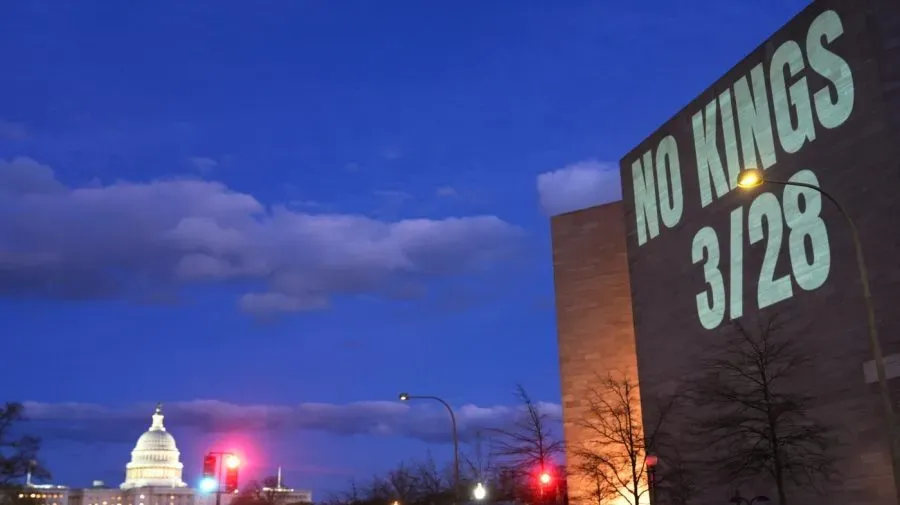
Public dissatisfaction with the legislative stalemate has manifested in widespread demonstrations across the United States. Huge rallies under the "No Kings" banner are expected in major cities throughout the weekend to protest the perceived incompetence of the federal government. Protesters have voiced anger over the repeated use of shutdowns as a political tool. These demonstrations reflect a growing frustration with the inability of Mike Johnson and other congressional leaders to maintain basic government functions. Organizers of the rallies have signaled that their movement will target both political parties if the DHS funding is not restored.
Legislative Deadlock Threatens National Security
National security experts warn that the seven weeks of funding uncertainty have created vulnerabilities within the Department of Homeland Security. Operational components such as the Secret Service and the Cybersecurity and Infrastructure Security Agency are currently operating on skeleton budgets. Funding gaps have delayed the procurement of new technology and the implementation of updated security protocols. Intelligence officials have quietly expressed concern that prolonged budget battles diminish the country's ability to respond to emerging threats. Career professionals at DHS have urged Congress to provide a predictable funding stream to ensure continuity of operations.
Border patrol agents are facing similar constraints as their resources are diverted to manage the immediate impacts of the shutdown. Administrative staff at DHS have been furloughed, leaving field agents to handle paperwork and logistical tasks that normally fall to civilian employees. Instead of resolving these issues, the House Republican caucus chose to leave Washington for a scheduled fourteen-day break. Senate colleagues have described this move as an abdication of duty. National security remains a secondary concern to the tactical political goals of the respective party leaders.
Political strategy has successfully eclipsed the basic requirements of governance.
Governance Failure
Why does Washington continue to treat national security as a bargaining chip for vacation time? The current deadlock over Department of Homeland Security funding is not a debate over policy but a performance for a base that views government collapse as a metric of success. Speaker Mike Johnson and the House Republican caucus have chosen to gamble with the livelihoods of TSA agents and border patrol officers to maintain a narrative of defiance. This is not leadership; it is a retreat into partisanship at the expense of institutional stability.
The Senate's unanimous vote proves that a solution is possible, yet the House remains tethered to a stopgap strategy that has repeatedly failed to produce results. By prioritizing a spring break over a functional budget, Congress has signaled that the optics of the fight matter more than the security of the nation. The executive order signed by Donald Trump is a desperate bandage on a self-inflicted wound that does nothing to solve the underlying rot in the legislative process.
If the American public expects a government that can fulfill its most basic duties, they must hold these lawmakers accountable for a seven-week failure that has no end in sight. Political survival has become the only currency that matters in a capital that has forgotten how to govern.