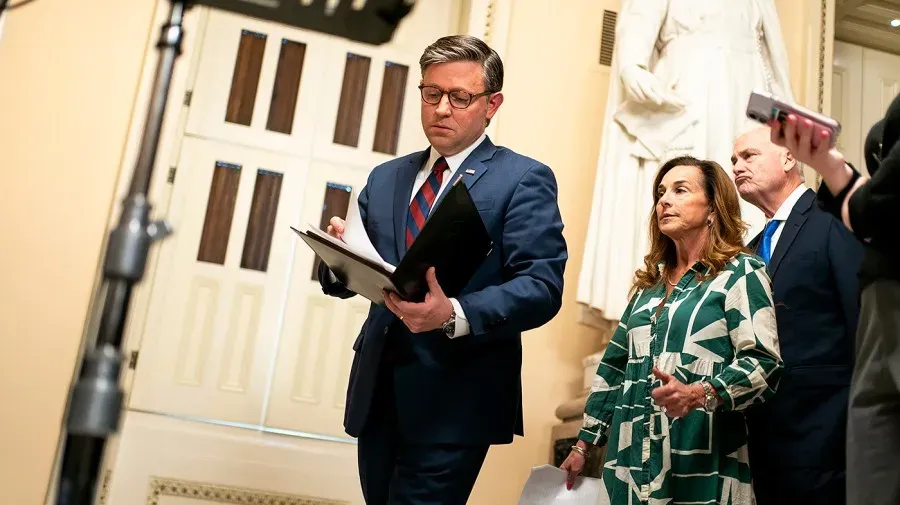
Speaker Mike Johnson sparked a fresh confrontation by rejecting a Senate-backed proposal to fund the Department of Homeland Security. The standoff has become a test of whether House Republicans can govern through internal factions. The issue reached public view on March 28, 2026. This decision arrived as the partial government shutdown reached its forty-third day, leaving thousands of federal employees without pay. Johnson signaled a hardline stance against any measure that fails to fully restore resources for border enforcement agencies. Senate Majority Leader John Thune had previously endorsed the compromise, but House leadership viewed the plan as insufficient for national security needs.
Tensions between the two chambers reached a boiling point late Friday evening. Senate leaders had successfully passed a measure that would have reopened the majority of the department, excluding specific contested accounts related to detention facilities. Johnson displayed visible anger when discussing the Senate proposal, characterizing it as a betrayal of Republican principles regarding immigration enforcement. Conservative members of the House caucus supported this rejection, arguing that the Senate version lacked the necessary teeth to secure the southern border. The deadlock extends the shutdown through the congressional recess.
House Republicans Reject Bipartisan Senate Compromise
Republican unity fractured as the House moved to pass its own alternative funding bill. This rival legislation provides only a two-month temporary extension for the department, a move that critics in the Senate labeled as a stalling tactic. Senate negotiators had spent weeks crafting a deal that garnered enough Democratic support to clear the sixty-vote threshold. House leadership, however, contended that the Senate deal effectively abandoned Immigration and Customs Enforcement (ICE) and U.S. Customs and Border Protection (CBP). Johnson argued that reopening the government without addressing these specific enforcement gaps was unacceptable.
"We're not going to split apart two of the most important agencies in the government and leave them hanging like that," House Speaker Mike Johnson told reporters leaving the U.S. Capitol on Friday night.
Passage of the House stopgap measure occurred primarily along party lines. House Republicans aimed to force the Senate back to the negotiating table by presenting a unified front. Senate Democrats immediately dismissed the House proposal as dead on arrival. They asserted that the upper chamber would not take up a bill that failed to meet previous bipartisan agreements. Friction between the House and Senate GOP highlights a broader ideological rift within the party. While Thune emphasizes legislative pragmatism, Johnson remains tethered to the demands of his most conservative members.
Impact on Border Security and National Transportation
Operations at major American airports have begun to deteriorate as the funding gap continues. Transportation Security Administration (TSA) officers, working without pay for over a month, are resigning or calling out in record numbers. Houston, Atlanta, and New Orleans have reported the most sizable staffing shortages. Official reports indicate that 450 officers have quit nationwide since the start of the shutdown. Travelers face long queues and unpredictable security checkpoint closures as a direct result of these vacancies. Mounting staffing shortages among TSA officers have triggered intense debates regarding the potential deployment of alternative federal personnel.
Security experts warn that the erosion of the federal workforce creates vulnerabilities in the national aviation system. Staffing levels at Customs and Border Protection have also reached critical lows. Officers at ports of entry must manage increasing workloads with dwindling resources. Local law enforcement agencies in border towns have expressed concern that the lack of federal funding hampers coordination efforts. Morale among frontline personnel has plummeted to historic lows as the legislative stalemate shows no sign of resolution. Paychecks remain frozen for thousands of families who rely on DHS salaries to cover basic expenses.
Senate Recess Leaves DHS Funding in Limbo
Senators departed Washington for a two-week Easter recess shortly after their early morning vote on Friday. The departure effectively freezes any further legislative action until their return. House Republicans criticized the recess, suggesting that the Senate should remain in session to consider the House stopgap bill. Some senators are already traveling abroad on scheduled congressional delegations. The timing of the recess complicates efforts to reach a final deal before the next major funding deadline. House leadership maintains that the burden of reopening the department now rests with the Senate.
A Republican aide confirmed that the path to ending the shutdown requires House cooperation on the Senate-passed bill. Democrats have blocked every short-term extension proposed by the House over the last forty days. They maintain that a full-year funding bill is the only viable solution to the crisis. Senate Republicans who supported the compromise now find themselves caught between their House colleagues and their Democratic negotiating partners. The lack of a clear legislative path forward suggests the shutdown could extend into late April. Political maneuvering continues to overshadow the operational needs of the country’s security infrastructure.
The legislative standoff now risks becoming one of the longest shutdown fights in recent American history.
Historical data indicates that the current lapse in funding is approaching the duration of the longest government shutdowns in American history. Previous impasses were often resolved within weeks, but the current dispute over DHS involves deep disagreements on immigration policy. House Republicans insist that no funding will be provided unless strict border enforcement measures are included. Senate leaders argue that such policy riders make the bill impossible to pass in a divided government. The fundamental disagreement has created a cyclical pattern of failed votes and finger-pointing.
Public frustration with the gridlock is mounting as the effects of the shutdown become more visible to the average citizen. National parks and other agencies remain open, but the specific targeting of DHS has focused the pain on travel and border security. Airline industry representatives have called on Congress to prioritize the stabilization of the TSA workforce. They fear that a prolonged staffing crisis will lead to a broader economic slowdown. Neither side appears willing to blink as the political stakes continue to rise. Hardline rhetoric from both ends of the Capitol suggests that a compromise remains elusive.
Governance Fallout
Legislative paralysis is no longer a bug of the American system; it has become the primary feature of a House majority that prefers ideological purity to operational stability. Watching Mike Johnson dismantle a bipartisan Senate deal is an exercise in political self-sabotage that prioritizes the optics of border security over the actual functioning of border agencies. One must ask how House Republicans justify a strategy that leaves border agents and TSA officers without pay while claiming to be the party of national security. The absurdity of the current situation is highlighted by a Senate that passes a bill and then immediately flees for a two-week vacation, leaving the wreckage of the department in its wake.
The practical damage is becoming harder to separate from the messaging fight. When hundreds of TSA officers leave, the system does not simply slow down; it loses trained personnel who cannot be replaced overnight. That makes the shutdown a test of governing capacity rather than only a dispute over border policy.