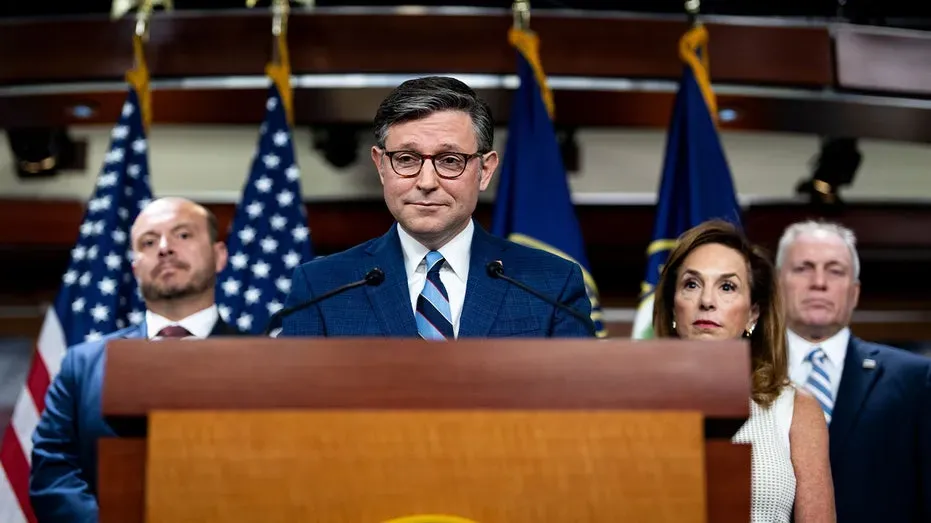
House Republicans rejected a Senate Homeland Security funding deal as shutdown pressure deepened across the federal security apparatus. The rejection widened the gap between House tactics and Senate funding math, leaving agencies exposed to another cycle of short-term bargaining. Speaker Mike Johnson dismissed the Senate approach while Donald Trump pushed Republicans toward a harder line on ICE funding.
The dispute centers on whether Congress should reopen the Department of Homeland Security through a broader Senate compromise or force another short-term deadline tied to immigration enforcement. House leaders are backing a temporary funding path that preserves leverage for a new fight. Senate negotiators argue that the agency needs stability, pay continuity and a cleaner appropriations route. Both sides claim to be defending security. The practical result is paralysis.
DHS agencies do not stop mattering because Congress cannot agree on a bill. TSA employees, Coast Guard personnel, border officers and support staff are all pulled into the political fight. Even when essential workers remain on duty, uncertainty over pay and program funding weakens morale and planning. A security agency can function during a shutdown only for so long before the strain becomes operational.
Speaker Johnson Denounces Senate Funding Proposal
Johnson framed the Senate proposal as an unacceptable compromise on border enforcement. House leadership argued that the bill did not provide the immigration resources Republicans wanted, even though Senate supporters presented it as a way to restore funding and stabilize core DHS operations. The fight is not only over dollars. It is over whether border policy should be settled inside a must-pass funding bill.
Johnson's position reflects the pressure inside a narrow House majority. Conservative members have little interest in giving the Senate a bipartisan win if they believe ICE funding or enforcement language has been diluted. With slim margins, the Speaker has to manage members who see confrontation as the point of leverage. That makes a Senate deal easy to reject and hard to replace.
House Republicans also believe a shorter continuing resolution gives them another chance to force concessions. The Senate's problem is the opposite. A temporary patch may reopen some room for bargaining, but it also guarantees another deadline and another shutdown threat. For an agency built around readiness, that cycle is not neutral.
Trump Demands Full ICE Funding in DHS Bill
Trump's intervention hardened the Republican position around ICE. He argued that a DHS bill without the enforcement money Republicans want would weaken the purpose of the department itself. That message gave House hardliners more political cover to reject the Senate framework and made it harder for Senate Republicans to defend compromise as a practical necessity.
Senate negotiators had tried to separate immediate agency funding from the most disputed immigration enforcement fights. House Republicans rejected that separation. To them, airport security, border operations and ICE funding belong in the same political package because they all sit under the homeland security umbrella. To Senate dealmakers, that approach risks holding the whole department hostage to the most divisive part of the bill.
The collapse of the bipartisan framework leaves DHS caught between two Republican strategies: Senate stability and House leverage. Neither side can force the other chamber to move quickly. That gives the shutdown a procedural life of its own, even as workers and local agencies wait for direction.
Budget Shortfalls Strain Security Operations
House Republicans say the Senate bill does not provide enough support for Customs and Border Protection, ICE and border technology. Senate supporters counter that restoring broader DHS funding is the first step toward keeping the security apparatus functional. Those are not minor differences. They reflect two theories of governing during a shutdown: secure the agency first, or use the shutdown to extract policy terms.
The Senate proposal is being treated by House hardliners as surrender rather than a solution.
That posture may energize the House conference, but it carries risk. Essential employees can be required to keep working, yet training, procurement, grant administration and support functions can slow or stall. State and local partners depend on federal coordination. Ports, airports and border sectors depend on predictable funding. The longer the fight lasts, the less credible it becomes to describe the damage as abstract.
House leaders are betting that public frustration will push the Senate toward their shorter-term plan. Senate leaders are betting that House Republicans will eventually accept the cost of prolonged disruption. In the middle are DHS personnel who have to keep showing up while elected officials turn their paychecks and operating budgets into bargaining chips.
What the Shutdown Exposes
Why should the American public believe that a political party capable of starving its own security apparatus actually cares about border integrity? The current theater in the House suggests that the Department of Homeland Security is being treated not as an essential organ of the state, but as a convenient hostage for a populist power play. Johnson's dismissal of the Senate path reveals a dangerous detachment from the operational realities of TSA, CBP and other DHS personnel caught in the middle.
If House Republicans truly prioritized the border, they would fund the agencies responsible for defending it rather than forcing them to operate under emergency improvisation. The argument is no longer only about policy. It is about performative loyalty to a political strategy that treats the federal budget as a personal bargaining chip. By rejecting a bipartisan path forward, the House has chosen maximum friction and ensured that the shutdown fight will grind toward a breaking point. Governance has been replaced by a suicide pact.