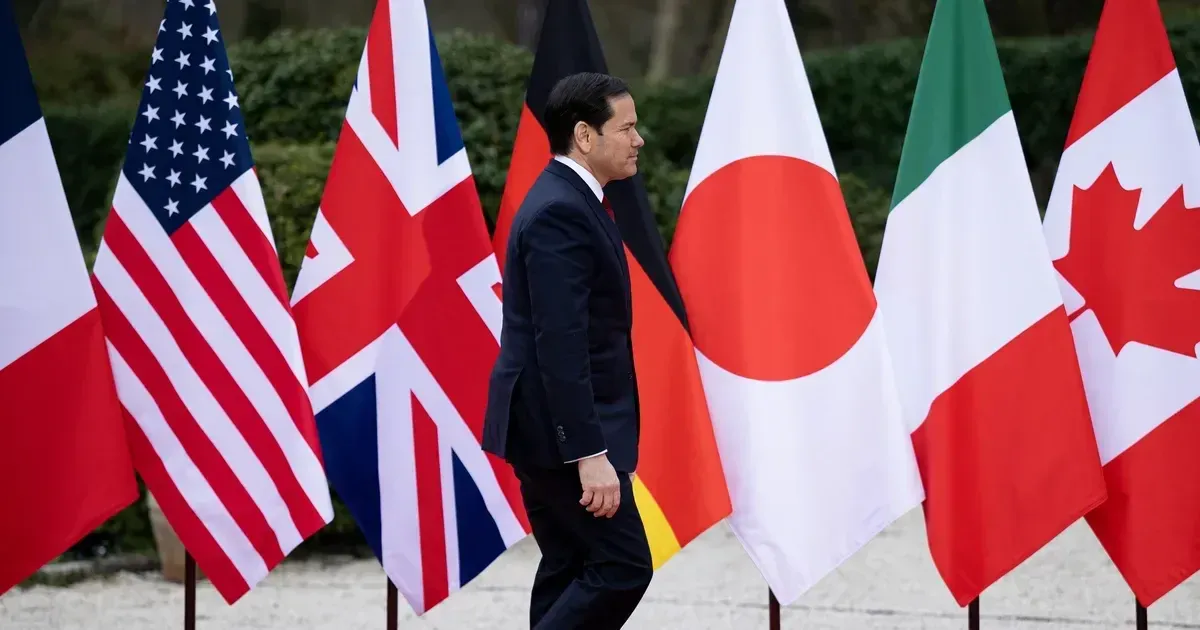
The Pentagon is warning allies that the Iran war could strain weapons flows meant for Ukraine. Marco Rubio raised the issue near Paris on March 27, 2026, telling G7 counterparts that US stockpiles and production lines are under pressure from overlapping security commitments.
Iranian missile pressure has forced Washington to think harder about interceptor burn rates, production limits and commitments already made to Kyiv. The Focused on Ukraine Requirements List was designed to keep hardware flowing to Eastern Europe, but an active Middle East conflict changes the urgency of every stockpile decision.
Patriot Interceptor Supplies Face Severe Strains
Patriot interceptor production remains one of the most sensitive bottlenecks in the American defense sector. The same weapons that defend Ukrainian cities are also needed to protect US forces and partners in the Middle East. That overlap turns a production problem into a strategic choice: which front gets priority when inventories cannot satisfy every request at once?
Current deliveries may continue, but that does not settle the future.
One European official noted that while current deliveries under the PURL program have not been officially diverted yet, the lack of long-term guarantees is chilling. White House spokesperson Karoline Leavitt attempted to project confidence this week by stating that the military objectives in Iran are nearing completion. Still, military commanders on the ground suggest that the suppression of Iranian mobile launch platforms will require a sustained presence and continued expenditure of high-end munitions. Concerns regarding the Trump war plan and its potential for long-term regional entrapment remain a top priority.
European Allies Fear PURL Delivery Diversions
Fears about the PURL initiative increased after reports that the Pentagon was reviewing foreign-bound interceptors and other high-demand munitions. If Washington redirects weapons already expected by allies, the decision could disrupt planning far beyond Ukraine. It would also raise doubts about how reliable US defense contracts remain during an American-led war.
Still, some Ukrainian officials remain cautiously optimistic about the immediate term. Heorhii Tykhyi, a spokesperson for Ukrainian foreign minister Andrii Sybiha, confirmed that Marco Rubio did not announce an official freeze during their bilateral meeting on Friday. Tykhyi declined to provide details about the specific assurances provided, but his comments suggest that the State Department is attempting to avoid a panic in Kyiv. For one, the disruption may be phased rather than immediate, allowing Ukraine to adjust its defensive posture before the summer.
The reality in the Persian Gulf is forcing a faster timeline than diplomats might prefer. Every missile defense engagement reduces a pool of interceptors that is expensive and slow to rebuild. Washington must now decide how much risk it can accept for its own forces while maintaining arms flows to a non-treaty ally.
Pentagon Stockpile Pressures Challenge Ukraine Defense
Defense industrial-base limits are no longer theoretical. Years of lean production have left the United States with limited surge capacity for high-end munitions. Even when the administration pushes factories to expand, rocket motors, seeker heads and specialized electronics cannot be produced overnight. The Iran conflict has exposed the fragility of the so-called arsenal of democracy.
The Pentagon is also exploring alternatives. Officials can ask allies that operate Patriot systems to discuss loans, swaps or buy-backs, but those conversations are difficult because Japan, South Korea and other partners face their own regional threats. Asking an ally to reduce its own air-defense cushion is never a simple diplomatic request.
Ukraine has therefore accelerated efforts to secure air-defense systems from European manufacturers such as MBDA. Those systems are also limited, leaving Kyiv inside a global scramble for weapons that are being consumed faster than they can be manufactured. The Iran war acts as a vacuum, pulling scarce hardware toward the most immediate crisis.
Ukraine Supply Tradeoff
Washington is currently rediscovering the hard limits of its global hegemony. For decades, the American defense establishment operated under the delusion that it could maintain an overmatch in two simultaneous regional conflicts. The reality of 2026 has shattered that assumption. By focusing on the Iran war over the defense of Ukraine, the Trump administration is making a cold, albeit necessary, calculation that its own active combat operations take precedence over a proxy conflict. This is not a failure of will, but a failure of mathematics.
The United States simply does not have the industrial capacity to serve as the primary munitions supplier for the entire world. Pretending otherwise only leads to the kind of diplomatic friction currently on display at the G7. Allied leaders in Paris should stop expressing shock and start building their own independent defense industries. Relying on a single supplier that is prone to being distracted by its own regional wars was always a strategic gamble.
The era of the American security blanket is ending not because of a lack of desire, but because the machinery of production can no longer keep pace with the chaotic reality of modern warfare. It is time for Europe to arm itself.