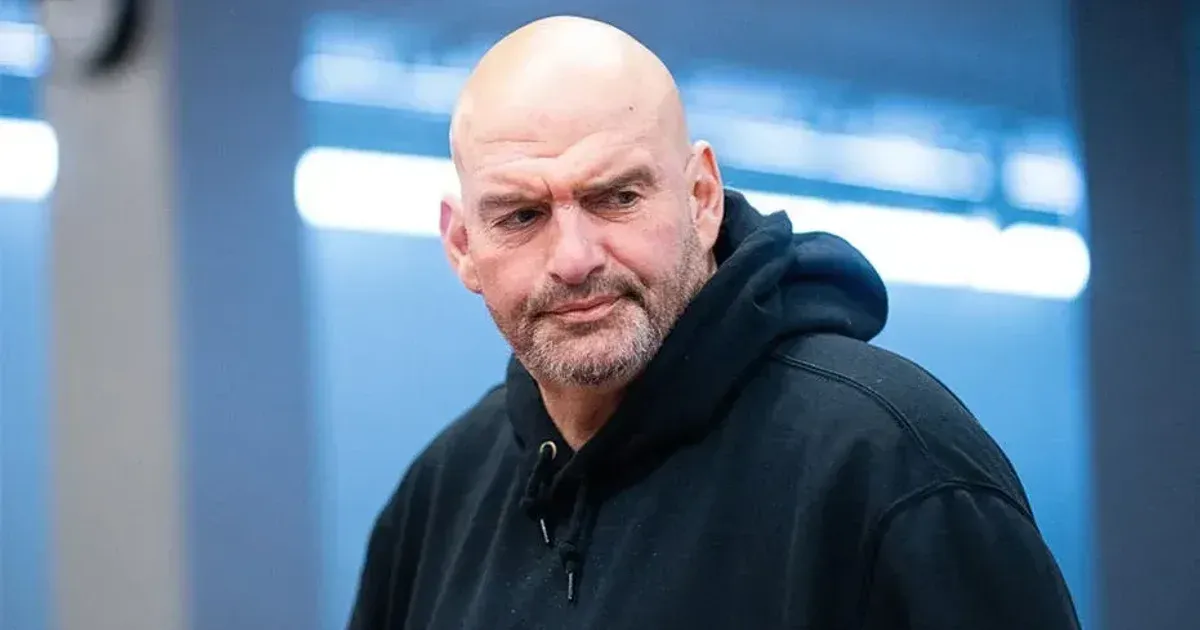
John Fetterman has opened another public rift with fellow Democrats, criticizing Philadelphia District Attorney Larry Krasner over threats to arrest ICE agents and arguing that his party avoids difficult conversations about immigration and violent crime. The dispute quickly moved beyond one local prosecutor. On March 27, 2026, the remarks added to months of tension between the Pennsylvania senator and progressive leaders.
The dispute centers partly on recent criminal cases involving noncitizen suspects. Fetterman argued that Democrats should be able to discuss those cases without treating every enforcement question as a concession to Republicans. His critics say he is amplifying right-wing framing and making local prosecutors into political targets.
Krasner's comments about possible action against federal immigration agents gave Fetterman an opening to challenge a prominent progressive official. The senator used sharp language and a pop-culture jab, telling Krasner to "lighten up, Francis." The exchange showed how far Fetterman has moved from the left-wing image many supporters associated with his 2022 campaign.
Immigration Enforcement Splits Democrats
Fetterman has framed his position as a public-safety argument rather than a partisan shift. He says people who commit serious crimes while in the country unlawfully should be removed and that Democrats lose credibility when they refuse to address those facts directly. Progressive Democrats see the issue differently. They argue that isolated criminal cases are often used to justify broad enforcement tactics that can sweep in families, workers and people with pending immigration claims. That disagreement explains why a local dispute in Philadelphia quickly became a national party argument.
The political risk is clear for both sides. Democrats who sound dismissive of public-safety concerns can lose moderate voters. Democrats who echo enforcement-heavy language can alienate immigrant communities and civil-rights groups that are central to the party coalition.
Voter ID Adds Another Fault Line
Fetterman's tensions with the party extend beyond immigration. He has said he personally supports voter identification, even while opposing Republican legislation that Democrats describe as restrictive. That distinction has not satisfied voting-rights advocates, who worry that his comments validate the premise of GOP election bills.
Representative Chrissy Houlahan has also expressed frustration with Fetterman, saying cooperation with Republican Senator David McCormick can sometimes be easier. Representative Brendan Boyle went further by calling for Fetterman to step down, citing his recent votes and public positioning. Those clashes show that the issue is not a single statement. It is a broader struggle over whether Fetterman is a maverick Democrat speaking to the political center or a liability undermining party unity.
The clash also gives Republicans a clean law-and-order argument at a moment when immigration enforcement is already central to national campaigning. Democrats, meanwhile, have to decide whether Krasner is an isolated local figure or a symbol opponents can attach to the party more broadly. The risk for Fetterman is that a local dispute can be nationalized quickly, especially when cable coverage turns prosecutor language into a proxy fight over border enforcement and city authority.
Policy Readout
Fetterman's approach may help him with independents and some working-class voters who want Democrats to sound tougher on crime and border enforcement. It may also deepen distrust among activists who already see him as abandoning the coalition that elected him. For Pennsylvania Democrats, the immediate challenge is managing disagreement without turning it into a permanent split. A party that cannot talk about enforcement, voting access and public safety in the same room will struggle to hold together in a competitive state.
The Krasner dispute also shows how local law-enforcement fights can become national identity tests. Philadelphia politics, federal immigration policy and Senate messaging are not the same thing, but in this debate they now overlap. That makes every phrase more combustible. Fetterman's calculation is that voters outside the most ideological Democratic circles want plain language on crime and border enforcement. His opponents believe that same language strips away context and gives Republicans permission to broaden enforcement in ways Democrats should oppose. Neither side is likely to resolve the argument quickly. The conflict touches public safety, civil liberties, voting access and the party's ability to compete in a state where narrow margins decide statewide races.
The political pressure is sharper because Pennsylvania remains a state where small shifts can decide national power. Democrats need turnout in Philadelphia, but they also need credibility in counties where crime and immigration are discussed in less activist language. Fetterman is trying to occupy that space even when it frustrates allies.
Krasner's defenders see the exchange differently. They argue that threats against local prosecutors and conflicts with federal agents cannot be discussed as slogans, because the legal questions involve jurisdiction, due process and community trust. That disagreement is why the dispute has lasted longer than one news cycle. The argument also reflects a broader Democratic problem: officials want to defend immigrant communities from overreach while showing that they take disorder and violent incidents seriously. Fetterman is betting that bluntness helps with the second goal, even if it strains the first.
Republicans will keep using the clash because it lets them argue that Democrats are divided on enforcement. Democrats, in turn, have to decide whether to treat Fetterman's comments as an internal irritant or as evidence that the party needs a more durable public-safety vocabulary. The fight is therefore not only about Krasner or ICE. It is about whether Democrats can separate legitimate concern about federal tactics from voters' demand for visible enforcement when public safety is already central to the campaign.