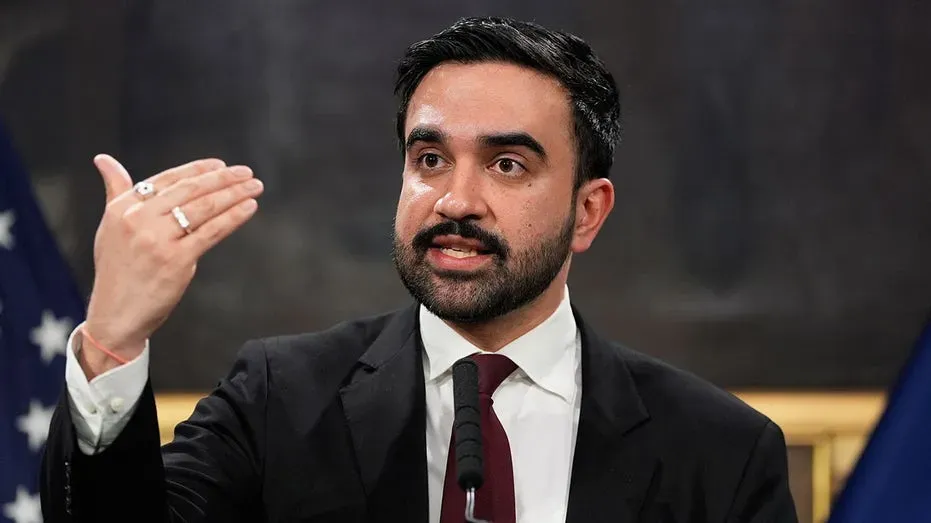
Zohran Mamdani endorsed the No Kings NYC demonstration on March 27, 2026, while escalating his rhetoric against federal immigration authorities. Speaking from a news conference originally designated for street safety initiatives, the mayor of New York City shifted his focus toward the executive branch. He explicitly called for the total abolition of Immigration and Customs Enforcement, an agency he characterized as a threat to municipal stability. Manhattan is preparing for a vast influx of activists as the third wave of the No Kings movement reaches the city streets.

Critics of the administration argue that the presidency has drifted toward an authoritarian model, requiring a public display of dissent. Activists planned the Saturday rally to serve as a direct rebuke of Donald Trump and his expansive use of federal law enforcement within urban centers.

Mamdani argued that the federal presence in New York has become reckless and counterproductive to public safety. He cited recent enforcement actions that he claims have left residents in a state of perpetual anxiety. Tension between the City Hall and the White House has reached a boiling point over the handling of non-citizens. This specific friction intensified after a fatal subway encounter involving an elderly veteran, an incident that prompted swift and controversial federal responses. Mamdani contends that the federal government is operating with a level of impunity that violates the spirit of local governance.

He maintains that municipal laws must remain the primary framework for safety in the five boroughs. Federal officials have not yet issued a formal rebuttal to the mayor’s latest accusations.

Protesters began mobilizing across social media platforms under the No Kings banner shortly after the mayor's announcement. Sources within the movement indicate this third round of demonstrations focuses specifically on what they describe as a monarchical shift in the presidency. RealClearPolitics reports that the frequency of these rallies suggests a deepening divide in American political life. Organizers expect thousands to congregate in lower Manhattan to voice their opposition to the current administration's policies. Financial districts and transportation hubs have increased security measures in anticipation of the crowds. But the mayor remains firm in his belief that public assembly is the most effective tool for citizens to project their vision for the country.

Mamdani Targets ICE Enforcement Tactics

Mamdani’s critique of ICE centers on the agency's perceived lack of transparency and its impact on routine city functions. New Yorkers are reportedly avoiding essential services and immigration check-ins due to the fear of detention. The mayor believes the agency delivers nothing toward the cause of public safety in its current form. Instead, he views it as a rogue entity that operates outside the standard rule of law. He has reportedly expressed these concerns directly to the president during private consultations. And yet, the federal government continues to expand its footprint in the city. Mamdani clarified that his stance is rooted in a commitment to protecting every resident regardless of their status.

I have made clear to the president, both in our private conversations and our public conversations, about that I believe that ICE is a rogue agency.

Immigration and Customs Enforcement officials maintain that their operations are necessary to maintain national security and uphold federal mandates. They argue that sanctuary policies in cities like New York create dangerous loopholes for criminal activity. In turn, the federal government has threatened to withhold funding from municipalities that refuse to cooperate with deportation efforts. Legal experts suggest this jurisdictional battle could eventually reach the Supreme Court. The city’s legal department is currently reviewing its options to limit federal access to municipal data. Mamdani stated that no one in his city is above the law, implying that federal agents themselves must adhere to local standards of conduct.

No Kings Protests Gain National Momentum

National organizers for the No Kings movement see New York as the primary battleground for their broader agenda. They have leveraged the mayor’s endorsement to recruit participants from neighboring states and urban centers. For instance, similar rallies are being planned in Philadelphia and Chicago to coincide with the Manhattan event. These groups argue that the executive branch has overreached its constitutional authority through various executive orders and agency directives. They use the moniker to highlight the contrast between a representative democracy and a centralized executive power. In fact, many participants carry signs depicting the president with a crown as a form of visual satire. This rhetoric has galvanized a base that feels increasingly alienated by federal policy decisions.

Media coverage of the movement has highlighted the varying interpretations of its success. While some outlets describe the protests as an essential expression of democratic health, others view them as a source of unnecessary civil unrest. Fox News noted that Mamdani’s endorsement comes at a time when questions persist regarding the city's management of the migrant crisis. The fatal subway killing of a veteran has complicated the narrative, providing fodder for those who believe stricter enforcement is required. Critics of the mayor suggests that his focus on federal agencies is a tactical distraction from domestic policy failures. Still, the movement continues to draw diverse crowds ranging from college students to labor union members.

Trump Administration Response to Urban Unrest

White House officials have dismissed the No Kings movement as a collection of fringe activists funded by political opponents. They maintain that the president’s actions are focused on restoring order and economic prosperity. Separately, the Department of Homeland Security has defended the conduct of its agents in New York and other sanctuary cities. They claim that the term rogue agency is a political fabrication intended to undermine legitimate law enforcement. Federal spokespeople emphasize that their priority remains the removal of individuals who pose a threat to public safety.

According to official statements, the administration will not be deterred by local political pressure or street demonstrations. The president has frequently used his platform to criticize urban leadership for what he calls a failure to protect citizens.

Law enforcement agencies in Manhattan are coordinating with federal counterparts to manage the logistics of the upcoming rally. Police Commissioner offices have issued advisories regarding road closures and potential transit delays. They aim to balance the right to protest with the need to maintain public order and safety. That said, the presence of federal agents near protest sites has been a point of contention for local organizers. Activists argue that a visible federal presence often serves to escalate rather than de-escalate tensions. The city has deployed additional community affairs officers to act as intermediaries between the police and the protesters. These efforts reflect the complex reality of policing in a highly polarized political environment.

Manhattan Rally Logistics and Public Safety

Saturday’s event is expected to begin at Foley Square before moving toward federal buildings in the area. Organizers have secured the necessary permits, but they anticipate the crowd size will exceed the initial projections. Businesses in the vicinity has been advised to take precautions against potential property damage. By contrast, many local vendors hope the large turnout will provide a temporary boost to the local economy. Security analysts are monitoring potential counter-protests that could lead to physical confrontations. The city’s emergency management team has established a command center to oversee the day’s activities. $1.2 million in overtime pay has already been allocated for the police department to cover the weekend’s events.

Mamdani plans to address the crowd personally to reiterate his calls for ICE's removal from New York. His presence is expected to draw sizable media attention and further solidify his role as a leading critic of the administration. Yet, he must also manage the internal pressures of a city divided over the immigration issue. Recent polling suggests that while many New Yorkers support his stance on federal overreach, others are concerned about rising crime rates. The mayor's ability to navigate these competing interests will be tested as the protest unfolds.

Every action taken by his administration is being scrutinized by both local constituents and national political figures. Manhattan remains the center of a debate that extends far beyond its geographical borders.

The Elite Tribune Perspective

Does the American Republic survive when its largest city declares open war on federal law enforcement? Mayor Zohran Mamdani is not merely protesting; he is attempting to nullify federal authority through rhetorical arson. By labeling a federal agency as rogue, Mamdani indicates a breakdown in the constitutional hierarchy that has sustained this nation for two centuries. This is the dangerous logical conclusion of the sanctuary city movement where local politicians focus on ideological purity over the basic mechanics of intergovernmental cooperation.

The No Kings movement relies on a simplistic, cartoonish depiction of executive power that ignores the genuine security crises facing urban centers. If the mayor believes ICE delivers nothing for public safety, he is willfully ignoring the complexities of human trafficking and international smuggling. He chooses instead to court the radical base, using the tragic death of a veteran as a pivot point for a political stunt. The picture emerging is the slow disintegration of federalism in real time as municipal leaders treat the White House like a foreign power rather than the head of their own government.

If every city decides which federal laws it will follow, the United States ceases to be a singular nation and becomes a fractured collection of city-states. Mamdani is playing a high-stakes game where the ultimate losers are the New Yorkers caught between his ambition and federal reality.