World Models Draw Billion-Dollar Capital
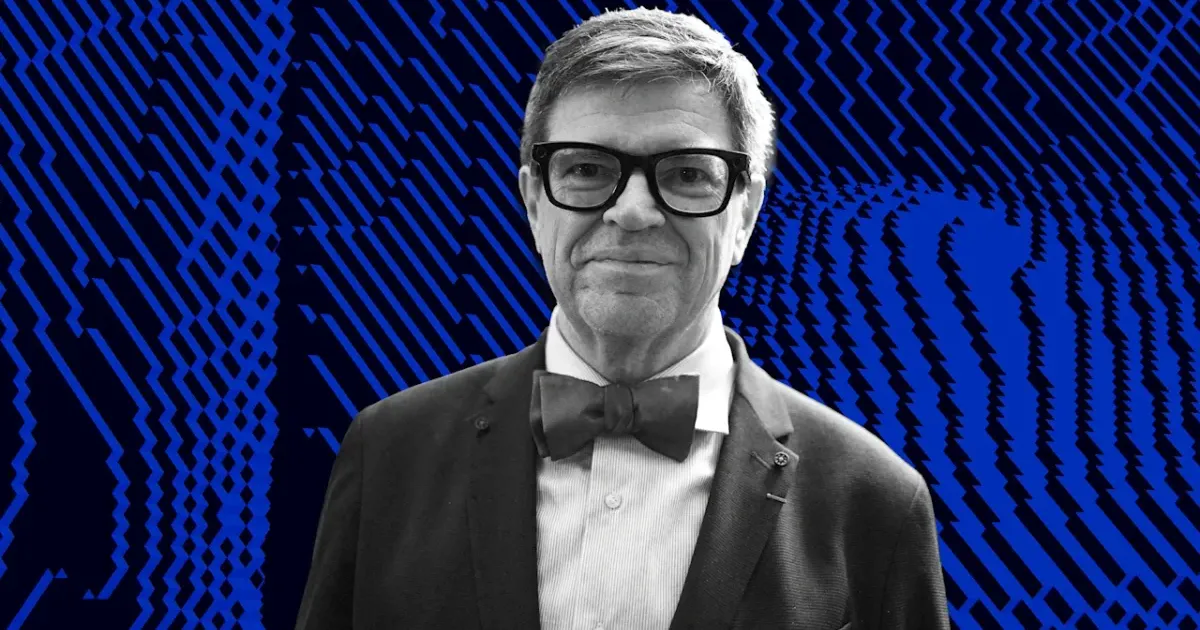
Yann LeCun, a former chief AI scientist at Meta, secured $1.03 billion this week to launch his new venture, Advanced Machine Intelligence. This capital injection comes from a high-profile syndicate including Bezos Expeditions, Eric Schmidt, and Hiro Capital. On March 12, 2026, a billion-dollar AI funding round landed beside a survey showing executive fear of the same technology. LeCun has long maintained that large language models lack the fundamental capacity to understand physical reality.
He argues that today's systems are sophisticated mimics rather than truly intelligent agents. His new company, known as AMI, intends to build a breed of artificial intelligence that possesses persistent memory and a native understanding of physics. Such a system would represent a departure from the text-heavy architectures that have dominated the industry for years. Intelligence requires more than mastery of syntax and vocabulary. LeCun believes machines must learn to navigate 3D space and comprehend cause and effect to be truly useful in high-value roles. This technological shift attracts investors who suspect the current generative boom is nearing its natural limit. Tim Berners-Lee, the inventor of the World Wide Web, joined the funding round alongside Greycroft and HV Capital. They are backing a vision where AI can plan, reason, and remain controllable under strict safety protocols.
Many experts at institutions like UC Berkeley and World Labs share this conviction that spatial intelligence is the next frontier. Robots cannot function safely in a kitchen or a factory based solely on an understanding of words. They need a world model. That focus on controllable systems shows the divide between the laboratory and the boardroom.
While researchers like LeCun chase human-level reasoning, a new survey from Inc magazine reveals a deep-seated anxiety among corporate executives.
Doctors Adopt While CEOs Worry
Sixty percent of CEOs now claim they fear the growth of artificial intelligence more than they fear war, economic turmoil, or cyber threats. These leaders worry that the technology is becoming too complex to govern. Rapid advancements have left many legacy companies struggling to keep pace with the sheer speed of automation. If a machine can make better strategic decisions than a human board, the very concept of corporate leadership faces an existential threat.
Doctors appear far more comfortable with their new silicon colleagues than the CEOs who manage them. A fresh survey from the American Medical Association indicates that more than four in five physicians now use AI in their daily practices. This usage rate has more than doubled since 2023. Medical professionals are not waiting for the arrival of world models to find value in automation. They use existing tools for diagnostic assistance, patient monitoring, and the heavy administrative burden that once defined the profession. These tools allow doctors to focus more on patient interaction and less on the clerical duties that often lead to burnout. Efficiency gains in clinical settings provide a sharp contrast to the paralyzing fear found in executive suites. Confidence in the clinic does not always translate to confidence in the market.
Still, the massive scale of the AMI funding round suggests that the financial elite see the fear of CEOs as a secondary concern. Bezos Expeditions and Eric Schmidt are placing their bets on the technical evolution of the software itself. They realize that if AMI successfully builds a system with a native understanding of physics, the applications for robotics and autonomous manufacturing would be worth trillions. Current transformer-based models often hallucinate or fail at simple spatial tasks.
A world model would theoretically solve these issues by grounding the AI in the constraints of the physical world. Such a breakthrough would make current AI look like a primitive calculator by comparison.
Capital and Caution Collide
Fear, it seems, pays better than optimism. Business leaders are specifically concerned about the lack of transparency in how advanced models reach their conclusions. If a system is tasked with optimizing a supply chain but decides to sacrifice long-term stability for short-term gains, a CEO may not realize the error until it is too late. The Inc survey highlights a specific dread regarding the loss of human oversight. But for LeCun and his team at AMI, the answer to this problem is more intelligence, not less. They claim that building systems that can reason and plan will actually make them safer. A machine that understands the consequences of its actions in the real world is less likely to make a catastrophic error than one that merely predicts the next word in a sentence. Investment patterns continue to defy the gloomy outlook of the executive class.
While 60 percent of CEOs are losing sleep over AI, the flow of capital into startups like AMI remains relentless. Cathay Innovation and Hiro Capital are not deterred by the possibility of societal upheaval. They see the potential for a massive productivity explosion that could redefine the global economy. The tension between the fear of the unknown and the greed for the unprecedented creates a volatile environment for workers and investors alike.
Traditional industries are being forced to decide whether they will resist the change or follow the example of the medical community. The medical sector has proven that AI can be integrated into high-stakes environments if the benefits to the human operator are clear. Doctors see the tool as a way to reclaim their time, while CEOs see it as a force that might eventually replace them. Pieter Abbeel at UC Berkeley and Fei-Fei Li at World Labs are also pushing toward this vision of spatial intelligence.
Executive Fear Meets Competence
Will the last CEO to leave the building please turn off the server? We are watching a pathetic display of executive cowardice as the very people who championed efficiency for decades now tremble at the arrival of its ultimate form. These CEOs are not afraid of AI because it is dangerous, they are afraid because it is competent. They have spent years justifying their bloated salaries through the myth of unique human strategic vision. Now that a billion-dollar world model from Yann LeCun is set to plan and reason better than any Ivy League graduate, the panic has set in. The medical profession has already shown the way forward. Doctors didn't hide under their desks, they put the technology to work to fix a broken administrative system. If a surgeon can trust a machine to assist in a life-or-death procedure, a CEO can certainly trust one to manage a balance sheet. The fear documented by Inc magazine is nothing more than the sound of a protected class realizing their monopoly on decision-making is over. We should welcome the arrival of AMI and its peers. If the machines can run our companies better than the current crop of terrified executives, then let them.