Dan Hurley drove the UConn Huskies to their third national championship appearance in four seasons on April 5, 2026, by orchestrating a dominant win against Illinois. Success in the high-stakes environment of the Final Four often reveals the raw psychological intensity required to sustain a modern college basketball dynasty. Hurley, known for a volatile sideline presence and careful preparation, remains the central figure in a program that now expects nothing less than hardware. The victory against the Fighting Illini is the latest confirmation of a shift in the collegiate power structure toward Storrs, Connecticut.

Coaches across the country often struggle with the transition from rebuilding to maintaining elite status, yet the Huskies appear to have bypassed the typical plateau of championship fatigue.

Hurley Demands Media Silence after Locker Room Exchange

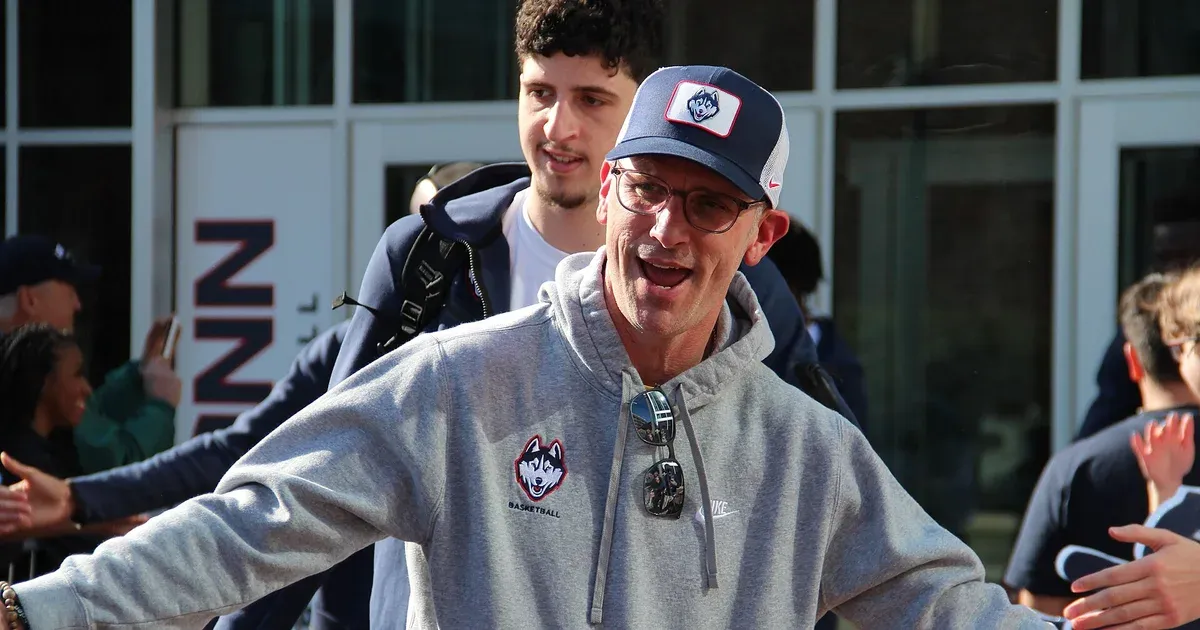
Cameras captured a candid and puzzling moment involving the head coach as he exited the court following the semifinal victory. Hurley walked toward the locker room through a crowded tunnel, passing media members and arena staff, when he noticed a lens pointed directly at him. He stopped briefly, pointed toward the camera, and muttered a request to delete the footage. This specific interaction immediately circulated among journalists, sparking questions about what the coach intended to keep private during a moment of public triumph.

Reporters present at the scene noted that Hurley seemed more focused on internal team dynamics than the external celebration. His desire for control extends beyond the X’s and O’s of the basketball court into the very perception of his program.

Locker room culture in Storrs is built on a foundation of absolute transparency between players and staff, though that openness rarely extends to the public. Hurley has spent years cultivating a specific aura of relentless pursuit, often bordering on the obsessive. Such a demand for privacy suggests that even in victory, the coach identifies potential distractions that could derail the focus required for the final game. Observations from the tunnel indicate that the intensity of the coach did not subside even as the final buzzer confirmed his team’s advancement. He moved with a sense of urgency that contrasted with the jubilant celebrations of the student section.

Delete that.

Microphones also picked up snippets of Hurley’s internal dialogue as he transitioned from the court to the press conference. He appeared to be processing the technical errors of the game despite the double-digit margin of victory. Perfectionism is a documented trait of the Hurley coaching tree, lineage that values grind over glamour. The request to remove footage might have stemmed from a superstitious habit or a tactical desire to hide team morale indicators from future opponents. His focus remained fixed on the upcoming championship matchup, leaving little room for the performative joy typical of the Final Four stage.

UConn Athletics Chases Historical Three Title Milestone

Historical data reveals that few programs in the modern era have achieved the consistency currently displayed by the UConn Huskies. Winning 3 national titles in a four-year span would place Hurley in a category previously reserved for legends like John Wooden or Mike Krzyzewski. Critics once questioned if the Huskies could maintain their trajectory after the departure of Jim Calhoun, but Hurley has effectively silenced those doubts through aggressive recruiting and a rigid adherence to his systems. The program has developed a reputation for identifying players who thrive under high-pressure, high-accountability environments. Illinois struggled to match the physical and mental stamina of a roster that has been conditioned for deep March runs.

Recruitment strategies at the University of Connecticut have evolved to prioritize fit over raw star ratings. Hurley often speaks about the need for players who possess a specific level of toughness and basketball IQ. This approach has allowed the team to integrate new talent seamlessly, even as key contributors depart for the NBA or the transfer portal. Continuity is the greatest asset for the Huskies, provided by a coaching staff that remains largely intact year after year. Basketball analysts point to the team’s defensive rotations as the clearest evidence of this internal cohesion. Illinois found no rhythm against a defense that anticipates movements before they happen.

Revenue streams for the university have also benefited from this sustained excellence on the hardwood. Merchandising and ticket sales have seen a serious uptick, while the athletic department’s national profile provides a recruiting edge across all sports. Success in the men’s tournament often generates a halo effect that boosts the entire university’s brand. The financial implications of a third title in four years are difficult to overstate in the NIL era. Donors are more likely to contribute to a winning culture that demonstrates a clear return on investment. $11 million in projected athletic department growth has been linked to this recent stretch of tournament success.

Legacy of Geno Auriemma Influences Modern Coaching Style

Hurley took a moment during his post-game remarks to acknowledge Geno Auriemma, the hall-of-fame coach of the UConn women’s basketball team. The acknowledgment was not a mere professional courtesy but a recognition of the standard of excellence that defines the campus in Storrs. Auriemma has secured 11 national titles, creating a shadow that could intimidate a lesser coach. Hurley, however, uses that legacy as a benchmark rather than a burden. He mentioned that the pressure to win at a place like Connecticut is unique because the fans and the administration have seen the highest level of success for decades. Auriemma’s influence is visible in the way Hurley demands consistent effort regardless of the opponent’s rank.

Standards set by the women’s program have long been the blueprint for how a basketball program should function at a state school. Hurley often observes Auriemma’s practices to glean insights into leadership and player psychology. This cross-pollination of ideas between the two programs has fortified the basketball culture in Storrs. Auriemma’s tenure has taught the university that greatness is not a destination but a continuous process of evolution. Hurley has adopted this mindset, refusing to let his players become complacent after a single title. The drive for a third championship is fueled by a desire to match the historic dominance of the women’s side of the athletic department.

Elite coaching requires a delicate balance between tactical genius and emotional intelligence. Auriemma is known for his sharp wit and psychological games, traits that Hurley has adapted into his own high-energy persona. Both coaches share an intolerance for mediocrity and a willingness to challenge the status quo of college athletics. The connection between the two clarifies why the Huskies are able to reload their roster while other programs suffer from championship hangovers. Storrs is an environment where winning is the only acceptable outcome. Hurley’s shoutout to Auriemma confirms that he views himself as a steward of a broader institutional legacy.

Illinois Defeat Solidifies Big East Basketball Supremacy

Competition within the Big East Conference has prepared the Huskies for the physical demands of the NCAA tournament. Illinois entered the game with a high-powered offense, but they were unable to navigate the physical perimeter defense that Hurley prides himself on. The Big East is often characterized as a league that favors grit over athleticism, and that identity was on full display in the Final Four. Big Ten teams like Illinois often struggle with the officiating and the pace of play that Big East officials allow during the regular season. The contrast in conference styles often manifests in the later rounds of the tournament, where the Huskies’ proven nature becomes a clear advantage.

Player development within the Hurley system is tailored to survive the grind of a 30-game season and a subsequent title run. He emphasizes strength and conditioning as much as shooting and passing. Illinois players appeared fatigued in the final ten minutes of the game, a period when the Huskies typically pull away from their opponents. The stamina is a product of grueling practices that Hurley oversees with an intensity that mirrors a game-day environment. He believes that if practice is harder than the game, the players will remain calm when the stakes are highest. The result is a team that thrives in the second half of tournament games.

Tactical adjustments during the game against Illinois showed Hurley’s ability to neutralize star players. He used a rotation of defenders to keep the Illini’s primary scorers off-balance. By the time the opponent adjusted to one defensive look, Hurley had already pivoted to another. The strategic flexibility is why the Huskies are rarely upset by lower seeds or unconventional offenses. The win against Illinois is a case study in how to dismantle a high-seed opponent through superior preparation and execution. Hurley walked off the court with the look of a man who had already started scouting his next opponent before the press conference began.

The Elite Tribune Strategic Analysis

Is Dan Hurley the anti-hero college basketball needs, or is he simply the only coach honest enough to admit that winning at this level requires a touch of madness? The obsession with his "weird" celebrations and his demand to delete locker room footage distracts from a more uncomfortable truth. He has cracked the code of the modern collegiate era by treating his program like a high-intensity private equity firm instead of a traditional sports team.

While other coaches complain about the transfer portal and NIL, Hurley has weaponized the pressure of Storrs to filter out anyone who cannot handle his particular brand of professionalized intensity. He is not looking for student-athletes in the nostalgic sense; he is looking for mercenaries of the hardwood who are willing to sacrifice their personalities for the pursuit of a ring.

The shoutout to Geno Auriemma is a calculated move to align himself with the only other person on campus who understands the burden of perfection. It is a subtle middle finger to the rest of the Big East, signaling that Hurley does not compare himself to his peers, but to the ghosts of dynasties past. His volatility on the sideline is a performance of accountability that keeps his players on a razor's edge. He knows that in the current media environment, a coach who is too polished is a coach who has lost his edge.

By remaining slightly unhinged and fiercely protective of his internal culture, Hurley has created a moat around his program that few are capable of crossing. The result is a machine that does not just win; it consumes the competition. One final victory stands between Hurley and a legacy that will be impossible to ignore. He is the most effective villain in the game.