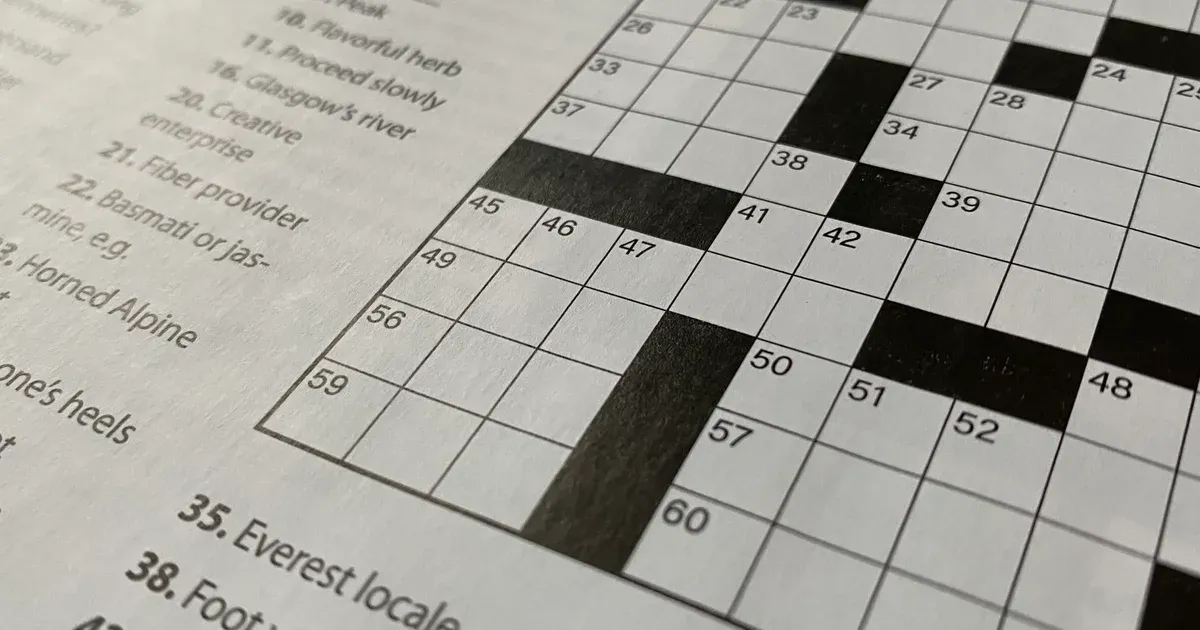
Daily crosswords have become a digital habit as much as a print ritual, giving newsrooms a loyal audience beyond the main news cycle.
Evolution of the Square
Millions of people across the United Kingdom and North America began their day with a familiar ritual involving a grid of black and white squares. By March 12, 2026, that ritual had become a shared digital habit as much as a print tradition. Whether gripping a physical newspaper or tapping a tablet screen, these enthusiasts engaged with two distinct puzzles that represent the pinnacle of linguistic labor. The Guardian published its Cryptic No. 29,952 and Quick No. 17,425, continuing a legacy that has survived the collapse of traditional print media. Such endurance is not accidental. Puzzles offer a rare form of controlled friction in an increasingly frictionless world. This daily engagement provides a psychological anchor for a global audience seeking mental stimulation before the workday begins.
Arthur Wynne published the first modern crossword in the New York World on December 21, 1913. He called it a Word-Cross, and it featured a diamond-shaped grid without the black blocks we see today. British publishers quickly adopted the format but added a layer of complexity that would eventually split the hobby into two distinct philosophical camps. While American puzzles generally rely on straightforward definitions and trivia, the British cryptic style evolved into a battle of wits involving anagrams, hidden indicators, and double definitions. The divide persists in 2026, with the Guardian’s cryptic offerings maintaining a reputation for being particularly devious. Expert solvers often spend years learning the specific dialect of individual setters who use pseudonyms to mask their identities.
British Cryptics vs. American Quick Puzzles
Linguistic flexibility defines the British cryptic crossword. Clues in puzzle No. 29,952 require a solver to ignore the surface meaning of a sentence entirely. A clue might look like a statement about a broken car, yet the reality involves an anagram of a different word tucked inside a synonym for a different concept. Logic serves as the primary tool here. Setters follow strict rules established by giants of the field like Ximenes or Azymus, ensuring that even the most difficult clue is technically fair. If a solver cannot find the answer, the failure lies in their own lack of lateral thinking, not in the clue's construction.
The grid remains a silent battlefield where human intellect resists the encroachment of automation.
Quick crosswords like No. 17,425 serve a different psychological function. They offer a sense of momentum. These puzzles rely on synonyms and direct knowledge, allowing a practiced solver to complete the grid in under ten minutes. The satisfaction comes from speed and the closure of a finished task. Data from digital puzzle platforms suggest that the popularity of quick grids has surged among younger demographics who view them as a form of mindfulness. They are not looking for a two-hour struggle, but rather a brief mental palate cleanser between digital notifications.
Neuroscientists have long studied the impact of these daily challenges on the aging brain. Research published in 2025 by the London Institute of Health indicated that consistent crossword solving can delay the onset of memory-related decline by nearly five years. The brain treats a cryptic clue like a complex mathematical equation that requires linguistic variables. This focus on cognitive health has transformed the crossword from a simple leisure activity into a wellness tool. Doctors now recommend these puzzles alongside physical exercise and a balanced diet. The mental effort required to decode a clue like those found in No. 29,952 forces the brain to create new neural pathways, strengthening the cognitive reserve.
Subscription models now dominate the industry as news organizations realize the value of their puzzle archives. The New York Times and The Guardian have both reported that their gaming apps generate more consistent daily traffic than their political or world news sections. Such a shift in consumer behavior has forced editors to treat setters like star columnists. This transition to digital formats has allowed for interactive features like hint buttons and timed leaderboards. However, purists argue that these features diminish the traditional experience. They believe the struggle is the point, and that removing the possibility of failure also removes the joy of success.
Setting a puzzle is an act of architecture. A creator must balance the number of black squares against the connectivity of the grid. Most professional setters use specialized software to help them construct the layout, but the clues themselves remain stubbornly human. AI has attempted to generate cryptic clues, yet it consistently fails to grasp the nuances of British humor and cultural references. Computers can solve a quick puzzle in milliseconds, but they struggle with the deceptive wordplay of a seasoned human setter. This intellectual pursuit remains one of the few areas where human creativity holds a definitive edge over machine learning.
Modern solvers are younger and more diverse than the stereotypical image of a retired professor in a library.
Sixty percent of digital crossword subscribers are now under the age of forty. The demographic shift is pushing setters to include more contemporary references, including pop culture and modern slang. A puzzle from 2026 might include clues about synthetic biology or Mars missions alongside references to Shakespeare or Dickens. The challenge for the Guardian’s editor lies in maintaining the puzzle’s high standards while ensuring it remains accessible to a global, digitally-native audience. Balancing these conflicting needs requires a delicate touch and a deep understanding of how language shifts across borders.
Why the Daily Grid Still Works
Ask a purist about the latest crossword apps and watch their face contort with a mix of pity and rage. We have entered an era where the brutalist beauty of the 15x15 grid is being sacrificed on the altar of engagement metrics and dopamine loops. The crossword was never meant to be convenient. It was a friction-filled obstacle meant to be tackled with a pen, a dictionary, and a thick skin. Today's digital versions, with their check-square functions and neon-colored streaks, have turned a high-status intellectual duel into a mobile game no different than crushing candies. By making the puzzles more accessible, publishers are diluting the very cognitive resistance that makes them valuable. If you need a hint button to finish a cryptic, you haven't solved the puzzle, you have merely negotiated a surrender. We should be suspicious of any trend that prioritizes the feeling of being smart over the actual work of being smart. The Guardian may still produce excellent grids, but the culture surrounding them is becoming soft. Real cruciverbalists know that the only thing worse than a blank square is an unearned answer. A puzzle that doesn't make you feel a little bit stupid isn't doing its job.